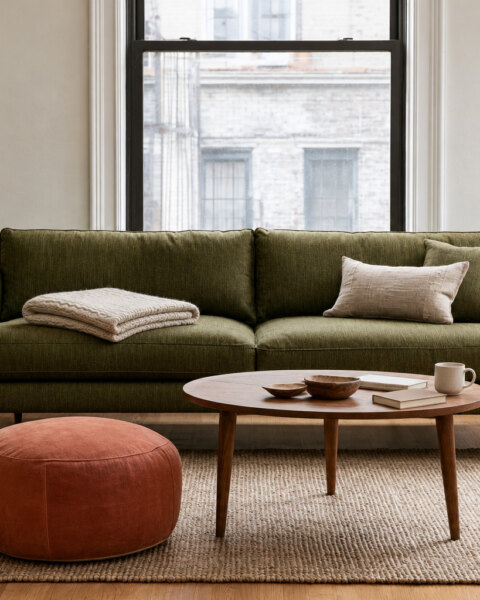
Small Living Room Wall Decor Ideas That Add Height
Wall decor ideas that make a small living room feel taller and less crowded, with art sizes, hanging heights, mirrors, shelves and sconces.
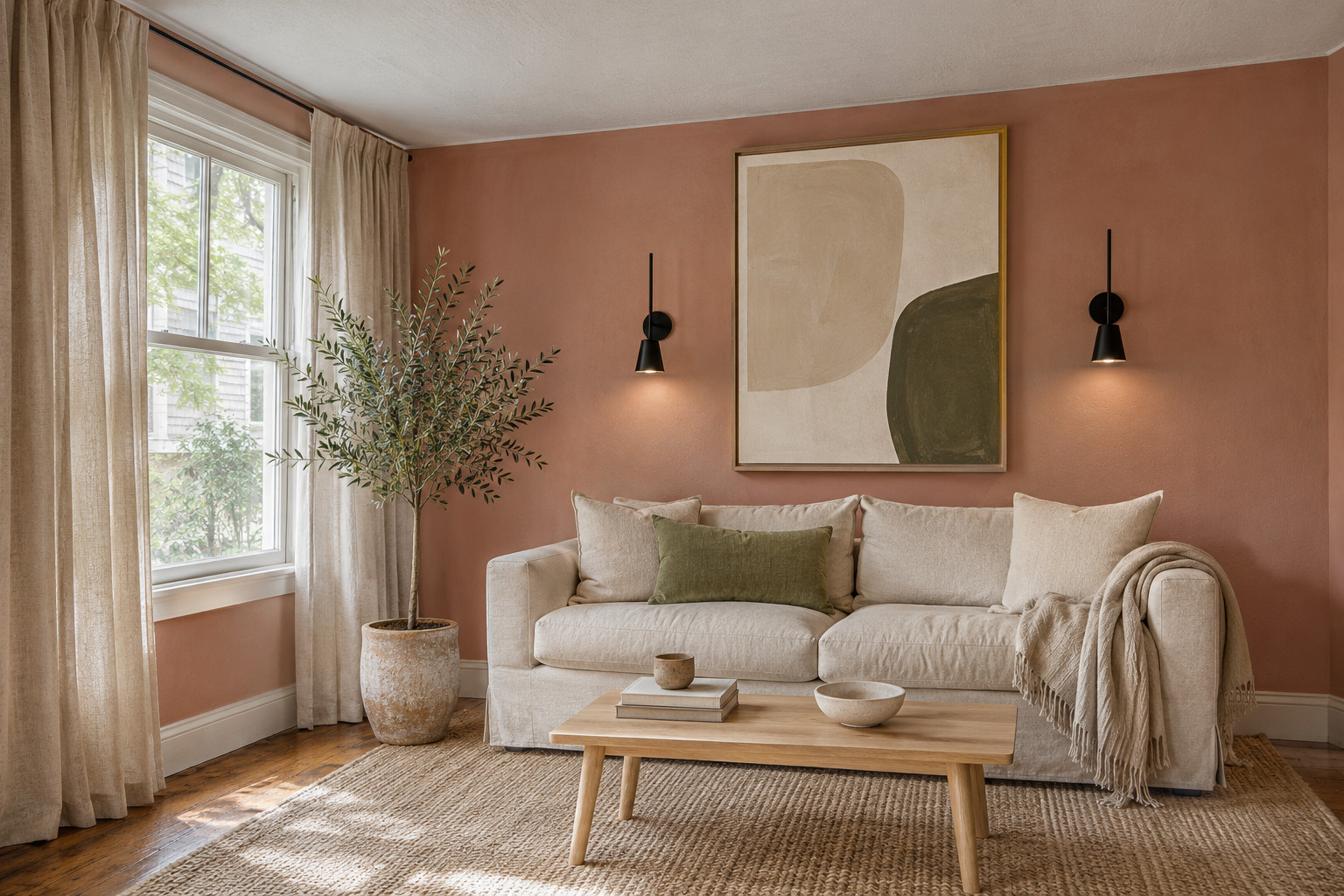
In a small living room the floor fills up fast. A sofa, a coffee table, a rug, and the space is spoken for. The walls are where you still have room to play, and they can do more than hold a few frames. Good small living room wall decor pulls the eye upward, so the room reads taller and less crowded. The ideas below are all about height: where to hang things, how big to go and which pieces make a low or tight room feel more open.
Quick answer: To make a small living room feel taller, hang curtains close to the ceiling, choose vertical art or stack two pieces, hang one large piece instead of many small ones, use a tall mirror, run shelves or paneling vertically, and swap floor lamps for wall sconces. Keep art 8 to 10 in (20 to 25 cm) above the sofa back and about two-thirds of the sofa’s width.
In this article
- Small living room wall decor: get the sizes right first
- 1. Hang curtains high and wide
- 2. Choose vertical art, or stack two pieces
- 3. Go big with one piece instead of many small ones
- 4. Use a tall mirror to bounce light and add depth
- 5. Run shelves up the wall, not along it
- 6. Add vertical paneling or paint the ceiling the same color
- 7. Swap floor lamps for wall sconces
- 8. Leave some wall empty
- Mistakes that make a small living room feel lower
- Frequently asked questions
- Begin with the curtains
Small living room wall decor: get the sizes right first
Most wall decor that looks wrong in a small room is the wrong size or hung at the wrong height, not the wrong style. These numbers work for most living rooms:
| Sofa width | Art or group width (about 2/3) | Gap above the sofa back |
|---|---|---|
| 60 in (152 cm) loveseat | about 40 in (102 cm) | 8 to 10 in (20 to 25 cm) |
| 72 in (183 cm) | about 48 in (122 cm) | 8 to 10 in |
| 84 in (213 cm) | about 56 in (142 cm) | 8 to 10 in |
On a wall with no furniture in front of it, hang art so its center sits about 57 to 60 in (145 to 152 cm) from the floor. That rule still applies in a small room. “Adding height” does not mean hanging everything near the ceiling. It means choosing shapes and arrangements that lead the eye up.
1. Hang curtains high and wide
 Save
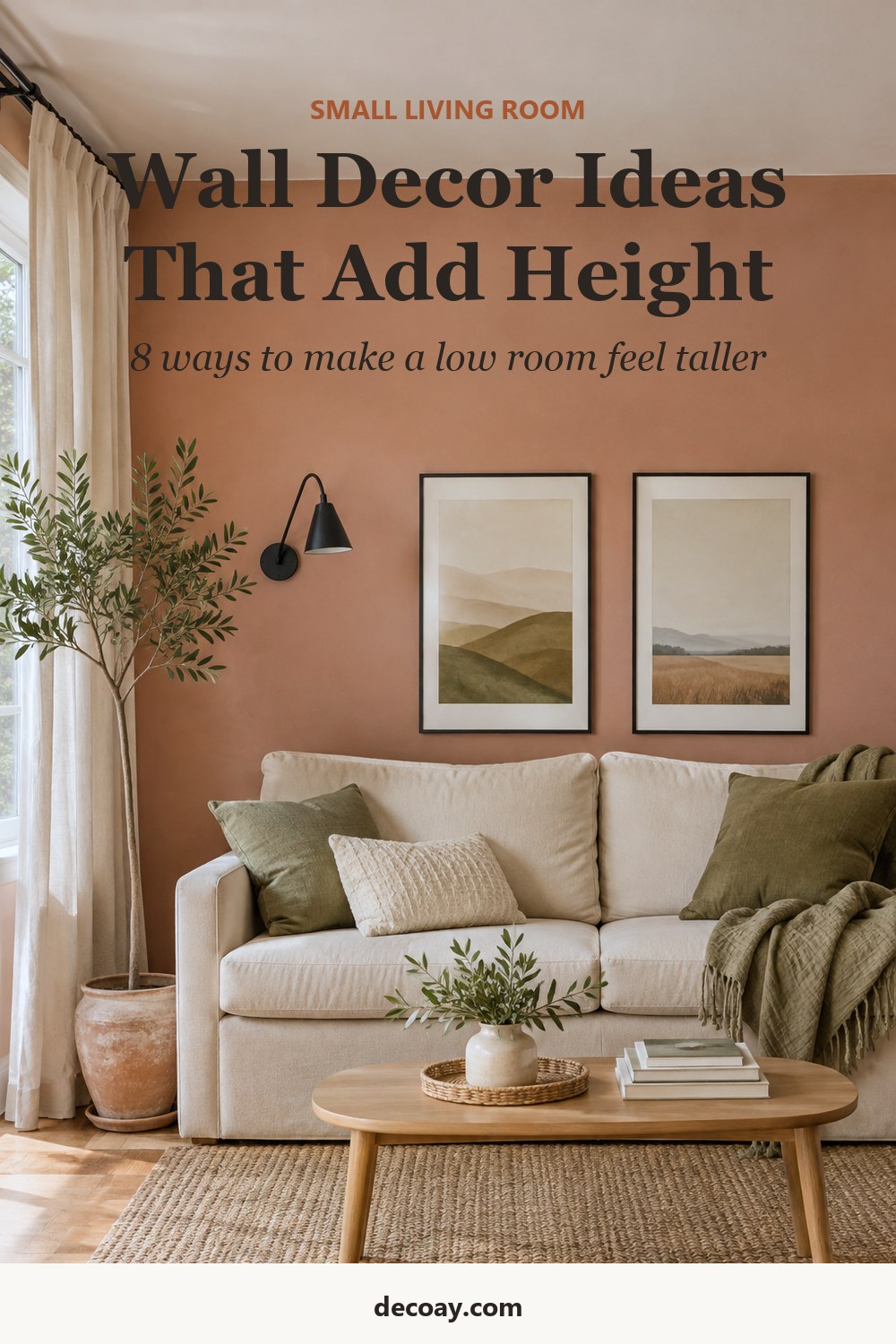
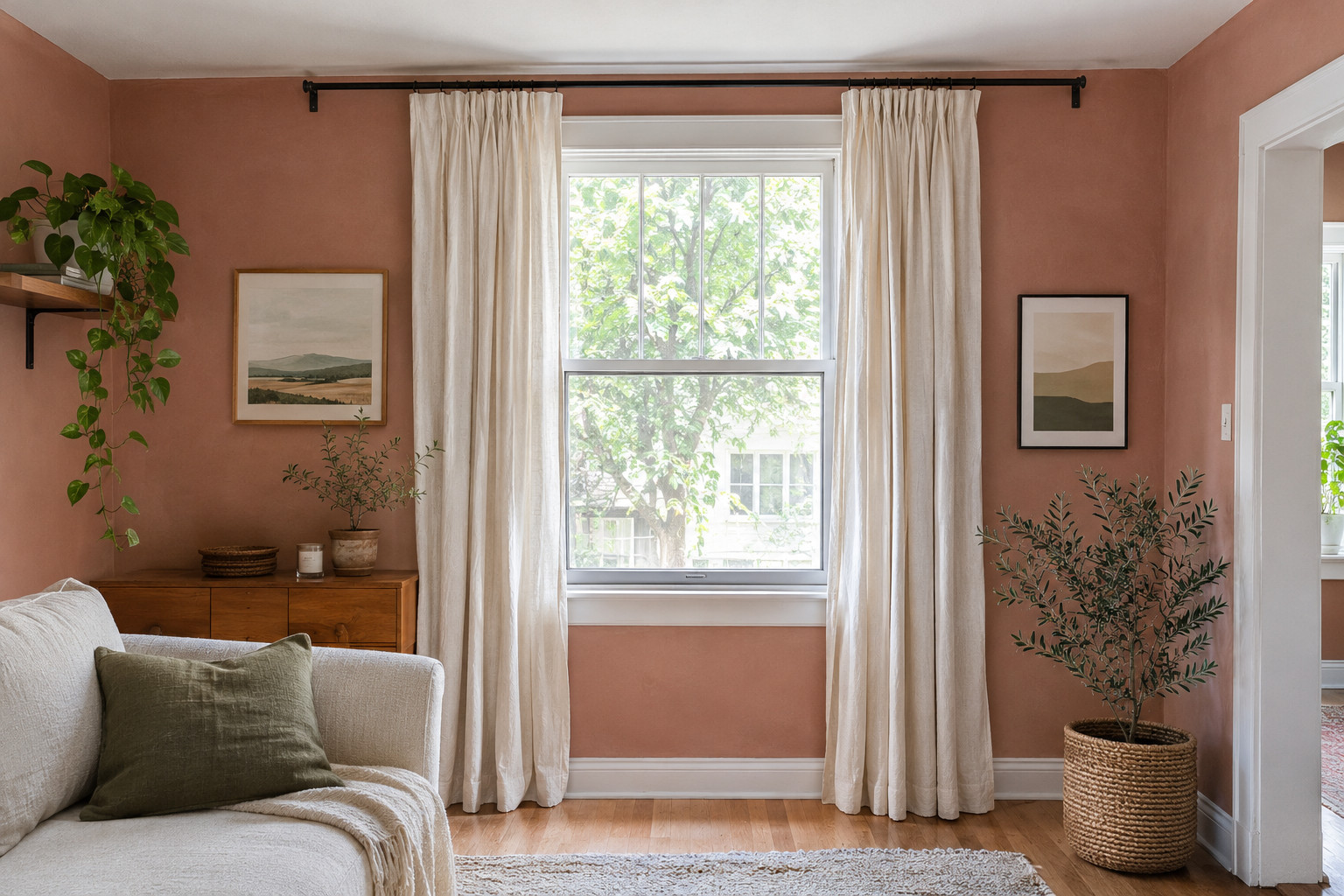
This one costs the least and changes the room the most. Mount the curtain rod close to the ceiling, about 2 to 4 in (5 to 10 cm) below it or just under the crown molding, rather than right above the window frame. Extend the rod 8 to 12 in (20 to 30 cm) past each side of the window so the curtains stack on the wall instead of covering the glass.
The curtains should just touch the floor or hover half an inch above it. With 8 ft (244 cm) ceilings that usually means 95 or 96 in panels; with 9 ft ceilings, 108 in. Measure from the rod to the floor before you buy, since shop sizes run in fixed lengths. Light, unlined linen in a color close to the wall keeps the effect calm.
2. Choose vertical art, or stack two pieces
 Save
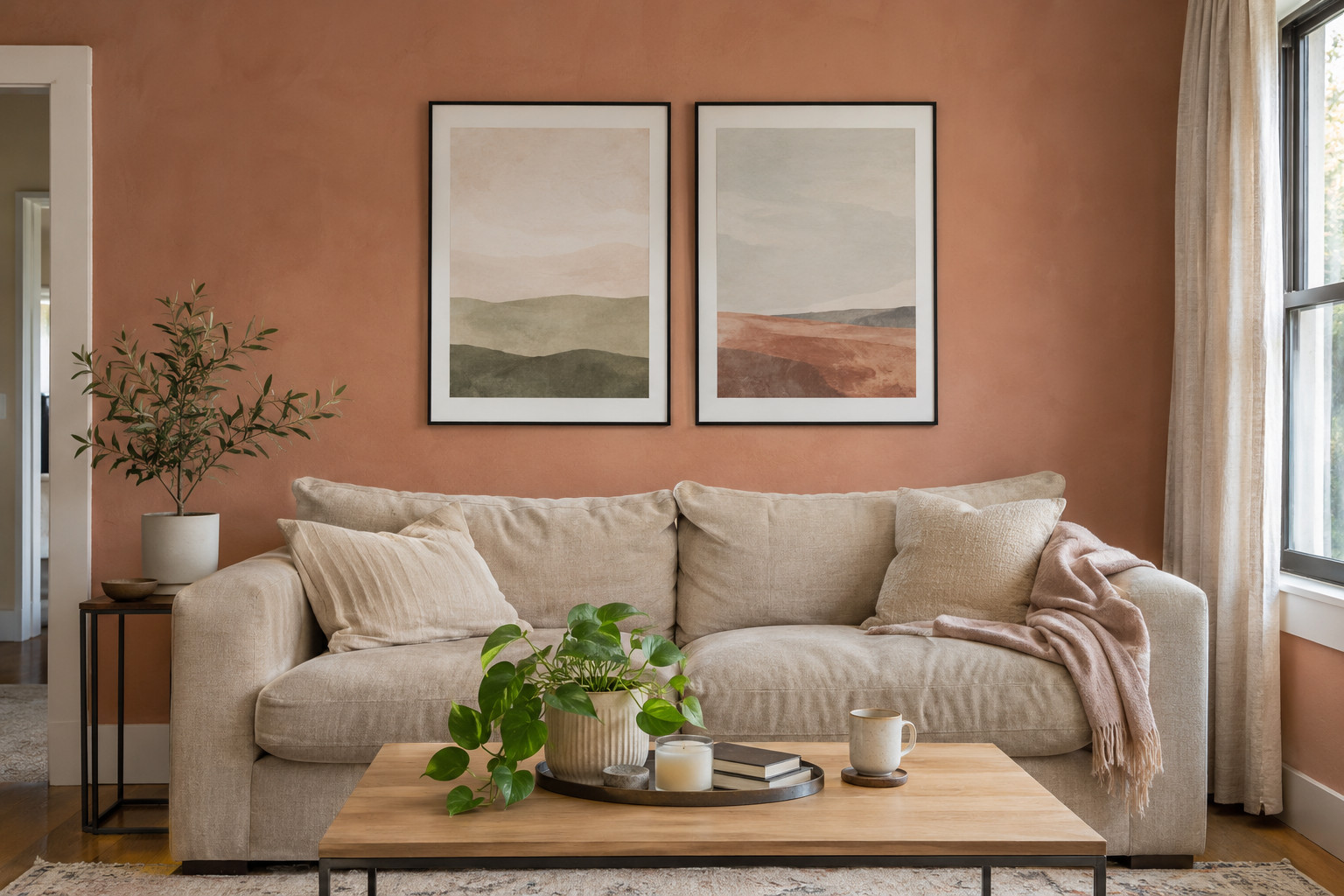
A wide, horizontal canvas over the sofa makes a wall feel wider and lower. A tall, narrow piece does the opposite. If the space above the sofa needs width, hang two vertical prints side by side, about 2 to 3 in (5 to 8 cm) apart, so the pair fills about two-thirds of the sofa but each piece still points up.
On a narrow wall, between a window and a corner for example, stack two frames one above the other with the same gap. Center the pair, not each frame, at eye level.
3. Go big with one piece instead of many small ones
 Save
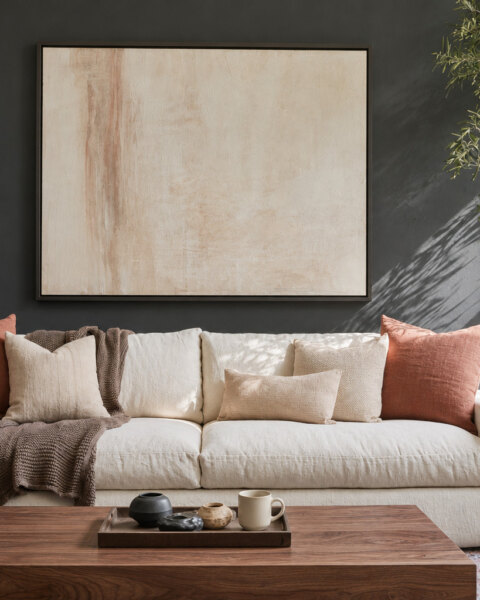
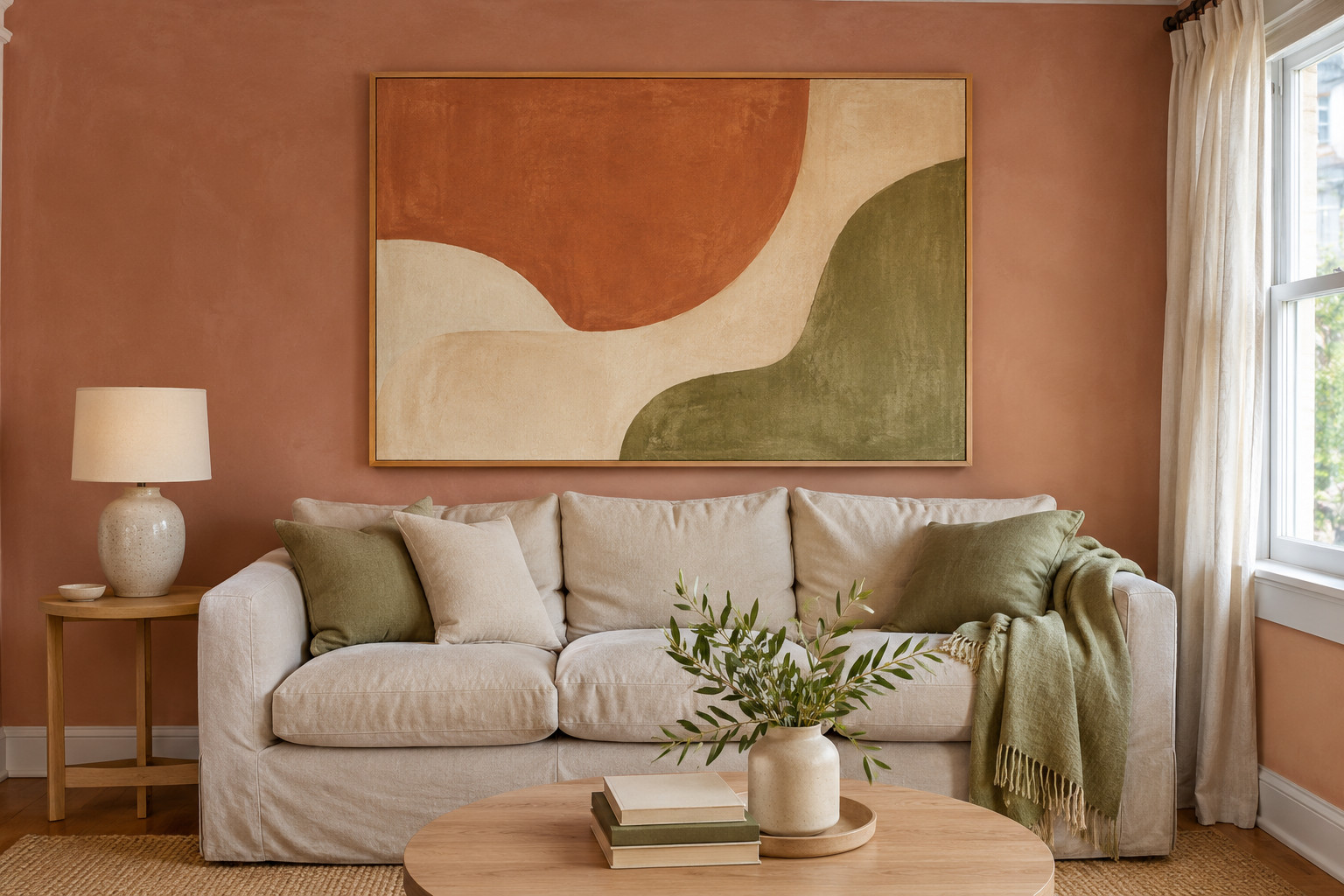
It sounds backwards, but a small room usually looks bigger with one large artwork than with ten small ones. Lots of little frames break the wall into busy pieces. A single oversized print or canvas gives the eye one place to rest, and the wall around it reads as calm, open space.
Honestly, if you are torn between two sizes, buy the bigger one. Large art is easier to find than it used to be. An oversized poster in a simple oak or black frame costs far less than an original and looks just as deliberate. Heavy frames belong on two hooks or a French cleat screwed into studs, never on a single nail above a sofa where people sit.
4. Use a tall mirror to bounce light and add depth
 Save
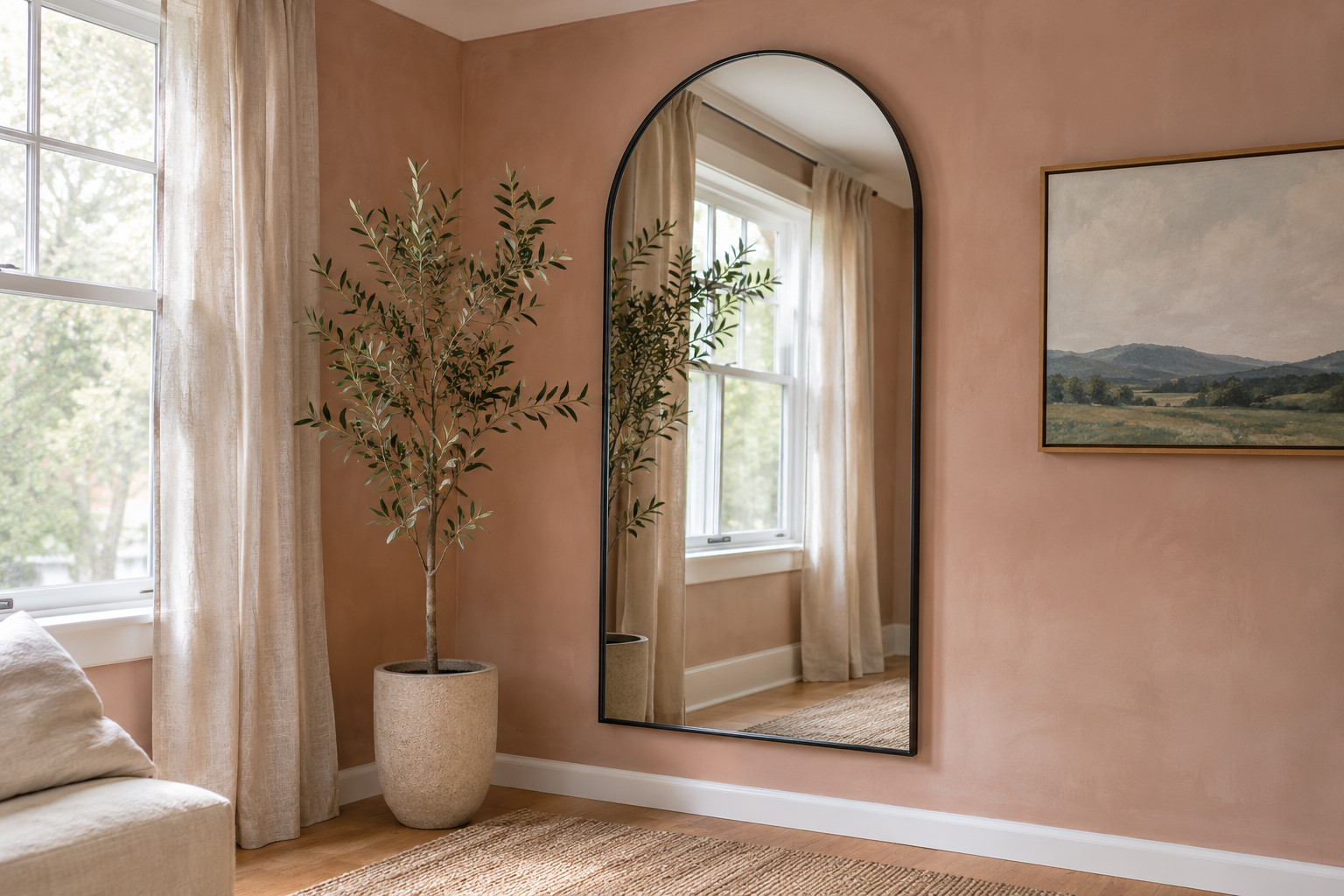
A tall arched or rectangular mirror does two jobs in a small living room. It reflects light from the window, and its height draws the eye up. Place it on a wall beside or opposite the window, where it catches daylight, rather than facing a blank wall.
Leaning a floor mirror looks relaxed, but it can slide or tip, especially with children or pets around. Secure the top to the wall with an anti-tip strap or a pair of mirror clips. The CPSC Anchor It campaign explains why tall, heavy pieces should always be fixed to the wall. Hanging it directly on the wall a few inches off the floor gives the same look with less risk.
5. Run shelves up the wall, not along it
 Save
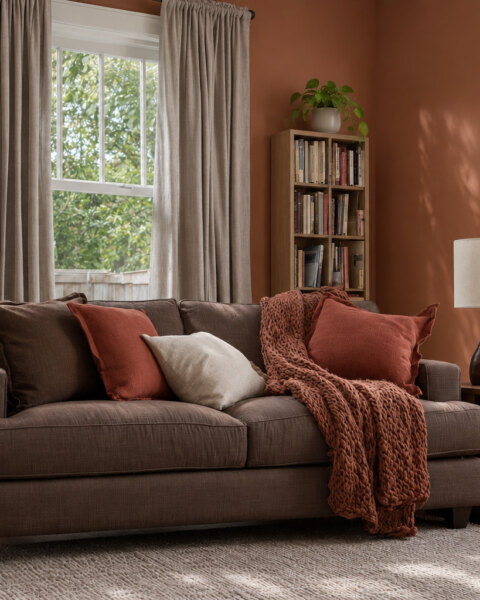
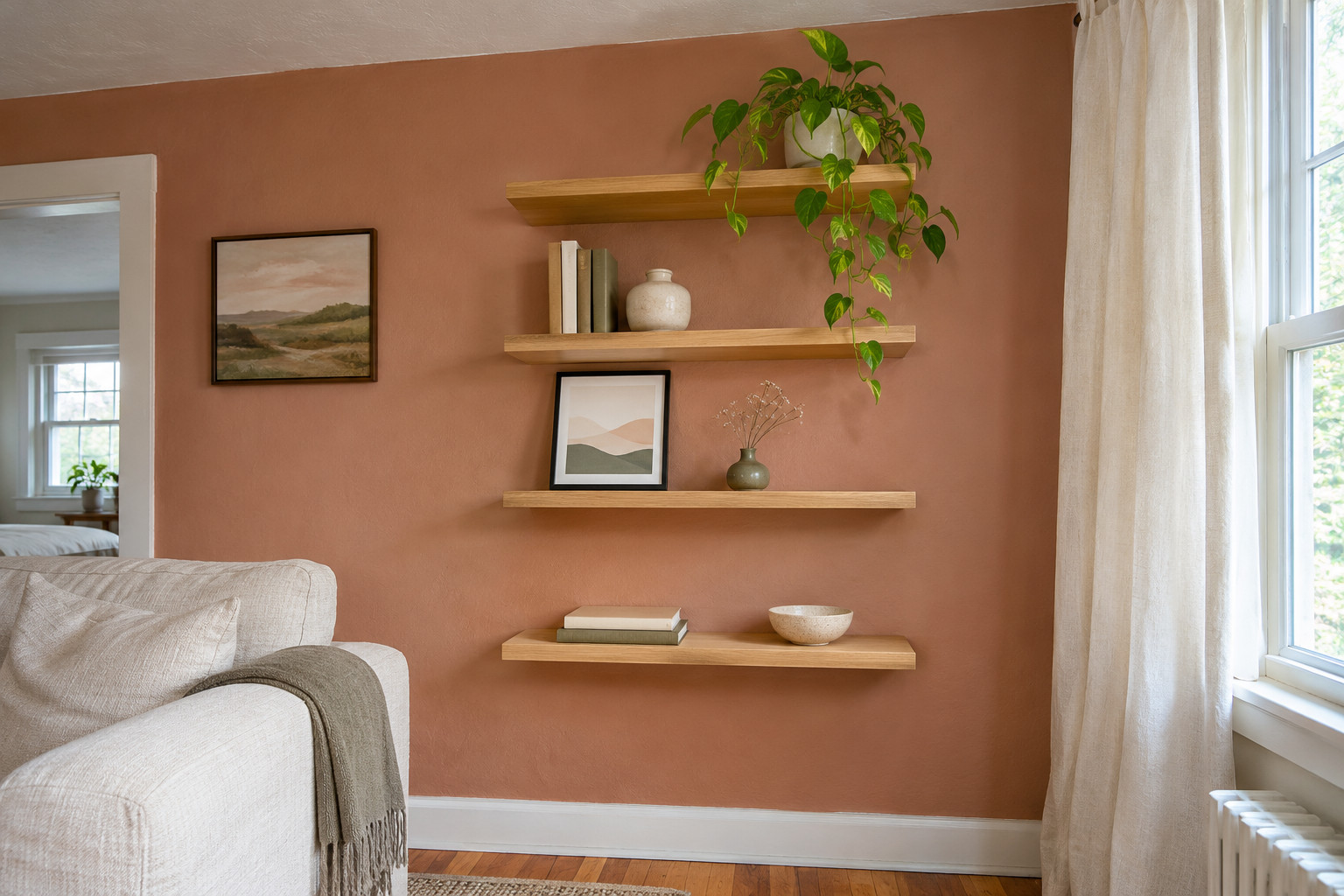
A long row of shelves draws a horizontal line across the room. Stack them instead. Three or four short floating shelves, 24 to 36 in (61 to 91 cm) wide and spaced 12 to 15 in (30 to 38 cm) apart vertically, turn a narrow stretch of wall into a tall display. A tall, slim bookcase does the same job with more storage.
Keep the styling light so the shelves do not look like clutter climbing the wall:
- A few books lying flat and a few standing, rather than full rows.
- One trailing plant on the top shelf, where it can hang down the side.
- Small framed prints leaning at the back.
- Some empty space on every shelf.
6. Add vertical paneling or paint the ceiling the same color
 Save
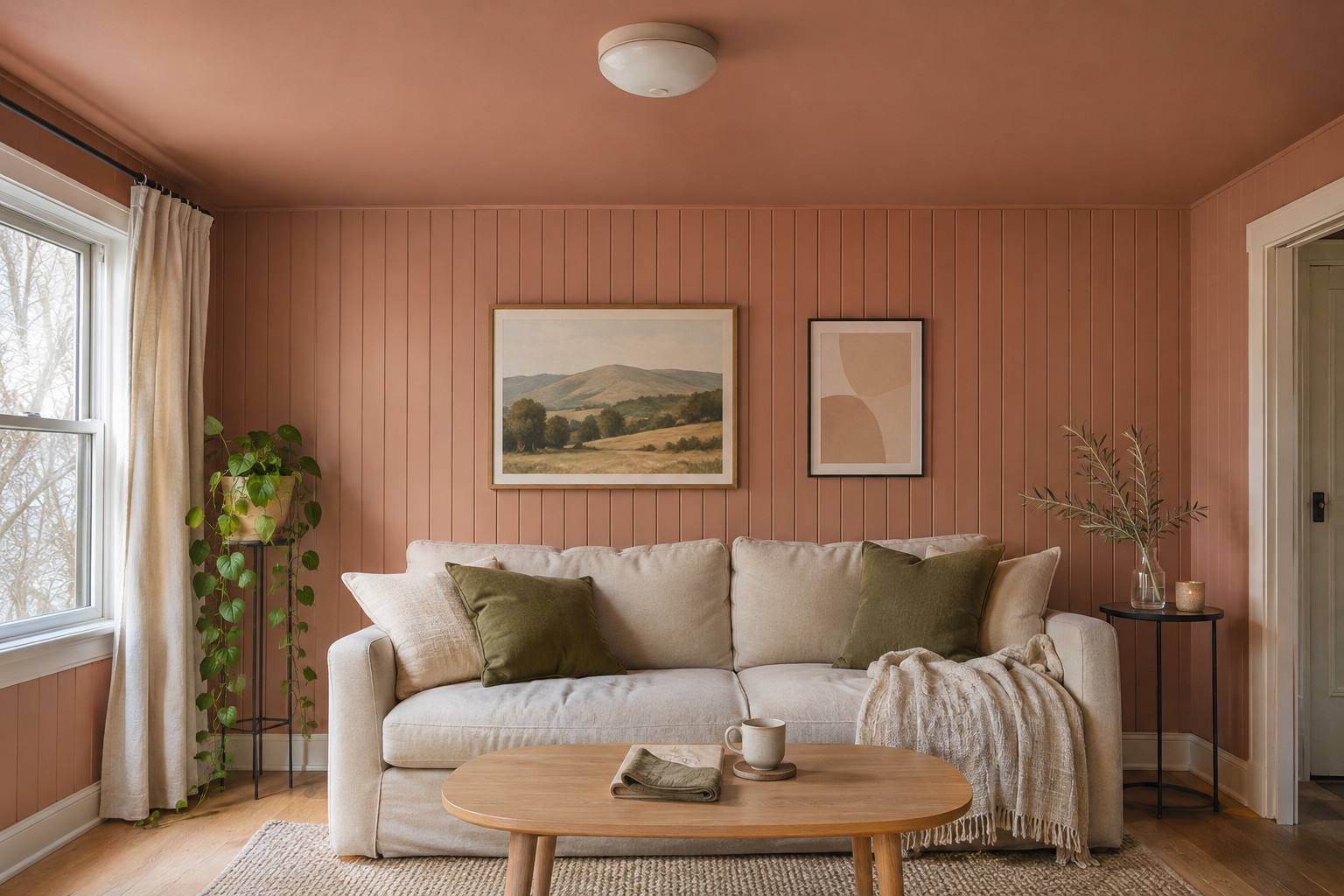
The walls themselves can add height. Vertical paneling, such as slim battens or tongue-and-groove boards running floor to ceiling, works like pinstripes on a suit. In a rental, peel-and-stick vertical wallpaper or a painted stripe gives a similar effect.
Another trick is to paint the ceiling the same color as the walls, or a shade lighter. Without a sharp line where wall meets ceiling, the eye cannot tell exactly where the room ends, and a low ceiling feels higher. This is the same idea as color drenching, which we cover in our guide to small laundry room color ideas. In a living room, soft mid-tones like warm clay, blush or sage work better than very dark colors.
7. Swap floor lamps for wall sconces
 Save
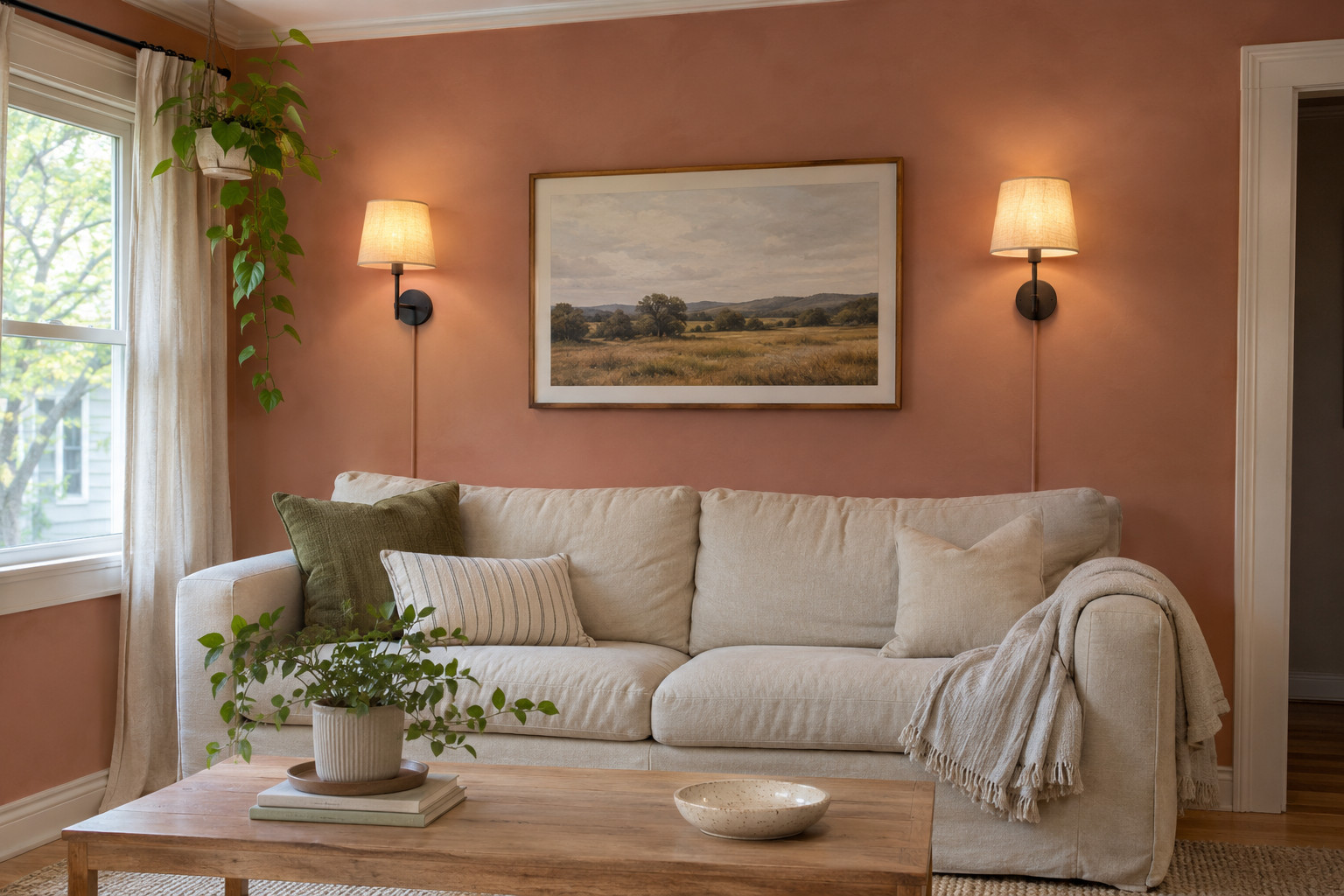
Every floor lamp takes up a small circle of floor. In a small living room, wall sconces give you the same light with none of the footprint, and they put light higher on the wall, which helps the room feel taller in the evening. Mount them about 60 to 66 in (152 to 168 cm) from the floor, either side of the sofa or a piece of art.
Plug-in sconces need no electrician. Run the cord down the wall in a paintable cord cover, the way we describe in our hallway wall decor guide, and paint the cover the wall color so it nearly disappears. Warm bulbs around 2700K keep the room cozy.
8. Leave some wall empty
 Save
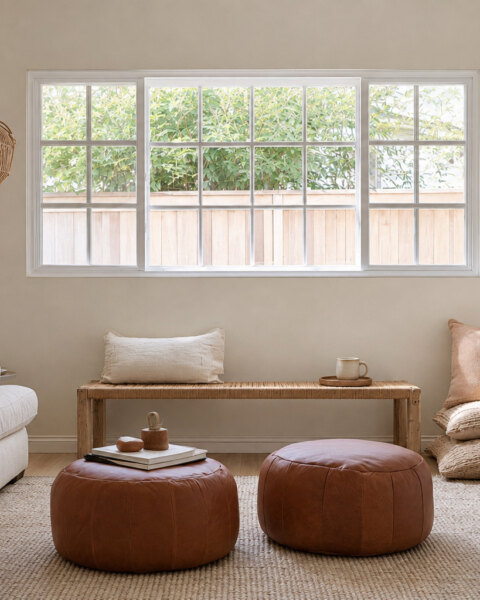
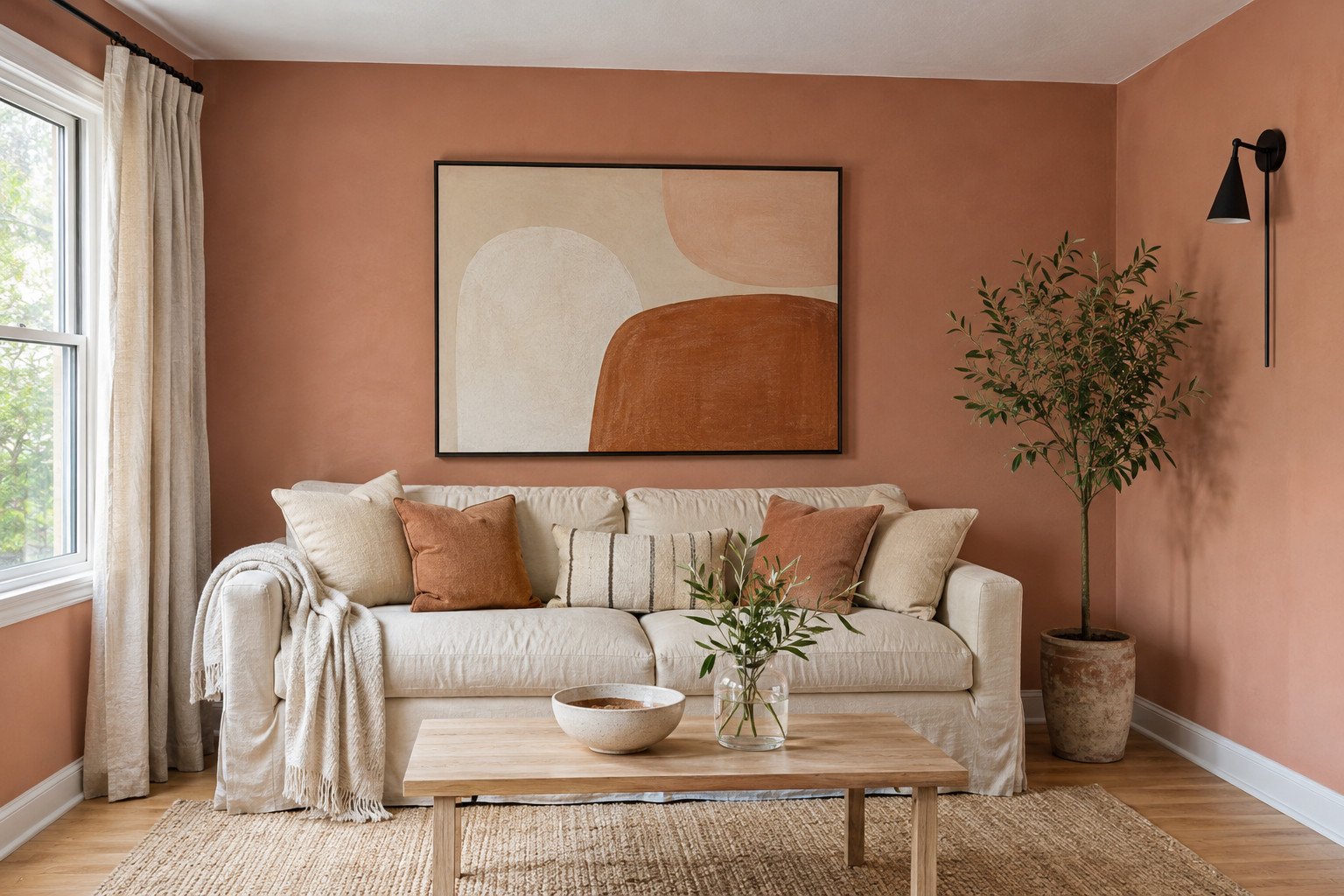
This is the idea most people skip. In a small room, every wall does not need something on it. A bare stretch of wall next to a strong focal point makes that focal point stand out and gives the room a little breathing space. Pick one or two walls to decorate properly and leave the rest mostly quiet, perhaps with just a sconce or a plant.
Mistakes that make a small living room feel lower
- Curtain rods right above the window frame. They cut the wall in half and make the ceiling look lower.
- Art that floats too high above the sofa. Keep it 8 to 10 in above the back so it connects to the furniture.
- A gallery wall of many tiny frames. In a small room it reads as clutter. Go bigger or group fewer pieces. Our small gallery wall ideas show layouts that do work.
- One long horizontal shelf at eye level. It draws a line across the room. Stack shelves vertically instead.
- A dark ceiling over light walls. It lowers the room visually. Keep the ceiling as light as or lighter than the walls.
Renting with plain white walls? These ideas for wall decor for white walls add warmth with only a few small nails.
Frequently asked questions
How do you decorate a small living room wall?
Choose one large piece or a vertical arrangement, hang it at the right height, add a tall mirror near the window and stack shelves vertically. Leave at least one wall fairly empty so the room does not feel crowded.
What wall decor makes a room look taller?
Curtains hung near the ceiling, tall vertical art, stacked frames, tall mirrors, vertical paneling and wall sconces all draw the eye up and make a room feel taller.
Should a small living room have a gallery wall?
It can, but keep it simple: fewer, larger frames in one consistent color, with equal gaps. A tall, narrow gallery works better than a wide one in a small room.
How big should art be over a small sofa?
About two-thirds of the sofa’s width. For a 72 in sofa, that means art or a group of frames roughly 48 in wide, hung 8 to 10 in above the sofa back.
Do mirrors make a small living room look bigger?
Yes, especially a tall mirror placed beside or across from a window, where it reflects daylight and draws the eye up. Secure leaning mirrors to the wall.
Begin with the curtains
If you only change one thing this weekend, move the curtain rod up to just under the ceiling and buy longer panels. Then stand in the doorway and look at the room. Most people are surprised how much taller it feels. After that, check the art over the sofa against the two-thirds rule. For where the sofa itself should go, see our small living room sofa arrangement guide. For more ideas for the rest of the room, browse our living room decor ideas, or see how to set up a home office den if your living room also has to be a workspace.