How to Decorate a Hallway Wall: Art, Mirrors and Shelves
Wall-only hallway ideas with the hanging heights that make them look right, from gallery walls and picture ledges to mirrors, sconces and two-tone paint.
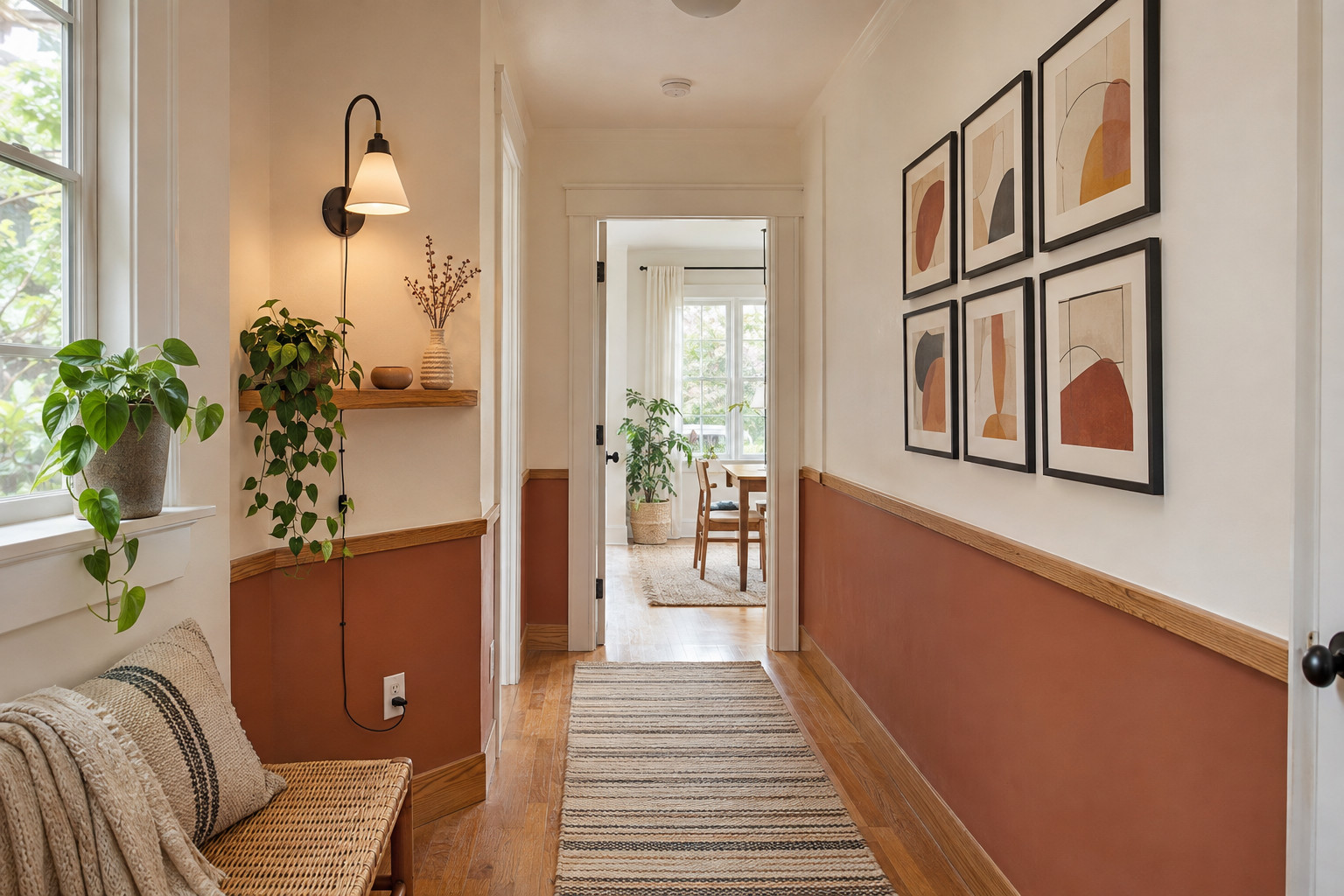
Hallways are the walls everyone walks past and nobody decorates. They are narrow, often dark, interrupted by doors and switches, and anything you hang there gets viewed from about three feet away. That changes the rules of decorating a hallway wall a little. The ideas below are all wall-only, so nothing eats into the walkway, and each one comes with the hanging height that makes it look right.
Quick answer: To decorate a hallway wall, hang art so its center sits about 57 to 60 in (145 to 152 cm) from the floor, run a gallery of frames along one shared center line, use shallow picture ledges and mirrors that stay flat to the wall, add slim sconces for light, and use paint or paneling for color. In a hallway narrower than 42 in (107 cm), keep everything within about 4 in (10 cm) of the wall.
In this article
- How to decorate a hallway wall: start with the width
- 1. Hang art at eye level, not “somewhere up there”
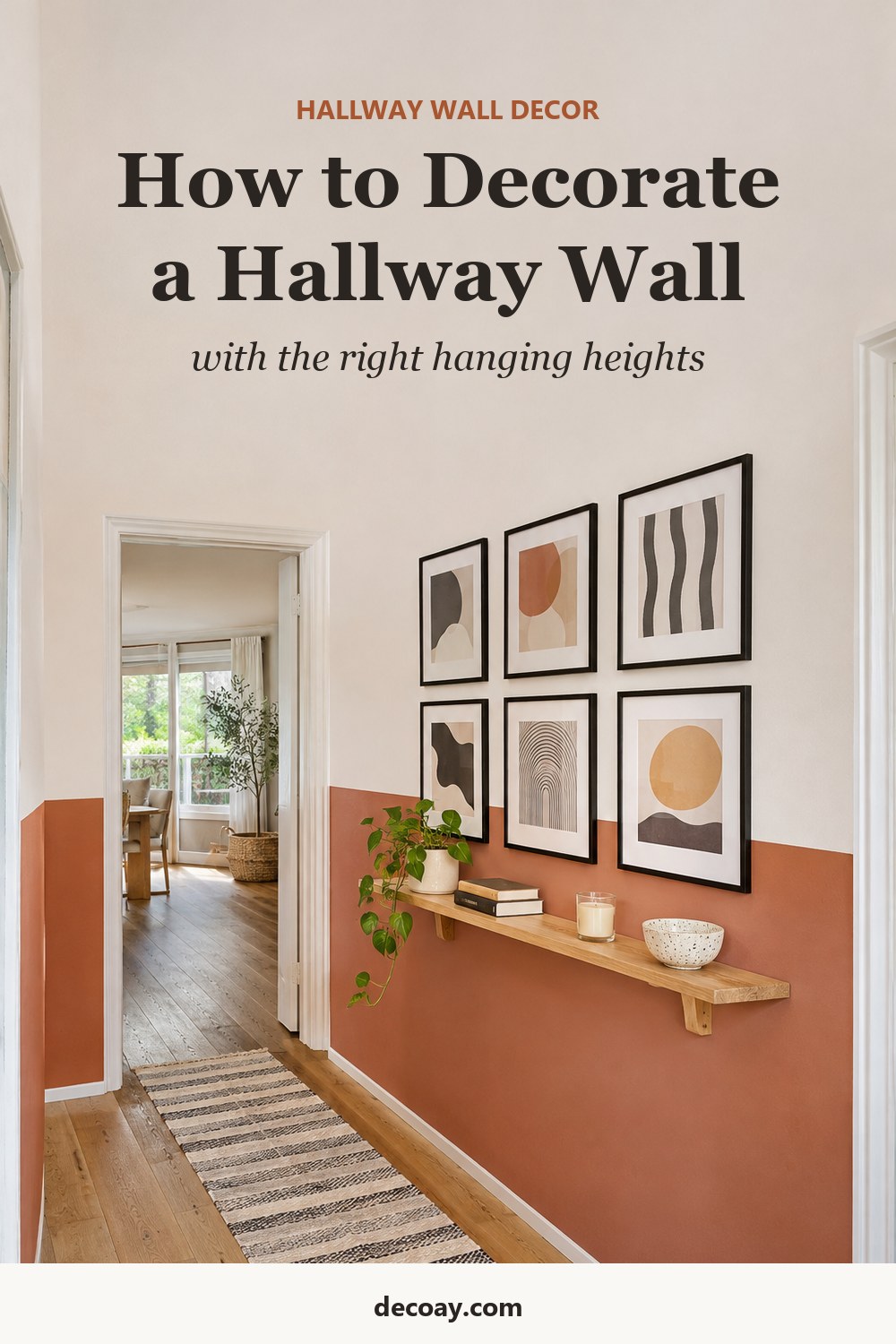
- 2. Run a gallery wall along one center line
- 3. Use picture ledges when you like to change things
- 4. Put a mirror where it can pull in light
- 5. Light the wall with slim sconces
- 6. Add color with paint or paneling
- 7. Add one narrow shelf where the hallway is wide enough
- 8. Make the entry end useful with hooks and a peg rail
- 9. Give the end wall one strong piece
- Hallway wall decor mistakes to avoid
- Frequently asked questions
- Start with one wall
How to decorate a hallway wall: start with the width
Before you buy anything, measure the hallway from wall to wall. Most homes have hallways between 36 and 48 in wide, and the number decides how far your decor can stick out.
| Hallway width | What fits on the wall | What to skip |
|---|---|---|
| 36 in (91 cm), the usual minimum | Flat art, mirrors, picture ledges up to 4 in deep, slim sconces, paint and paneling | Shelves, consoles, anything you might bump with a shoulder or a laundry basket |
| 42 in (107 cm) | All of the above, plus a peg rail and one narrow shelf up to 6 in (15 cm) deep | Furniture on the floor |
| 48 in (122 cm) or more | All of the above, plus a slim console 10 to 12 in (25 to 30 cm) deep | Deep cabinets and big planters in the middle of the run |
The 4 in figure is not random. Accessibility guidelines treat anything mounted between 27 and 80 in high that sticks out more than 4 in as a hazard in a walkway, because people with limited vision cannot detect it with a cane (see section 307 of the ADA Standards). Your home is not a public building, but it is a sensible rule for a narrow corridor.
1. Hang art at eye level, not “somewhere up there”
 Save
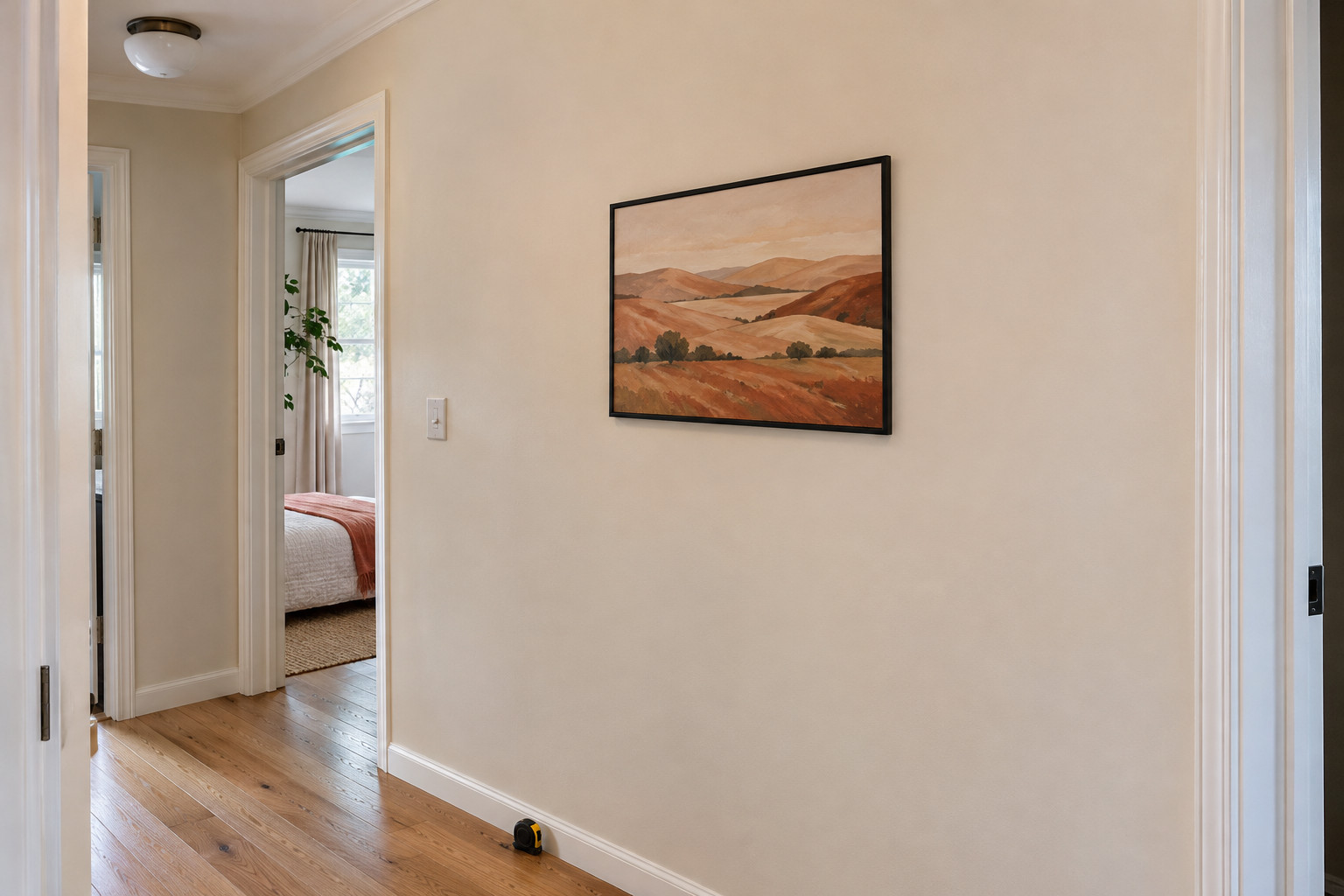
The most common hallway mistake is art hung too high. Galleries hang pictures so the center sits at about 57 to 60 in from the floor, which is roughly average eye level, and that works in a hallway too. For a frame that is 20 in tall, the top lands at about 67 to 70 in and the bottom at about 47 to 50 in.
Because people see hallway art up close, pick pieces that reward a closer look: botanical prints, photographs, small paintings, maps. A huge canvas you can only take in from ten feet back is wasted in a corridor. Use two hooks or two D-rings per frame so it stays level when someone brushes past.
2. Run a gallery wall along one center line
 Save
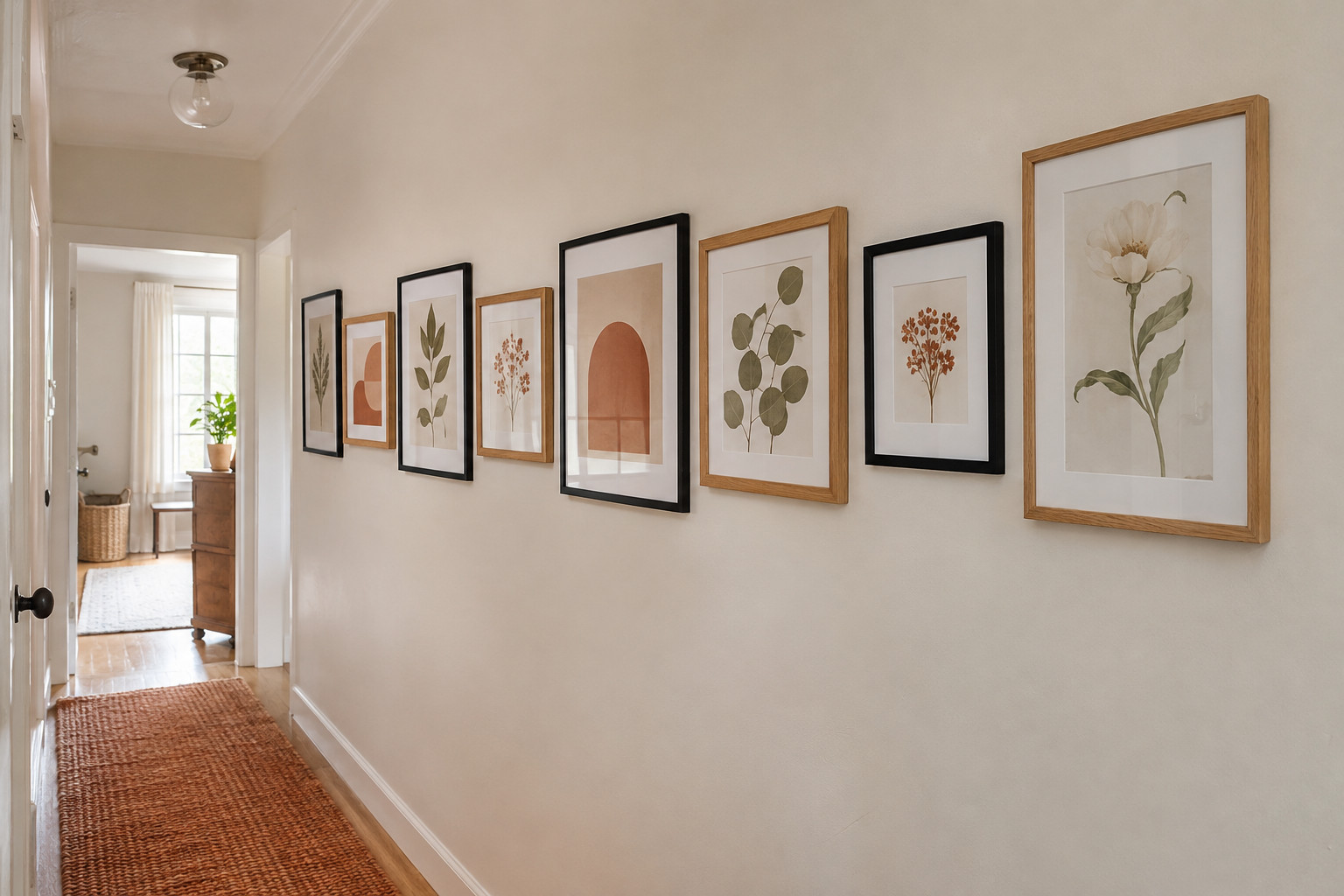
A hallway is a natural place for a long, low gallery that you walk alongside. The trick that keeps it from looking random is a shared horizontal center line. Here is the order to work in:
- Pick a center height, usually 57 to 60 in, and mark it lightly in pencil along the wall.
- Lay the frames out on the floor first and play with the order until it flows. Mix sizes, but repeat one frame color.
- Keep the gaps the same everywhere, about 2 to 3 in (5 to 8 cm).
- Stop 6 to 12 in (15 to 30 cm) short of door frames and corners so the wall can breathe.
- Cut paper templates of each frame, tape them up and live with them for a day before you put in a single nail.
Black or oak frames with white mats are the easiest way to make mismatched art look like a set. If the hallway has several doors, treat each stretch of wall between them as its own small group rather than forcing one long line across the doorways.
3. Use picture ledges when you like to change things
 Save
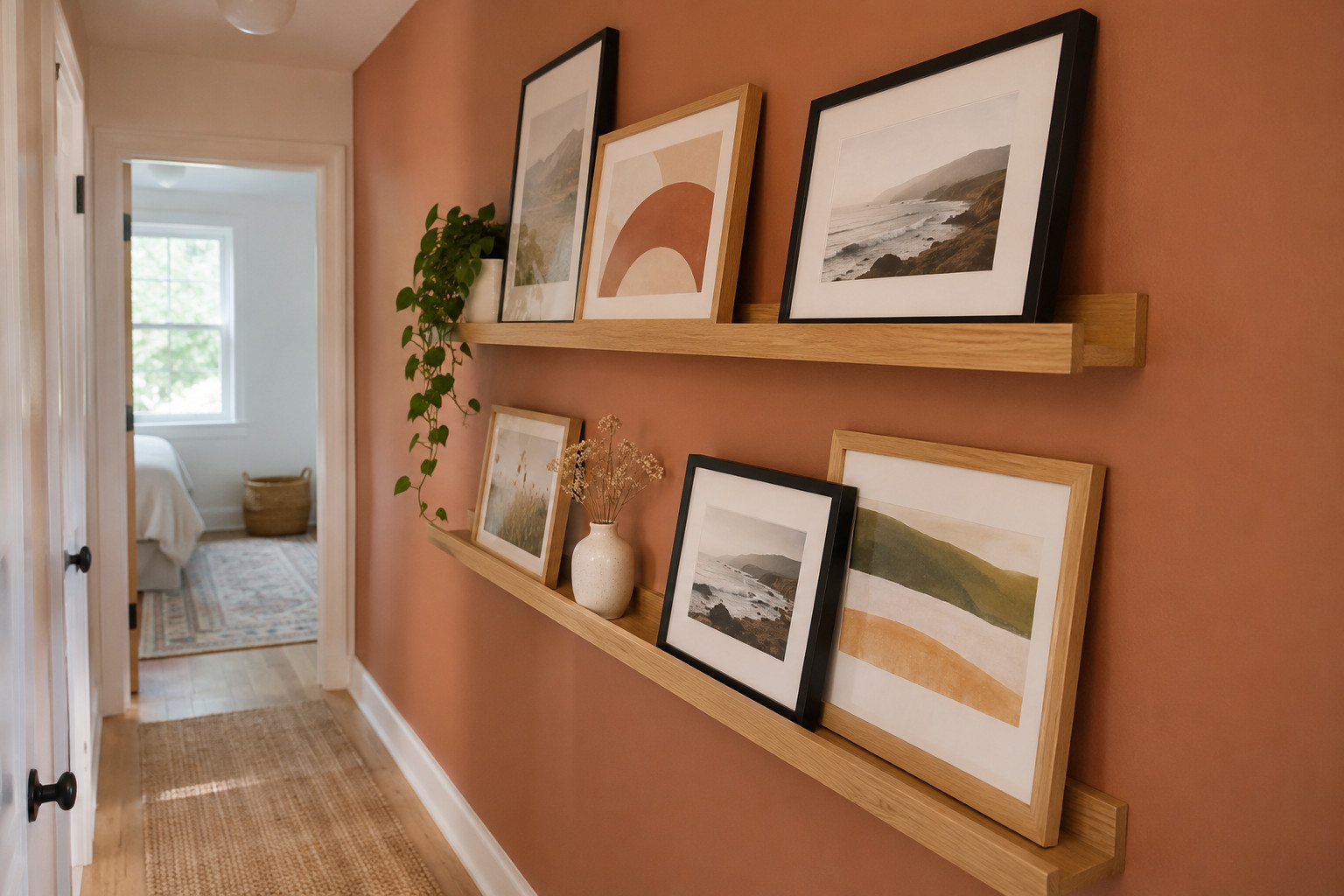
Picture ledges are shallow shelves, usually 3.5 to 4.5 in (9 to 11 cm) deep, with a lip that stops frames from sliding off. In a hallway they solve two problems at once: they stay within the 4 in limit, and you can swap art without making new holes in the wall.
Hang one ledge at about 50 to 55 in, or two ledges stacked about 14 to 18 in apart if you want a fuller look. Lean frames of different heights so they overlap a little, and add one small object, such as a ceramic vase or a candle in a holder, to break up the rectangles. Screw the ledge into studs or rated anchors. A full row of glass frames is heavier than it looks.
4. Put a mirror where it can pull in light
 Save
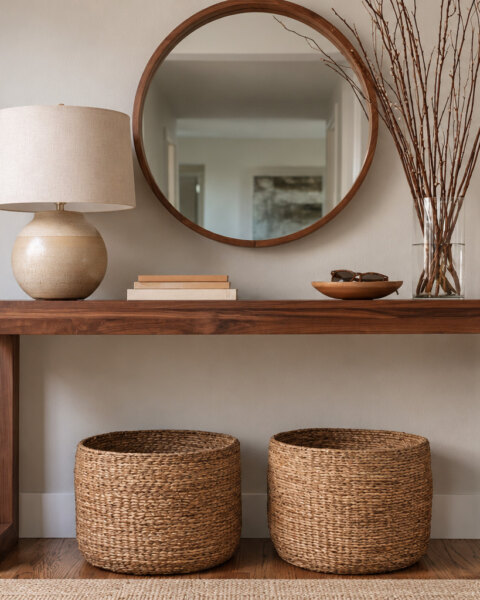
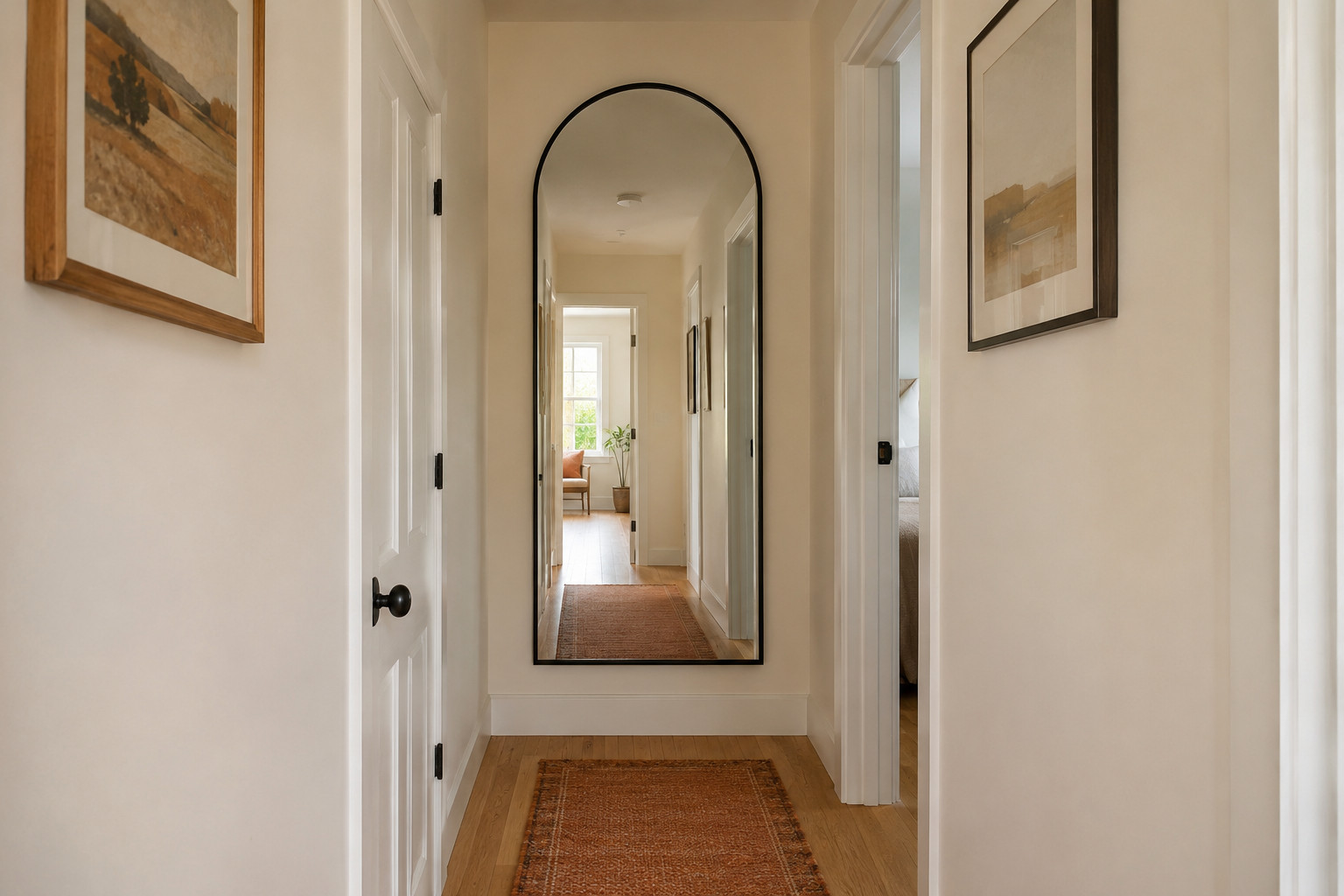
Hallways rarely have their own windows, so a mirror does a lot of work here. On the end wall it makes the hallway look longer. On a side wall opposite a doorway or a window it bounces daylight back into a dark stretch. A tall, slim mirror is usually better than a wide one in a corridor because it suits the proportions of the space.
Mirrors are heavy for their size. Hang them on a French cleat or on hardware rated for at least twice the weight, and into studs where you can. Never rely on a single nail, and do not lean a tall mirror on the floor in a hallway, where it will get knocked.
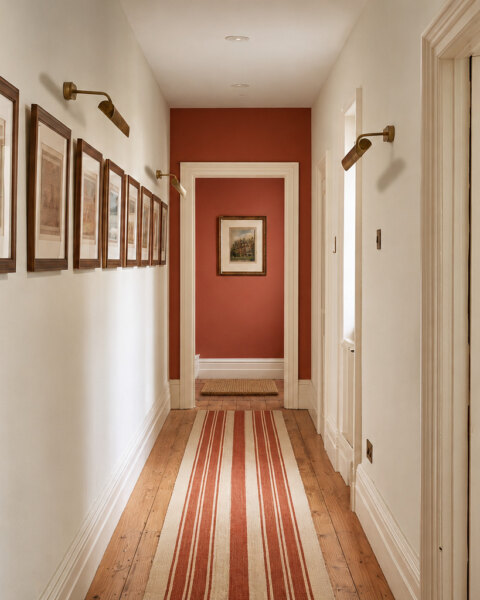
5. Light the wall with slim sconces
 Save
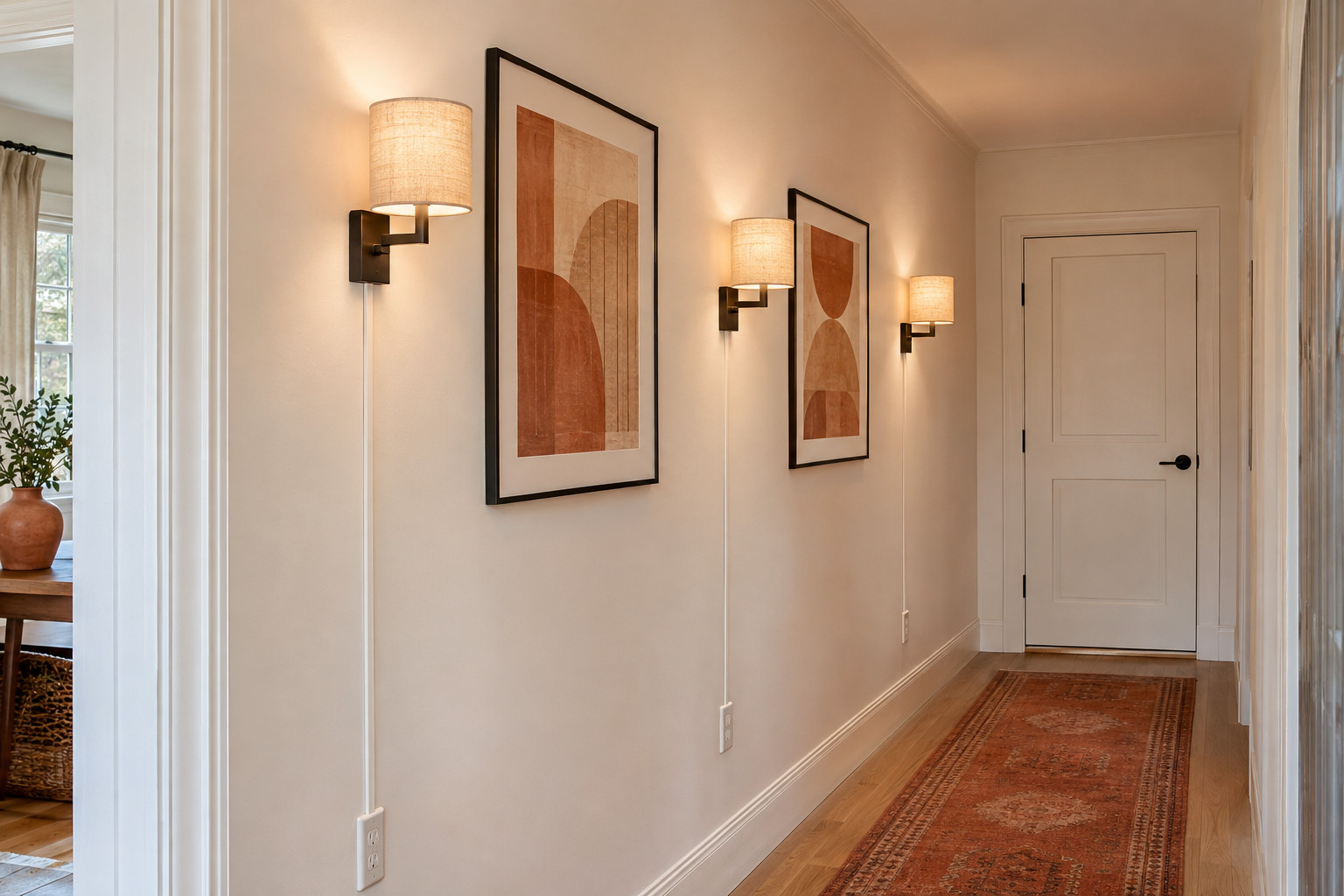
A single ceiling light leaves hallway walls flat and art in shadow. Wall sconces fix both, and plug-in versions mean no new wiring: run the cord through a cord cover painted the wall color and it nearly disappears. Choose fixtures that project about 4 in or less in a narrow hallway.
Mount them at roughly 60 to 66 in (152 to 168 cm) from the floor and space them about every 8 ft (2.4 m) along a long wall. Warm bulbs around 2700 to 3000K keep the hallway from feeling like an office corridor. If you have one standout piece of art, a slim picture light above it is a nice touch.
6. Add color with paint or paneling
 Save
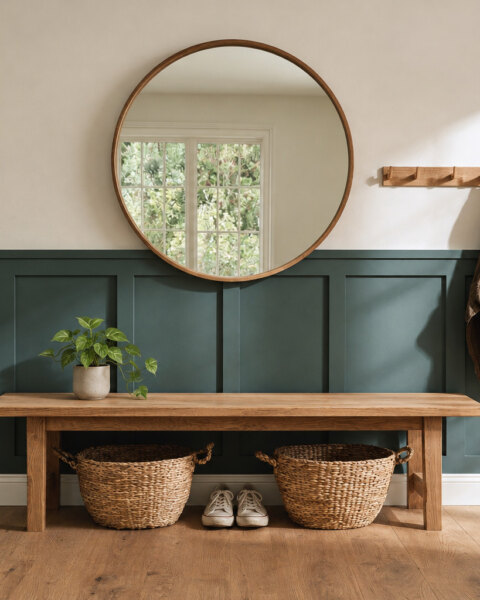
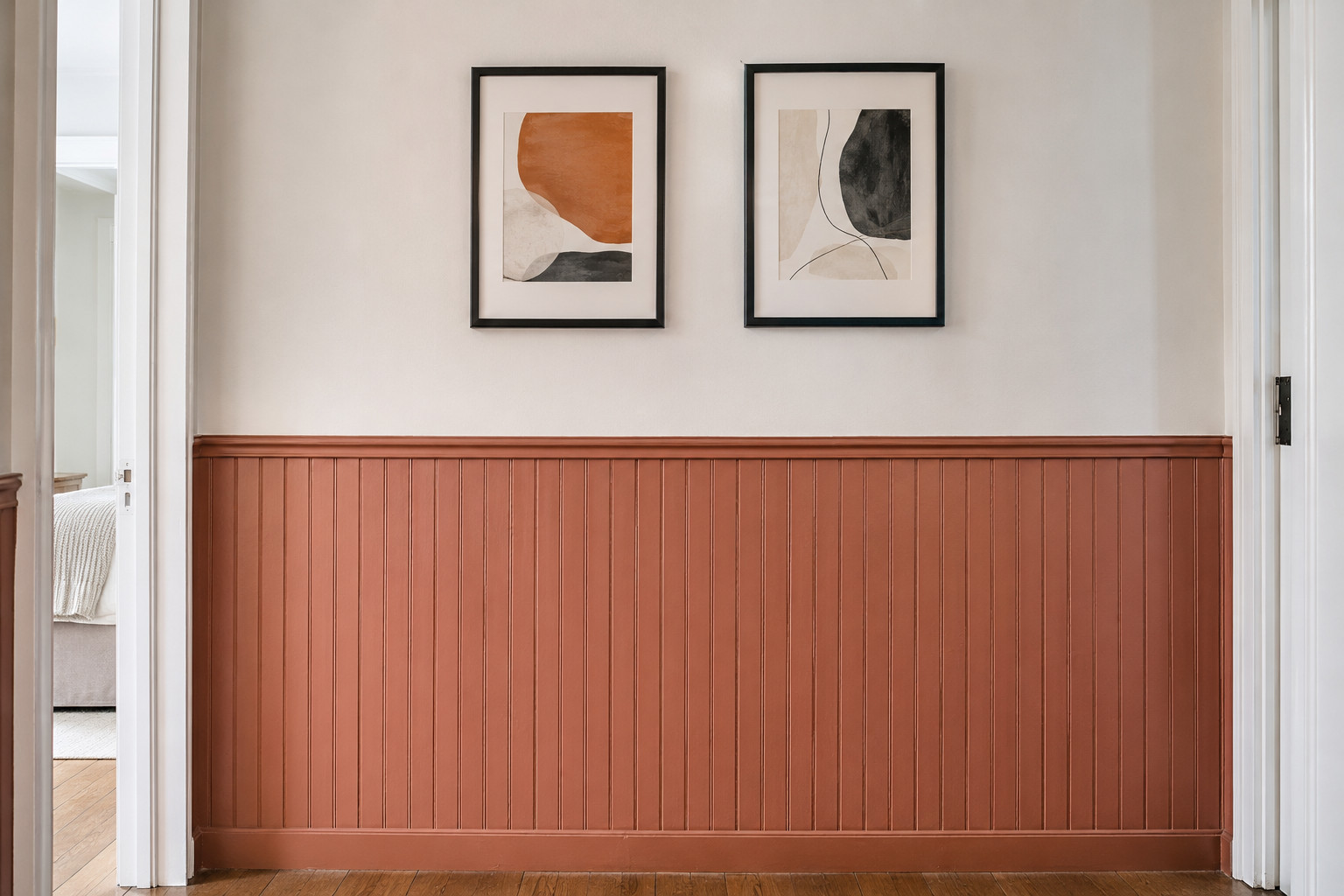
Sometimes the best hallway wall decor is the wall itself. Paint the lower third in a deeper color, such as clay, olive or navy, and the upper part in a lighter shade. The line usually sits at 32 to 36 in (81 to 91 cm), often marked with a slim chair rail. The darker lower half also hides scuffs from bags and shoes, which hallways collect quickly.
Beadboard or simple board-and-batten paneling on the lower part does the same job with more texture. It is a realistic weekend project with a miter saw, construction adhesive and a nail gun. If you rent, a two-tone paint job is easy to undo, and peel-and-stick wallpaper above a painted lower half is another option. We used beadboard in an entryway in our cottage style decor guide if you want to see the look in a softer palette.
7. Add one narrow shelf where the hallway is wide enough
 Save
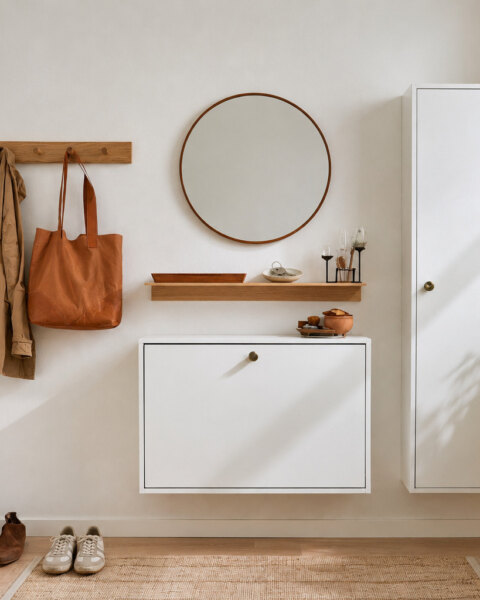
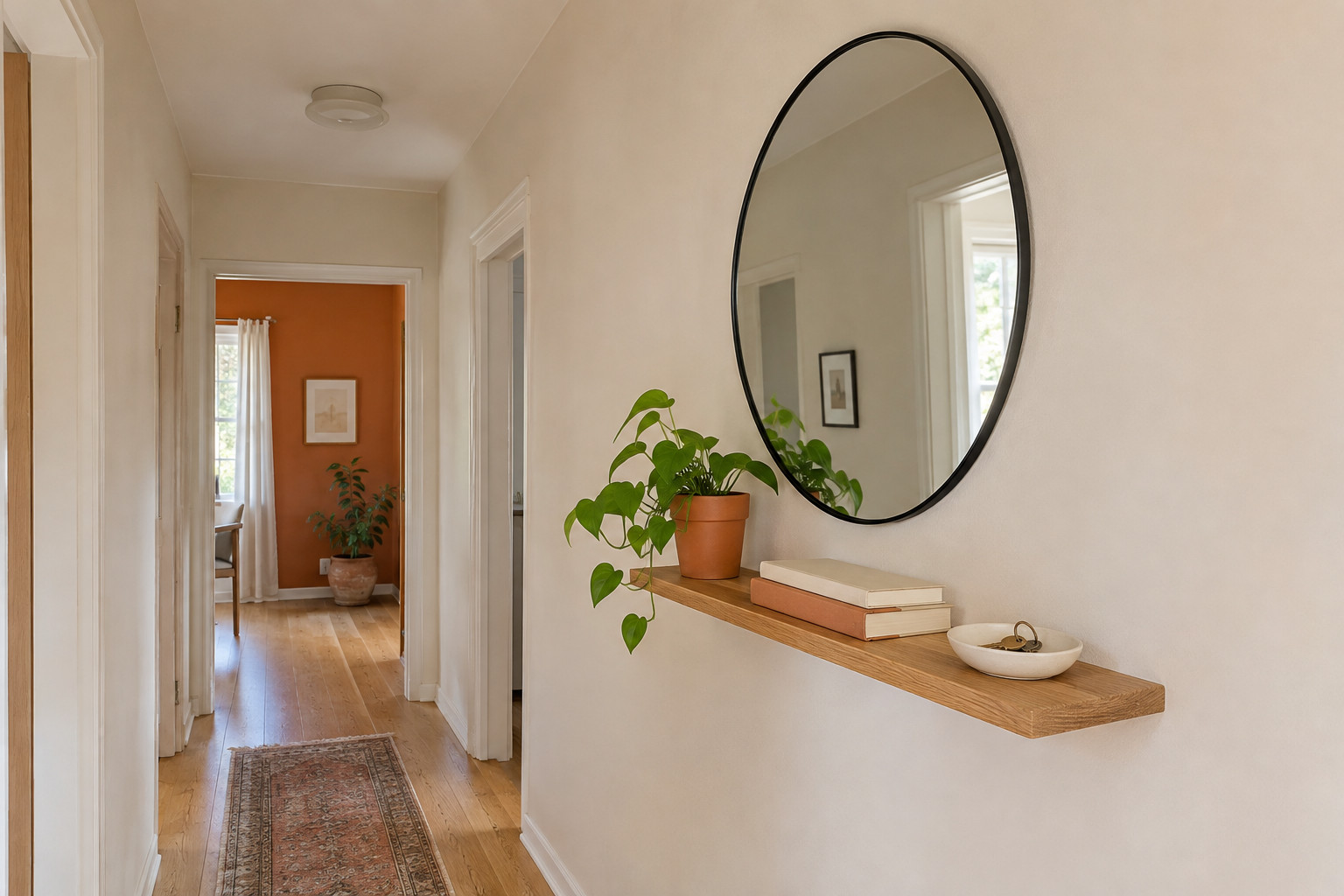
In a hallway of 42 in or more, a single floating shelf about 6 in deep, mounted at 34 to 40 in (86 to 102 cm), works like a mini console. It holds keys, a small plant and a book or two without stealing floor space. Add a round mirror above it and you have a landing spot by the front door. In a 36 in hallway, skip it. You will catch your hip on it within a week.
8. Make the entry end useful with hooks and a peg rail
 Save
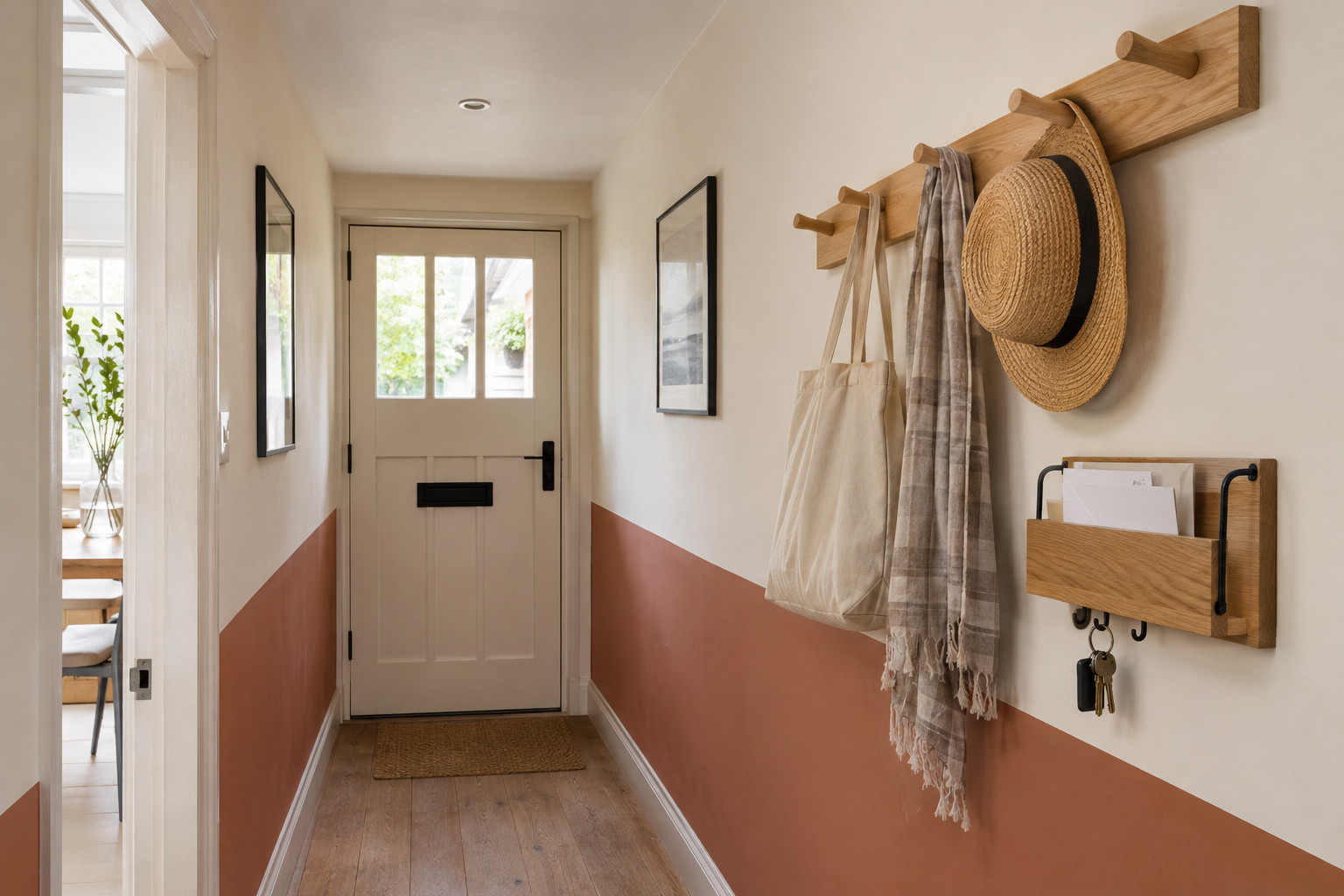
Where the hallway meets the front door, the wall should work as hard as it looks. A Shaker-style peg rail at about 60 to 66 in high takes coats, bags and hats, and the pegs themselves look good even when they are empty. Below it, a slim wall-mounted holder for mail and keys keeps the clutter off the floor.
- Allow about 8 to 10 in (20 to 25 cm) between hooks so coats do not pile on top of each other.
- Kids’ hooks can go lower, around 40 to 48 in, on the same wall.
- Pegs and hooks stick out, so keep them to hallways of 42 in or wider, or to the entry area itself.
9. Give the end wall one strong piece
 Save
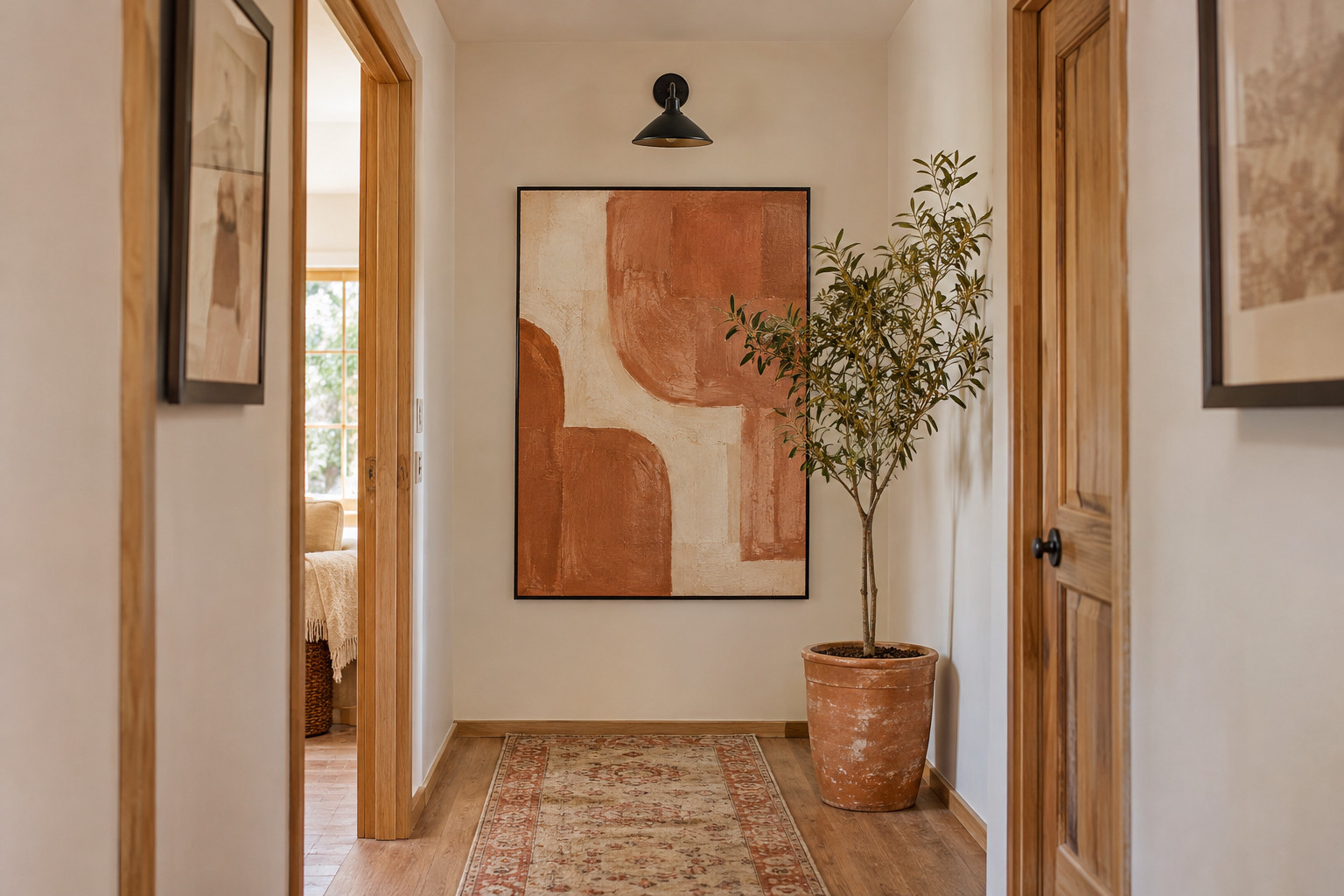
The wall at the end of a hallway is the one you look straight at as you walk toward it, so it deserves the boldest piece you own. One large artwork centered at eye level, a big mirror or a striking wallpaper panel works far better here than several small frames. If there is floor space in front of it, a tall plant in a heavy pot adds life without blocking the way. Keep it simple: one focal point, lit well, and the whole hallway feels finished.
Hallway wall decor mistakes to avoid
- Art hung too high. If you have to tilt your head back, bring it down to the 57 to 60 in center line.
- Too many tiny frames scattered everywhere. Group them, or go bigger. Random small pieces read as clutter in a narrow space.
- Things that stick out. Deep shelves, chunky sconces and hooks in a 36 in hallway turn into shoulder bumpers.
- Ignoring light switches and thermostats. Plan the gallery around them, or include them as part of the grid so they look intentional.
- Light-colored walls that scuff. Use a washable eggshell or satin finish, or a darker lower half.
Working with a long, tight corridor? See how to decorate a long narrow hallway so it feels wider.
Frequently asked questions
How high should you hang pictures in a hallway?
Hang them so the center of the picture, or the center of a group, sits about 57 to 60 in (145 to 152 cm) from the floor. That is average eye level, and it works even in narrow hallways where people stand close to the art.
What can I put on a long hallway wall?
A gallery of frames along one center line, picture ledges, a series of sconces, a two-tone paint job or paneling, and a large mirror or artwork on the end wall. In wider hallways you can add a narrow shelf or a peg rail.
How do I decorate a narrow hallway wall without making it feel smaller?
Keep everything flat to the wall, ideally within 4 in. Use light colors on the upper wall, a mirror to bounce light, and one consistent frame color so the decor reads as a single calm line rather than lots of separate pieces.
Should hallway frames all match?
They do not have to, but repeating one frame color, such as black or oak, makes mixed art look intentional. Keeping the gaps equal matters more than matching the frames.
Are mirrors a good idea in a hallway?
Yes. A mirror on the end wall makes a hallway look longer, and one opposite a doorway or window brings in light. Hang it securely on a cleat or rated hardware, never on a single nail.
Start with one wall
Pick the longest stretch of hallway wall, decide on your center line and hang one group of frames or one ledge there. Add a sconce, then live with it for a week before you decide whether the rest of the hallway needs more. Most hallways look best with one strong idea per wall rather than every idea at once. If the hallway starts at a tiny front door, see our small entryway decor ideas. For more entry and hallway ideas, see our entryway and hallway decor section.