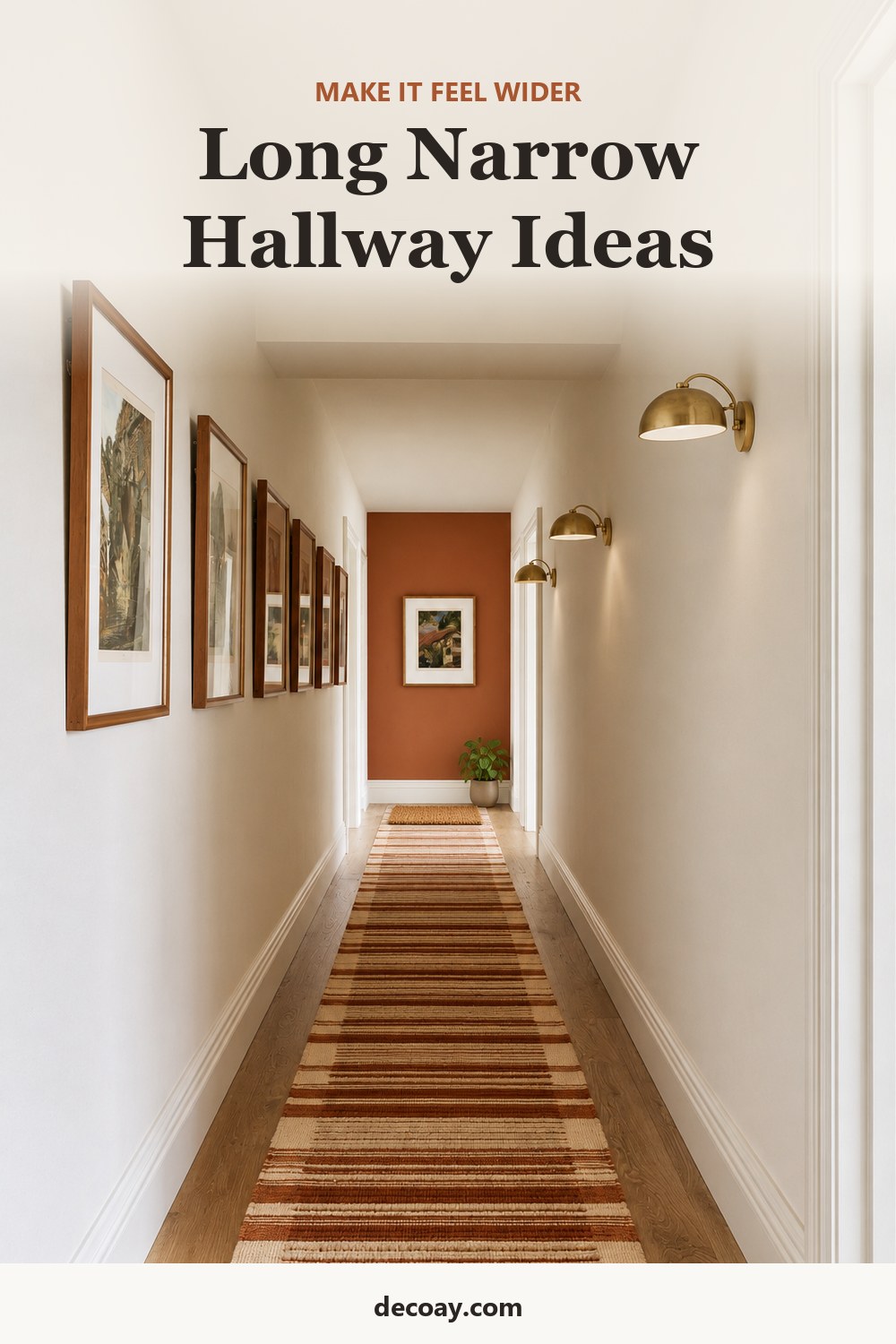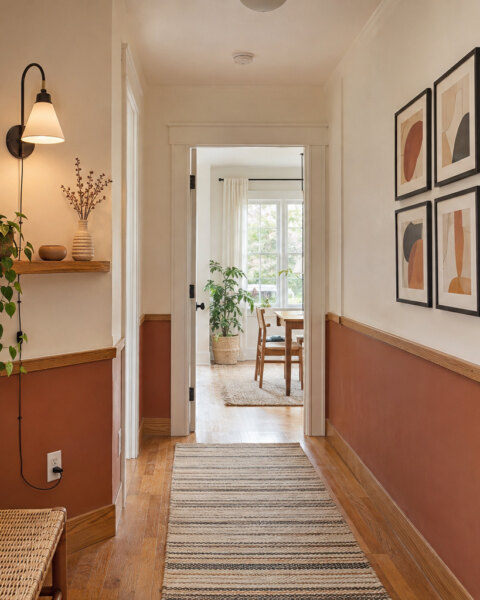
How to Decorate a Long Narrow Hallway (8 Ideas That Make It Feel Wider)
8 narrow hallway decorating ideas with runner sizes, art heights and lighting that make the space feel wider.
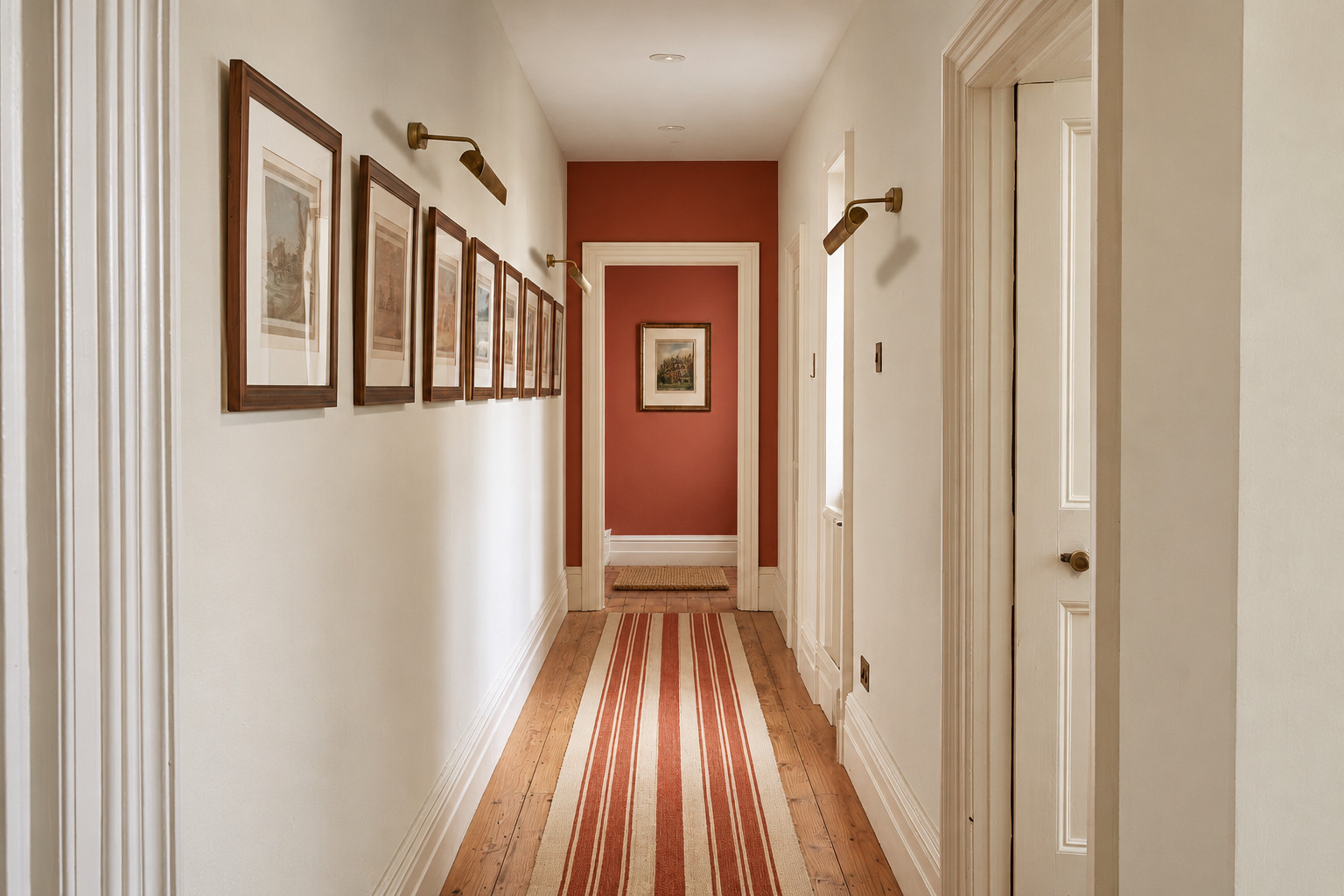
A long, narrow hallway is a strange space to decorate. It is too tight for furniture, often has no window, and the walls are so close that anything you hang is seen from an awkward angle. Most people leave it bare or line it with family photos and hope for the best. If you are wondering how to decorate a long narrow hallway so it feels wider and less like a tunnel, the answer is mostly about light, lines and what happens at the far end, not about adding more things.
Quick answer: To make a long narrow hallway feel wider, paint the walls a light warm color, lay a long runner that leaves about 4 to 6 in (10 to 15 cm) of floor on each side, hang a large mirror on one long wall, space art evenly in one line at eye level, swap ceiling lights for flat wall sconces, paint the end wall a deeper color, add a shallow picture ledge and use horizontal lines such as a painted lower half or paneling. Keep anything on the walls within 4 in (10 cm) of the wall surface.
In this article
- Narrow hallway measurements to know
- 1. Paint the walls a light, warm color
- 2. Lay a long runner
- 3. Hang a large mirror on one long wall
- 4. Space art evenly in one line
- 5. Light it with flat wall sconces
- 6. Paint the end wall a deeper color
- 7. Add a shallow picture ledge
- 8. Use horizontal lines
- What to leave out of a narrow hallway
- Frequently asked questions
- Start at the far end
Narrow hallway measurements to know
| Measurement | Typical value |
|---|---|
| Minimum hallway width under the US residential code | 36 in (91 cm) |
| Floor visible on each side of a runner | 4 to 6 in (10 to 15 cm) |
| Gap at each end of the runner | 6 to 12 in (15 to 30 cm) |
| Center of art above the floor | 57 to 60 in (145 to 152 cm) |
| Wall sconce height | about 66 in (168 cm) |
| Maximum depth of wall items in a walkway | 4 in (10 cm) |
The 4 in (10 cm) limit comes from accessibility guidance for walkways: wall-mounted objects that stick out further at body height are easy to walk into, especially in the dark. It is a good rule for any home hallway, even where it is not required.
1. Paint the walls a light, warm color
 Save
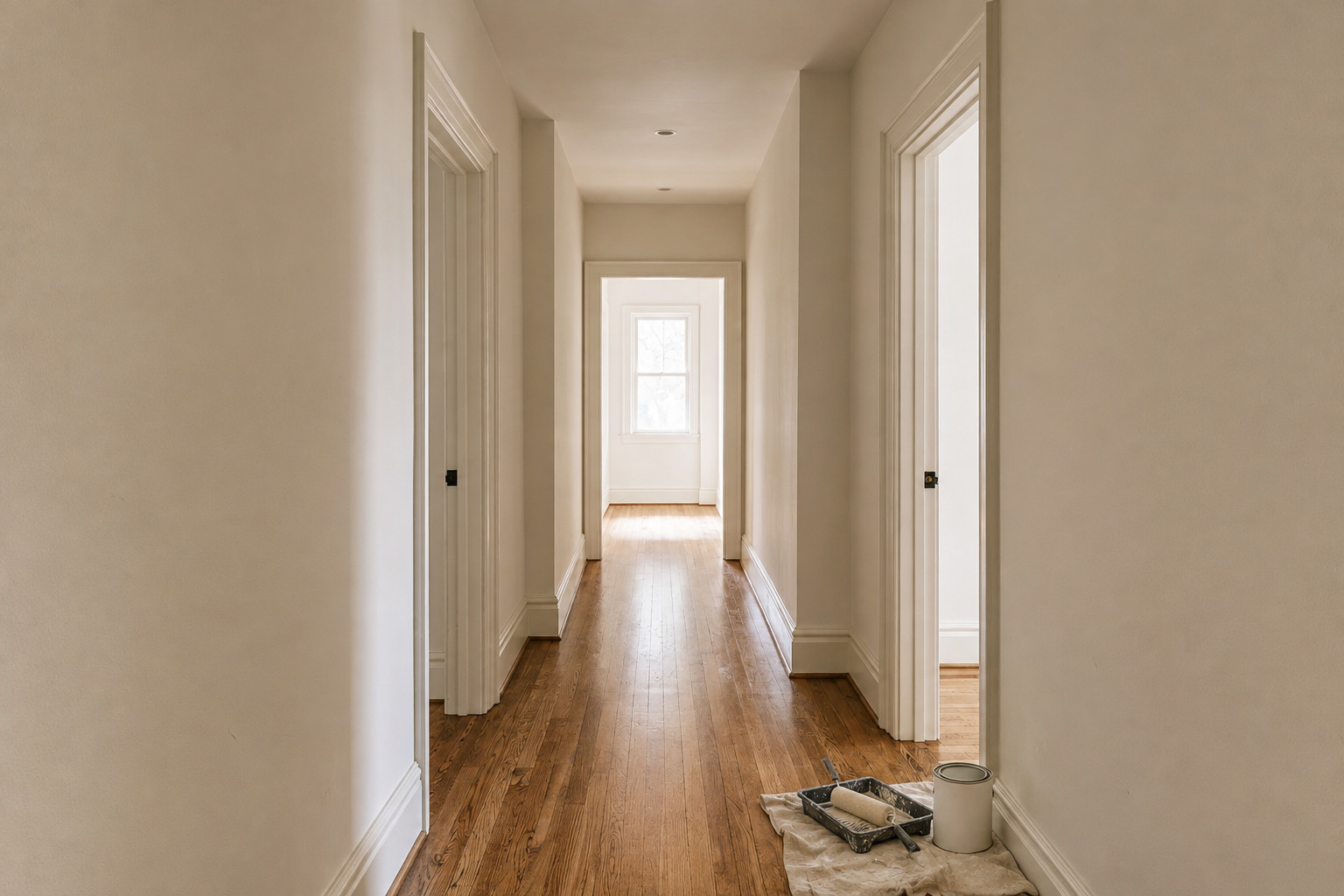
Light colors reflect more of the little daylight a hallway gets, which makes the walls seem further apart. Choose a warm off-white, a pale greige or a soft putty rather than a bright, cool white, which tends to look gray in a space without windows. Use an eggshell or satin finish. Hallways get scuffed by bags, shoulders and vacuum cleaners, and a slightly glossy finish can be wiped clean. Paint the ceiling the same color or a shade lighter so the walls and ceiling read as one soft box.
2. Lay a long runner
 Save
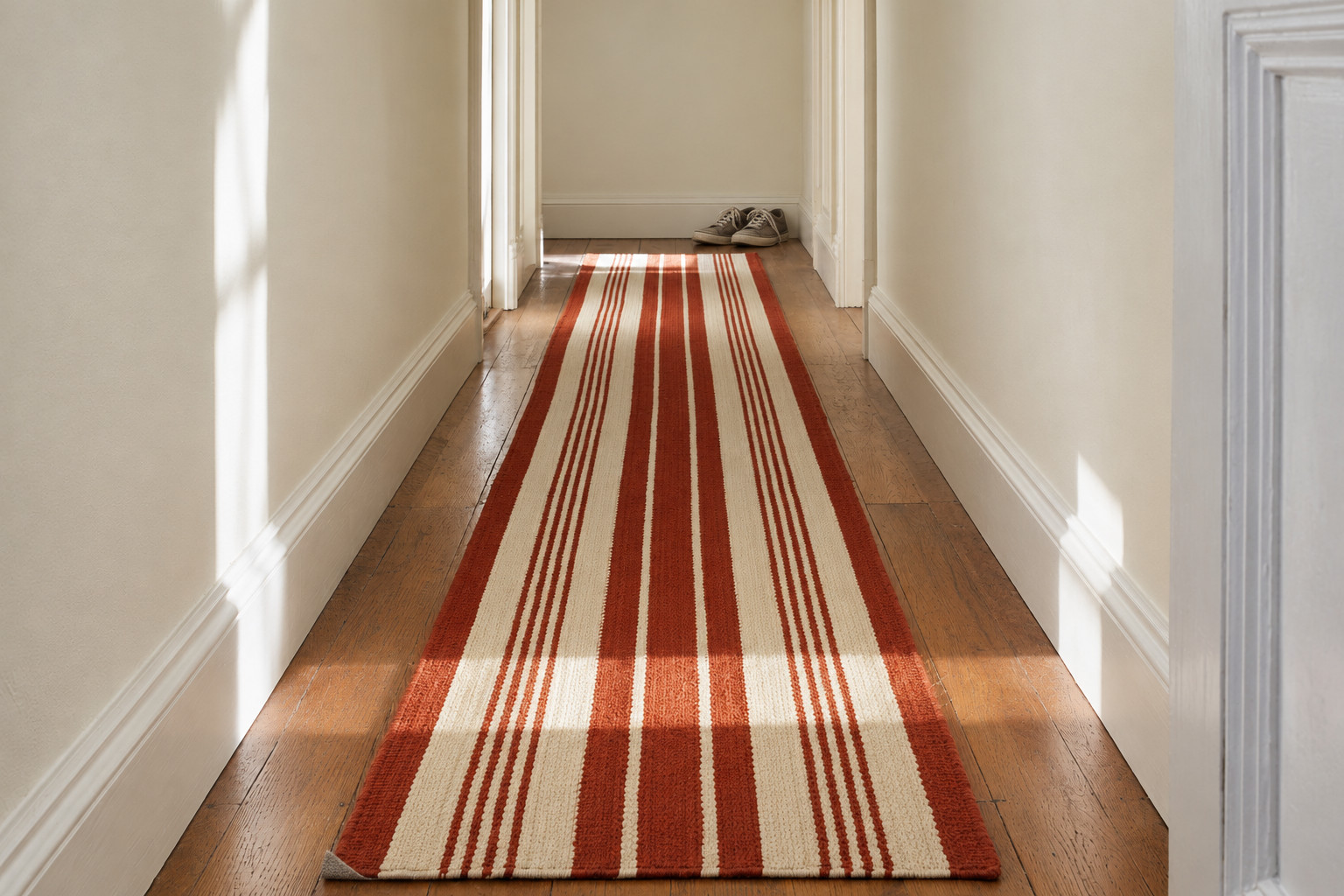
A runner adds pattern and warmth to a hallway without using any wall space, and a striped or geometric runner leads the eye forward. Size matters more than style. Leave about 4 to 6 in (10 to 15 cm) of floor showing on each side and stop the runner 6 to 12 in (15 to 30 cm) short of each end. For a 36 in (91 cm) hallway, that means a runner about 24 to 28 in (61 to 71 cm) wide. Put a non-slip rug pad underneath; a runner that slides is a real trip hazard in a hallway.
3. Hang a large mirror on one long wall
 Save
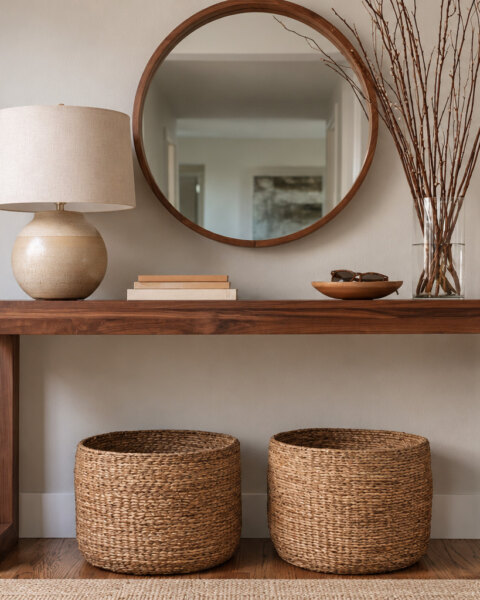
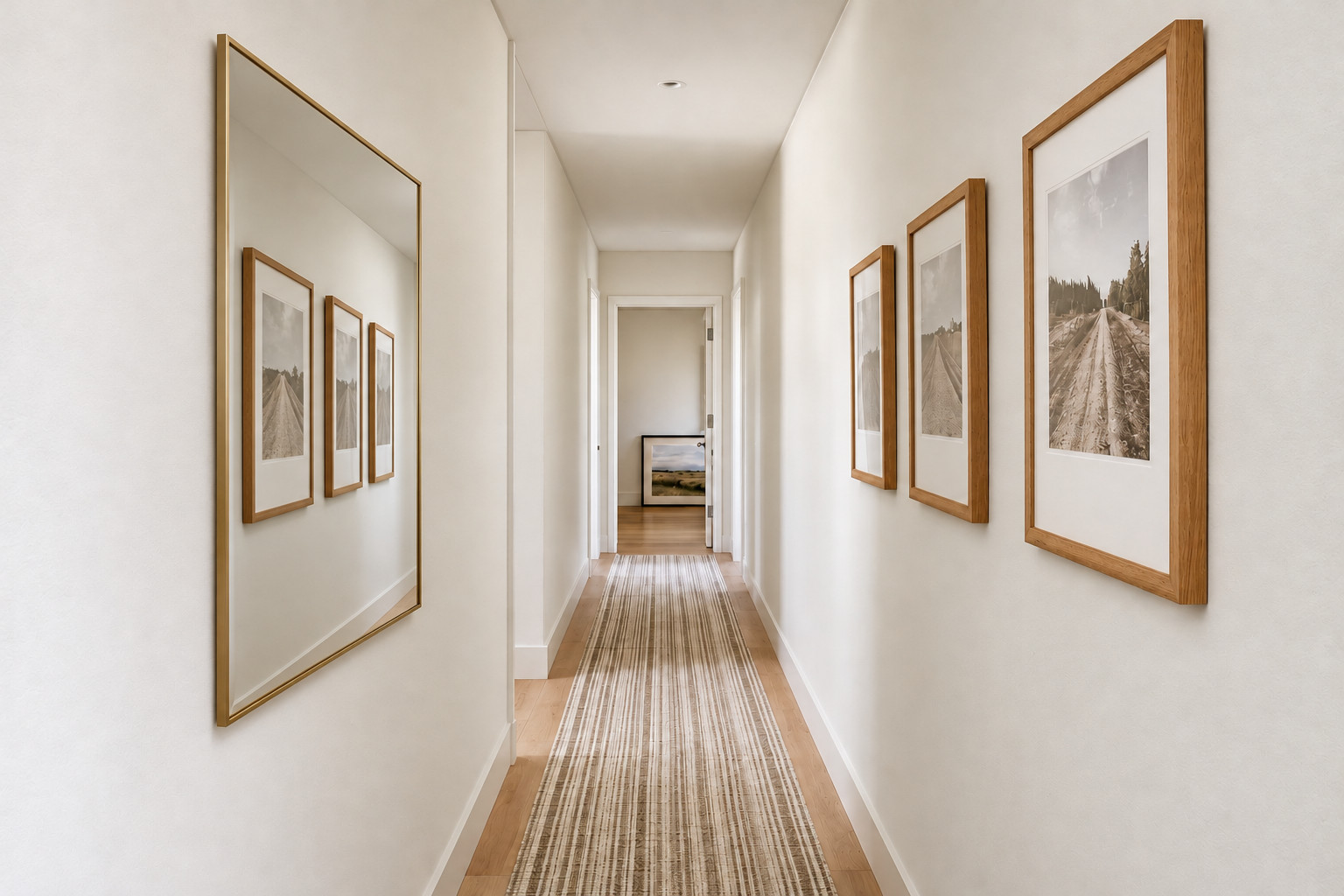
A mirror on one of the long walls visually doubles the width of the hallway, which is exactly the direction a narrow hall needs. Choose a large, flat mirror with a slim frame, hang it at eye level and place it opposite a doorway or a light source if you can, so it reflects light rather than a blank wall. Use a mirror that hangs flat against the wall and screw it into studs or anchors rated for at least twice its weight. A leaning floor mirror does not belong in a narrow walkway.
4. Space art evenly in one line
 Save
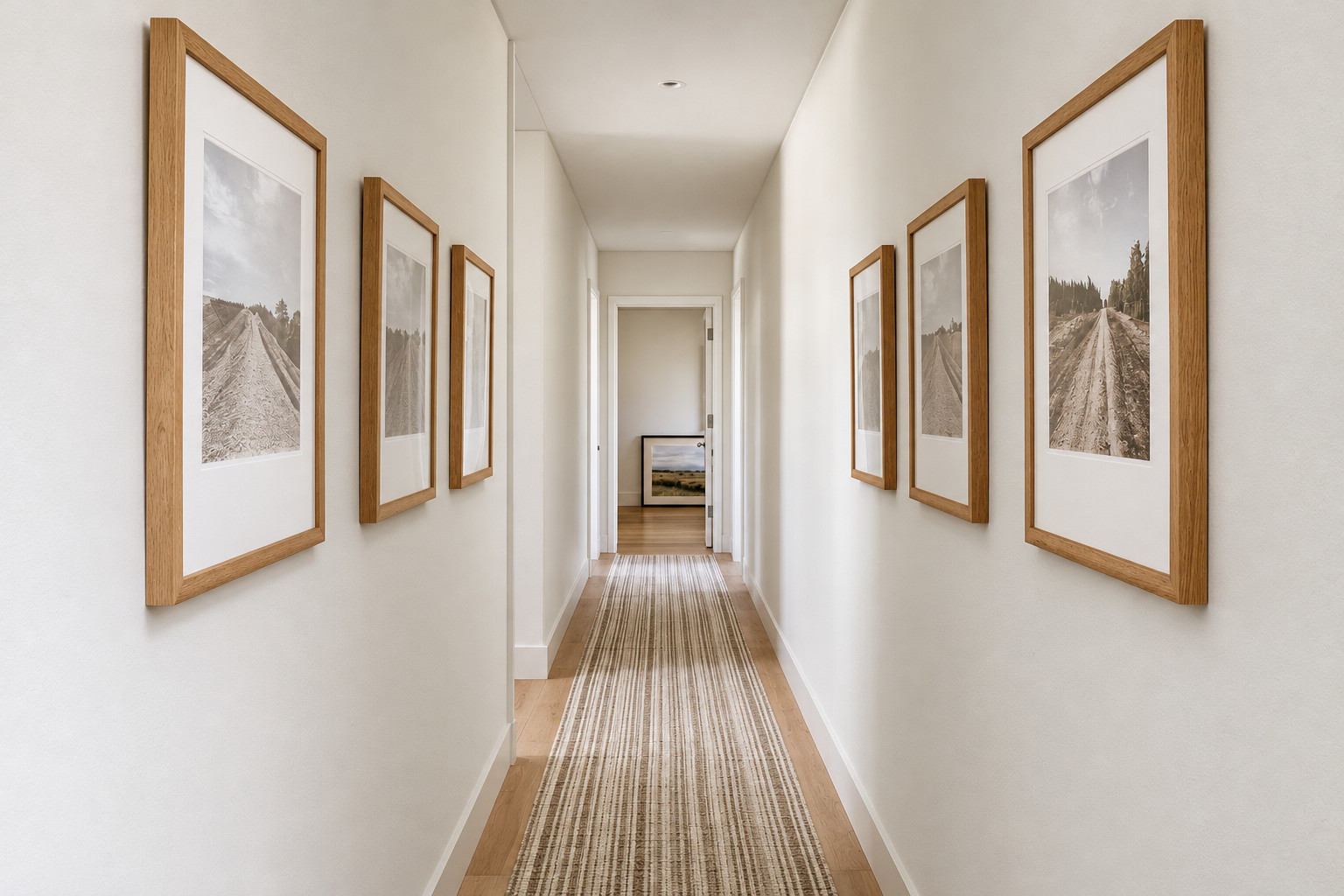
In a long hallway, a rhythm of art looks better than a big gallery cluster. Hang several frames of the same size in one straight line at eye level, with the centers at 57 to 60 in (145 to 152 cm) and the same gap between each frame. As you walk, the repeated frames give the hallway a steady beat, like windows in a train. Thin frames in one finish and prints in a related palette keep it calm. For help with frame sizes and gaps, use our gallery wall sizes chart.
5. Light it with flat wall sconces
 Save
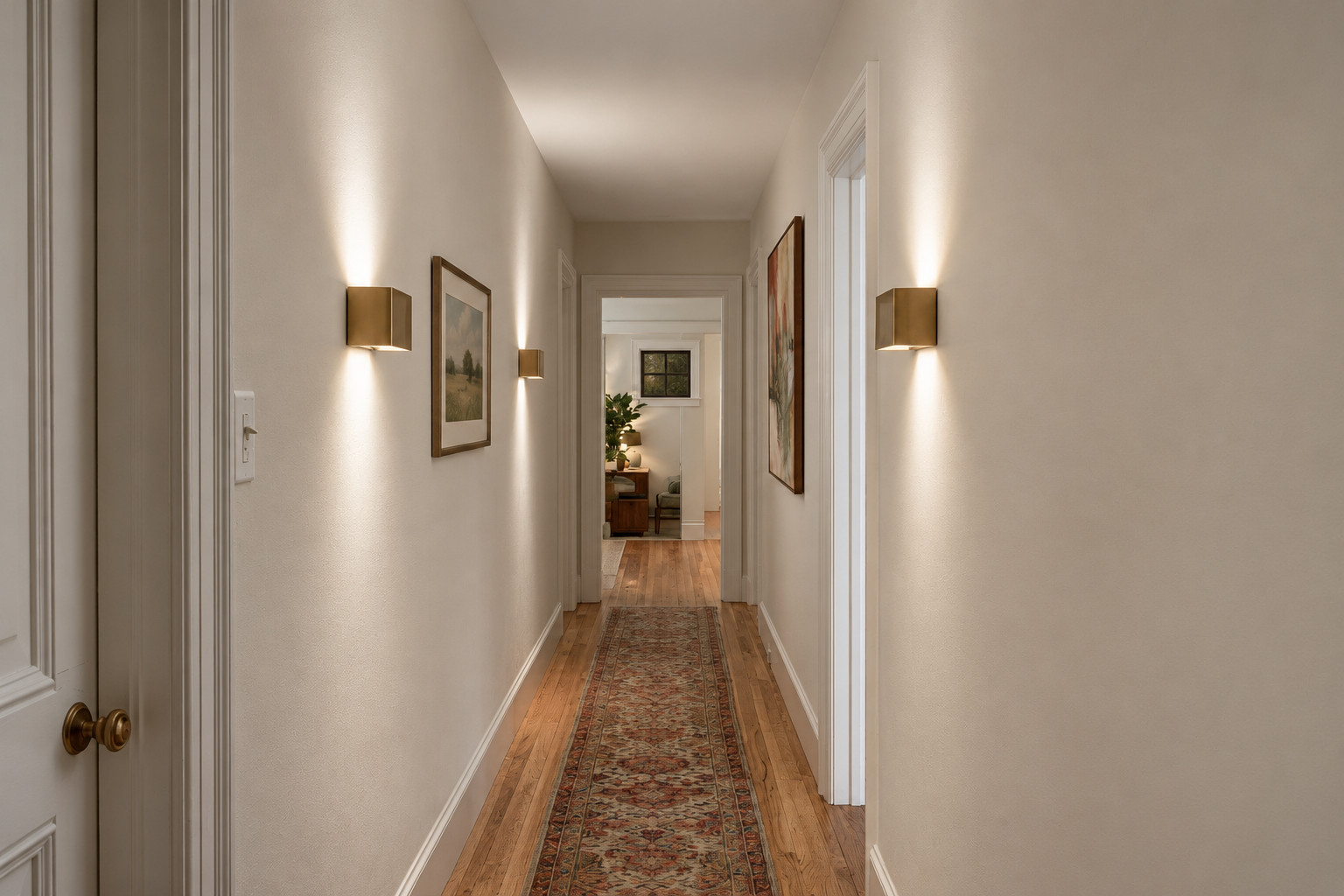
A single ceiling light at one end leaves the far end dark and makes the hallway look longer. Wall sconces spread light along its length and wash the walls, which makes them feel further away. Pick flat, shallow sconces that stay within 4 in (10 cm) of the wall, mount them at about 66 in (168 cm) and space them roughly every 8 to 10 ft (2.4 to 3 m). Use warm 2700K bulbs. If there is no wiring on the walls, plug-in sconces with a painted cord cover work in a short hallway near an outlet.
6. Paint the end wall a deeper color
 Save
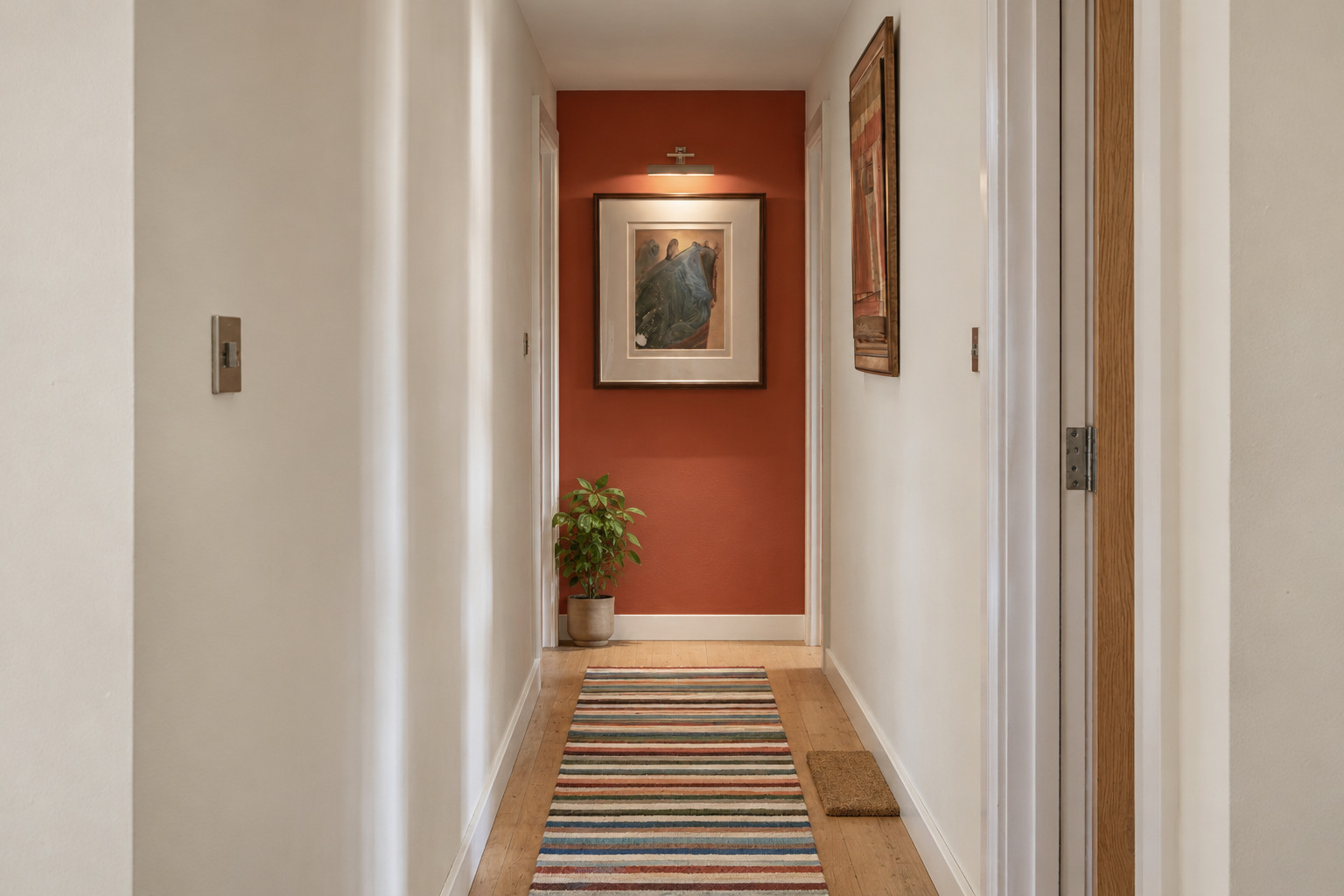
The wall at the far end decides how long the hallway feels. A deeper color there, such as terracotta, olive or deep blue, seems to come forward and pulls the end of the hall closer. It also gives the eye a destination, so the hallway reads as a path to something rather than an empty corridor. Hang one larger piece of art or a mirror on the end wall and light it, and the whole space feels shorter and more finished.
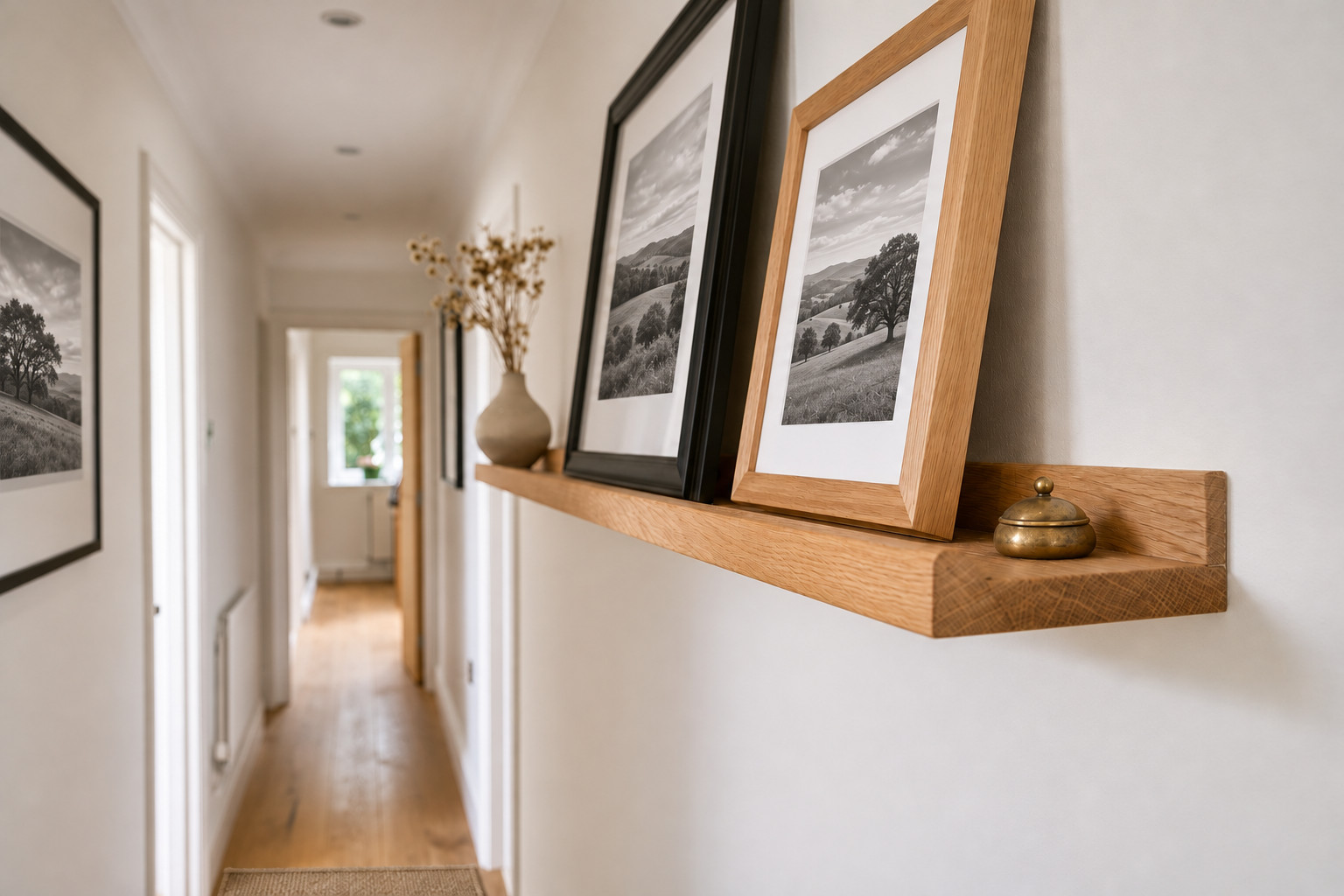
7. Add a shallow picture ledge
 Save
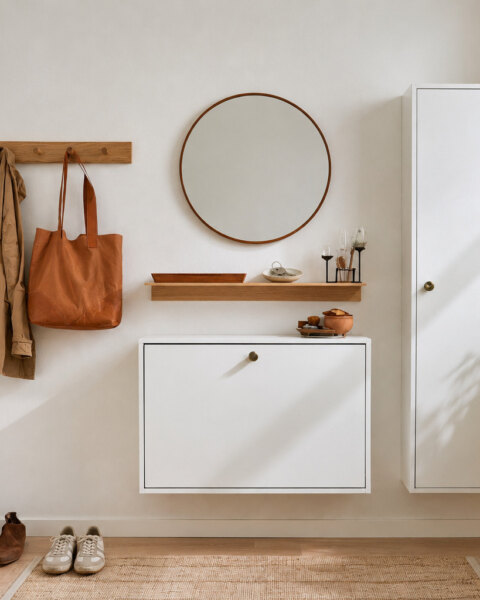
Many narrow hallways are too tight for a console table, but a picture ledge works almost anywhere. A ledge about 3.5 to 4 in (9 to 10 cm) deep holds leaning frames and small objects without breaking the 4 in (10 cm) rule. Mount it at about chest height so frames sit in the eye-level zone and do not catch on bags. Leaning art on a ledge is also easy to change, which suits a hallway where you might want to swap prints with the seasons.
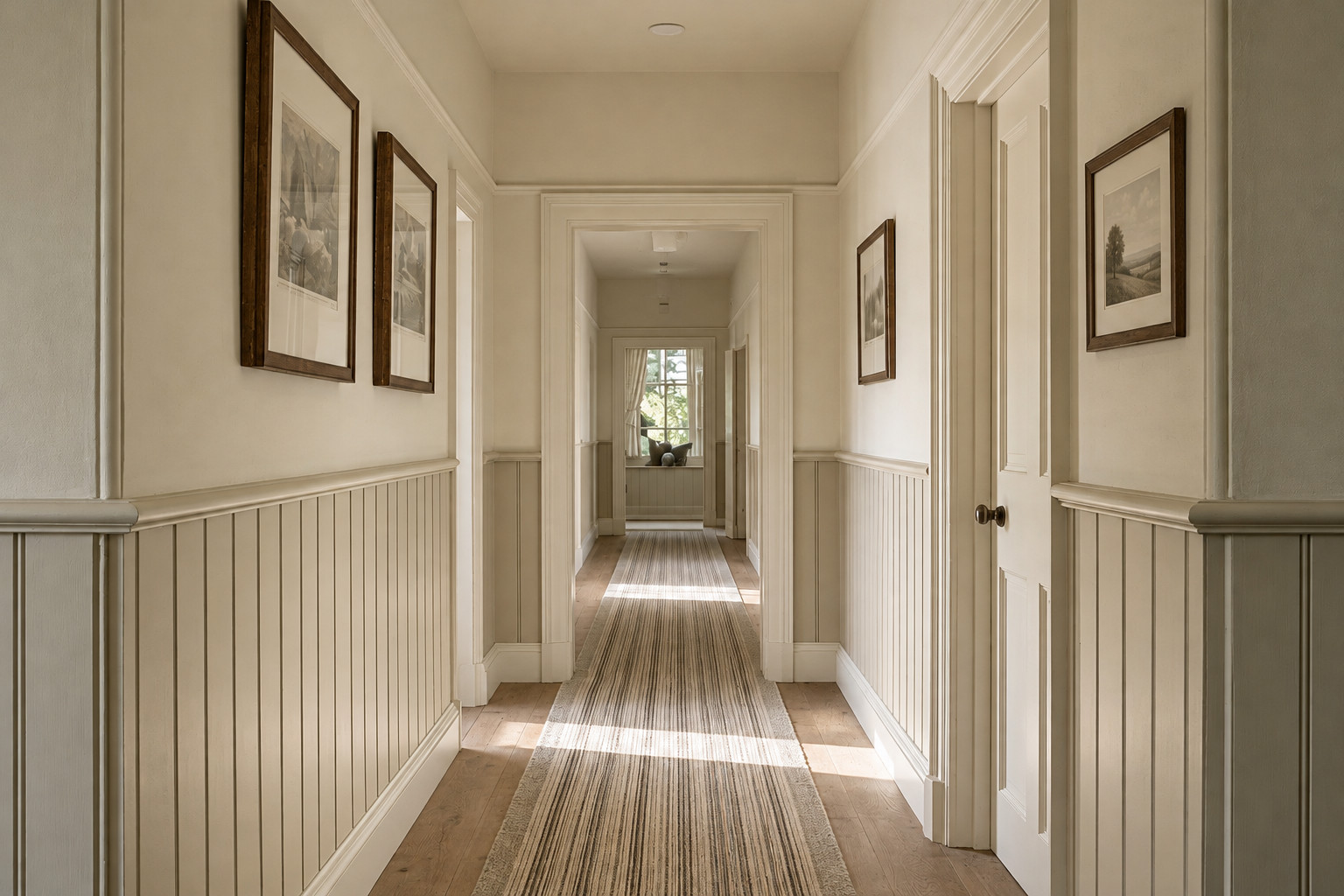
8. Use horizontal lines
 Save
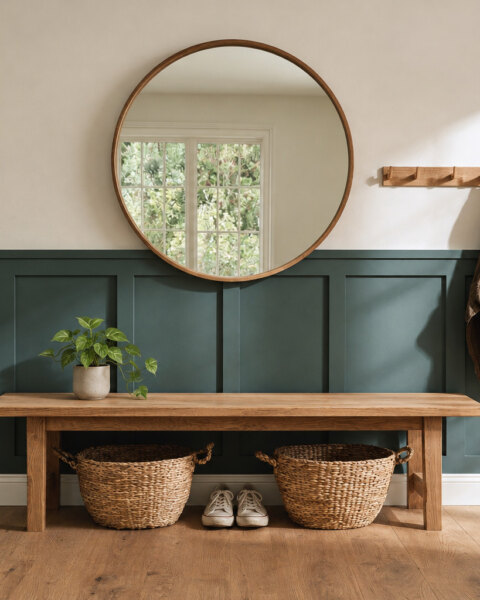
Horizontal lines stretch a space sideways. Paint the lower third of the walls in a slightly deeper shade, add a chair rail or a simple picture rail, or install board and batten paneling up to about 36 in (91 cm). The line runs the length of the hallway and makes the walls feel wider apart, and a painted or paneled lower section also hides scuffs. Avoid bold vertical stripes, which make a hall look even narrower.
What to leave out of a narrow hallway
- Deep console tables or floor plants that narrow the walkway.
- Coat hooks along the length of the hall, where coats brush everyone who passes.
- Floor lamps and cords running across the floor.
- A dense cluster of photos at different heights on both walls.
- Heavy, dark colors on both long walls.
Frequently asked questions
How do you make a long narrow hallway look wider?
Use light warm paint, a large mirror on one long wall, horizontal lines such as a painted lower third and flat wall sconces that light the walls evenly.
What color should a narrow hallway be?
A light warm color such as warm off-white, pale greige or soft putty on the long walls, with a deeper color on the end wall if you want it to feel shorter.
What size runner for a narrow hallway?
Leave 4 to 6 in (10 to 15 cm) of floor on each side and stop 6 to 12 in (15 to 30 cm) from each end. For a 36 in (91 cm) hallway, about 24 to 28 in (61 to 71 cm) wide.
How high should art be in a hallway?
Hang it so the centers sit at 57 to 60 in (145 to 152 cm) above the floor, all in one line.
Can you put a table in a narrow hallway?
Only if at least 36 in (91 cm) of walkway remains. Otherwise use a picture ledge about 3.5 to 4 in (9 to 10 cm) deep instead.
Start at the far end
If you can only do one thing this weekend, paint the end wall and hang one lit piece there. The hallway will already feel shorter. For walls along the way, see our guide on how to decorate a hallway wall and our entryway wall decor ideas, or browse all entryway and hallway ideas.