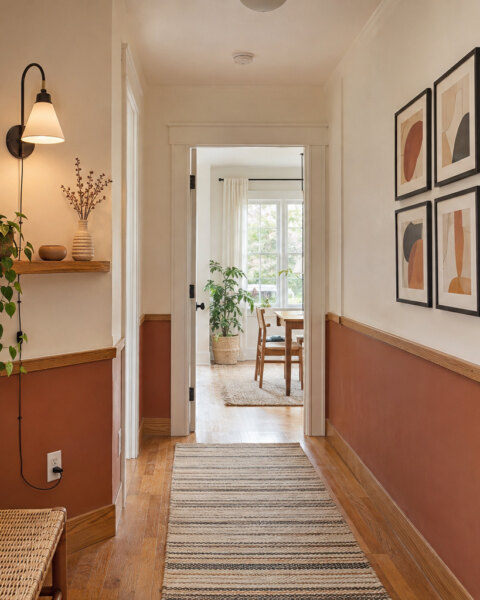
Small Entryway Decor Ideas for Apartments and Tiny Foyers
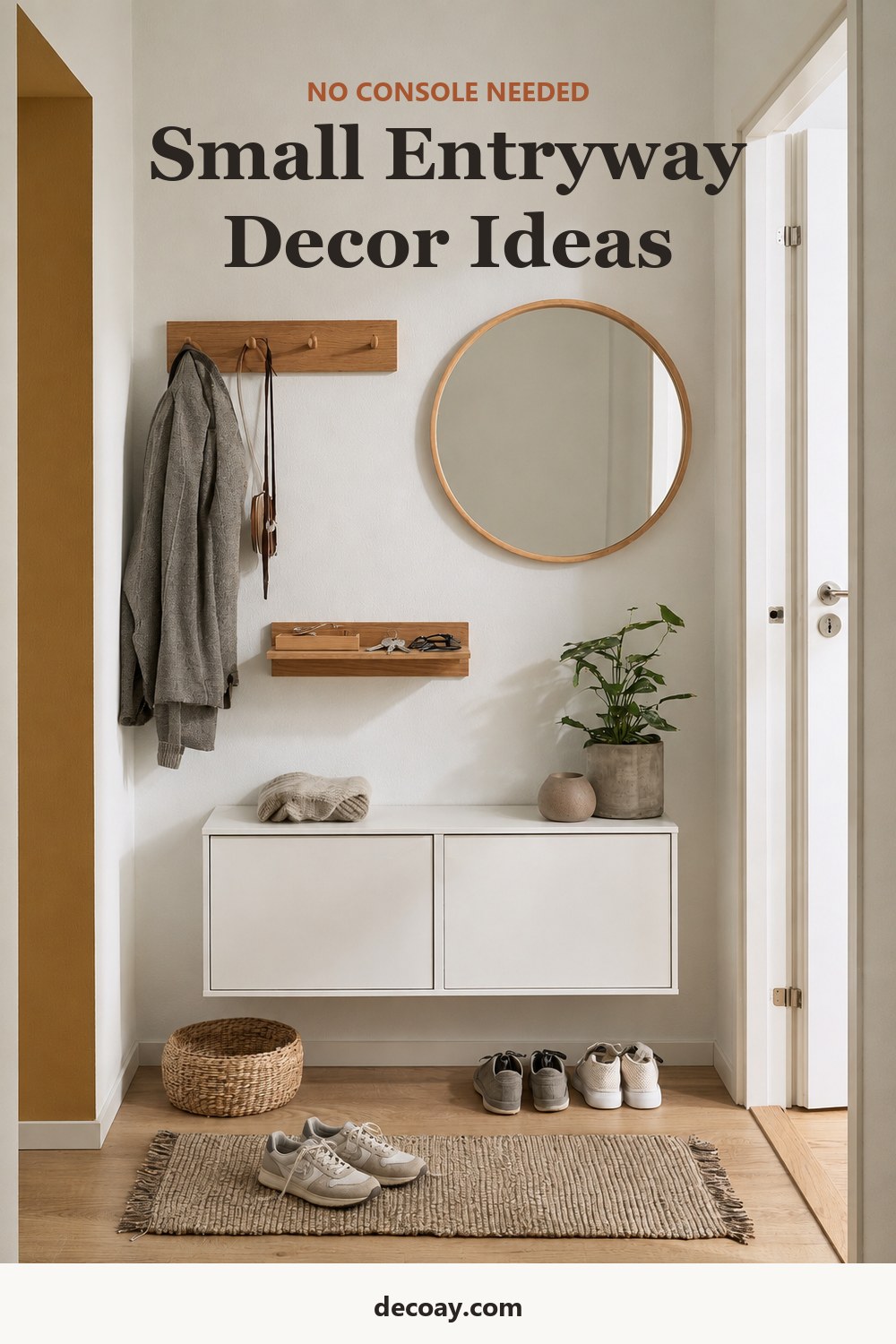
Wall-first ideas for tiny entryways: hooks, shallow shelves, mirrors, slim shoe cabinets, runners and a home for keys and mail.
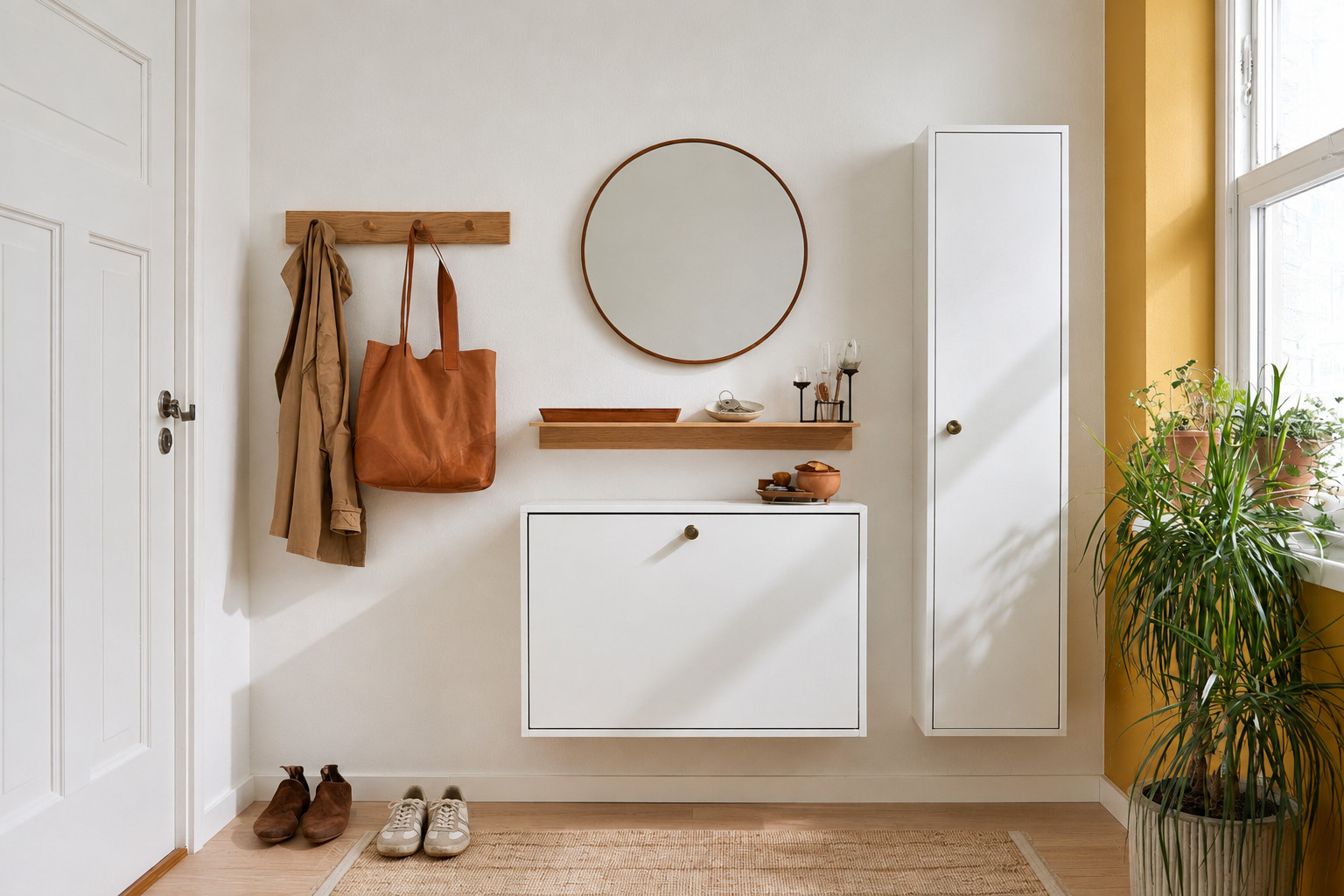
In many apartments, the entryway is not a room at all. It is the patch of floor between the front door and the kitchen, maybe a strip of wall beside a coat closet. There is no space for a console table, yet it still has to hold keys, coats, bags, shoes and the mail. Good decor for a small entryway works almost entirely on the wall, keeps the floor clear, and gives you a place to drop things the second you walk in. These ideas are built for exactly that kind of space.
Quick answer: In a small entryway, decorate the wall instead of the floor: a row of hooks or a peg rail at 60 to 66 in (152 to 168 cm), a shallow floating shelf for keys, a mirror above it, a slim wall-mounted shoe cabinet or a narrow bench, and a washable runner. Keep anything that sticks out within about 4 in (10 cm) of the wall so the door can open and people can pass.
In this article
- First, measure the door swing
- 1. A row of hooks or a peg rail
- 2. A shallow shelf as a mini console
- 3. A mirror above the shelf
- 4. A wall-mounted shoe cabinet
- 5. A narrow bench, if there is room
- 6. A runner that can handle the weather
- 7. Wall pockets for mail and keys
- 8. Light and a little personality
- Small entryway mistakes to avoid
- Frequently asked questions
- Start with hooks and a tray
First, measure the door swing
Open the front door fully and look at where it lands. That arc is off limits for furniture, and anything on the wall behind it must be shallow enough not to stop the door. Then measure from the wall to the nearest obstacle, such as the opposite wall or the kitchen counter. This is how much depth you really have:
| Clear depth | What fits |
|---|---|
| Under 36 in (91 cm) | Hooks, a 4 in deep shelf, a flat mirror, a wall pocket for mail |
| 36 to 48 in (91 to 122 cm) | All of the above plus a wall-mounted shoe cabinet about 7 in (18 cm) deep |
| Over 48 in (122 cm) | A narrow bench 12 to 14 in (30 to 36 cm) deep, or a slim console |
1. A row of hooks or a peg rail
 Save
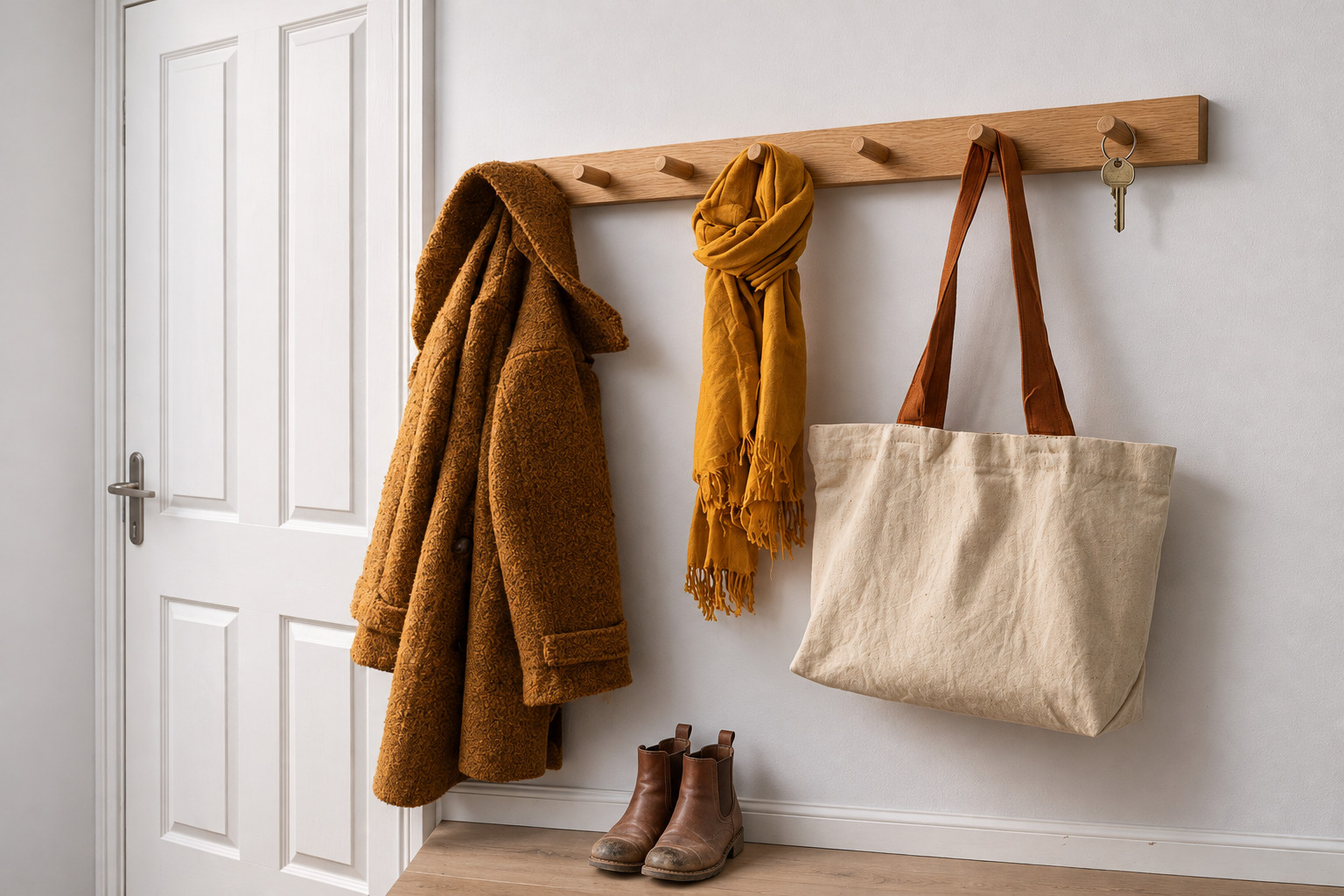
This is the most useful thing you can put in a small entryway. A wooden peg rail or a row of sturdy hooks takes coats, bags, umbrellas and the dog leash, and it costs very little. Mount it at 60 to 66 in high for adults. If children live with you, add a second, lower row at about 40 to 48 in so they can hang their own things.
Leave 8 to 10 in between hooks so coats do not pile up on each other. And be honest about how many coats will actually hang there in winter. Four hooks for a family of four will be overloaded by December.
2. A shallow shelf as a mini console
 Save
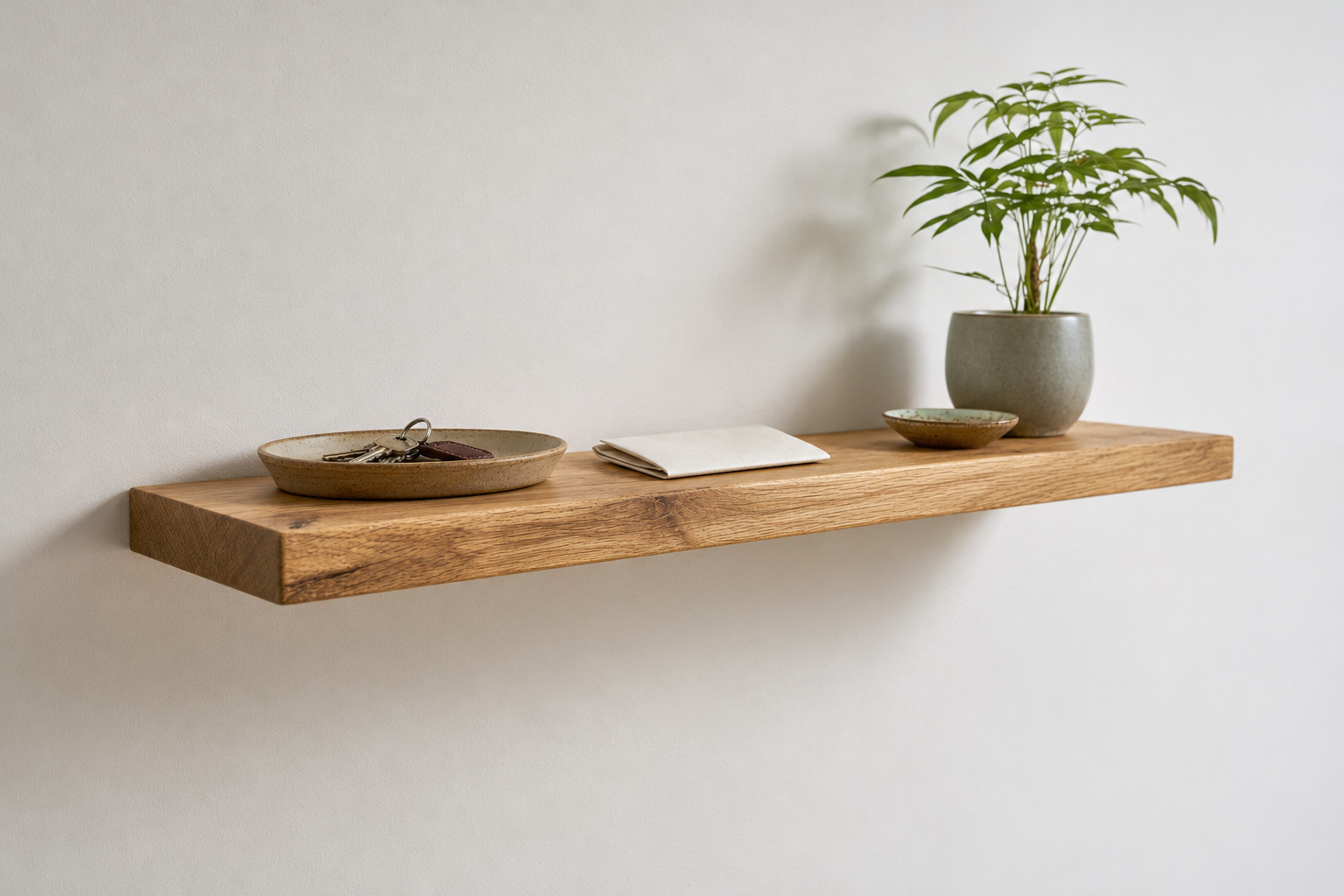
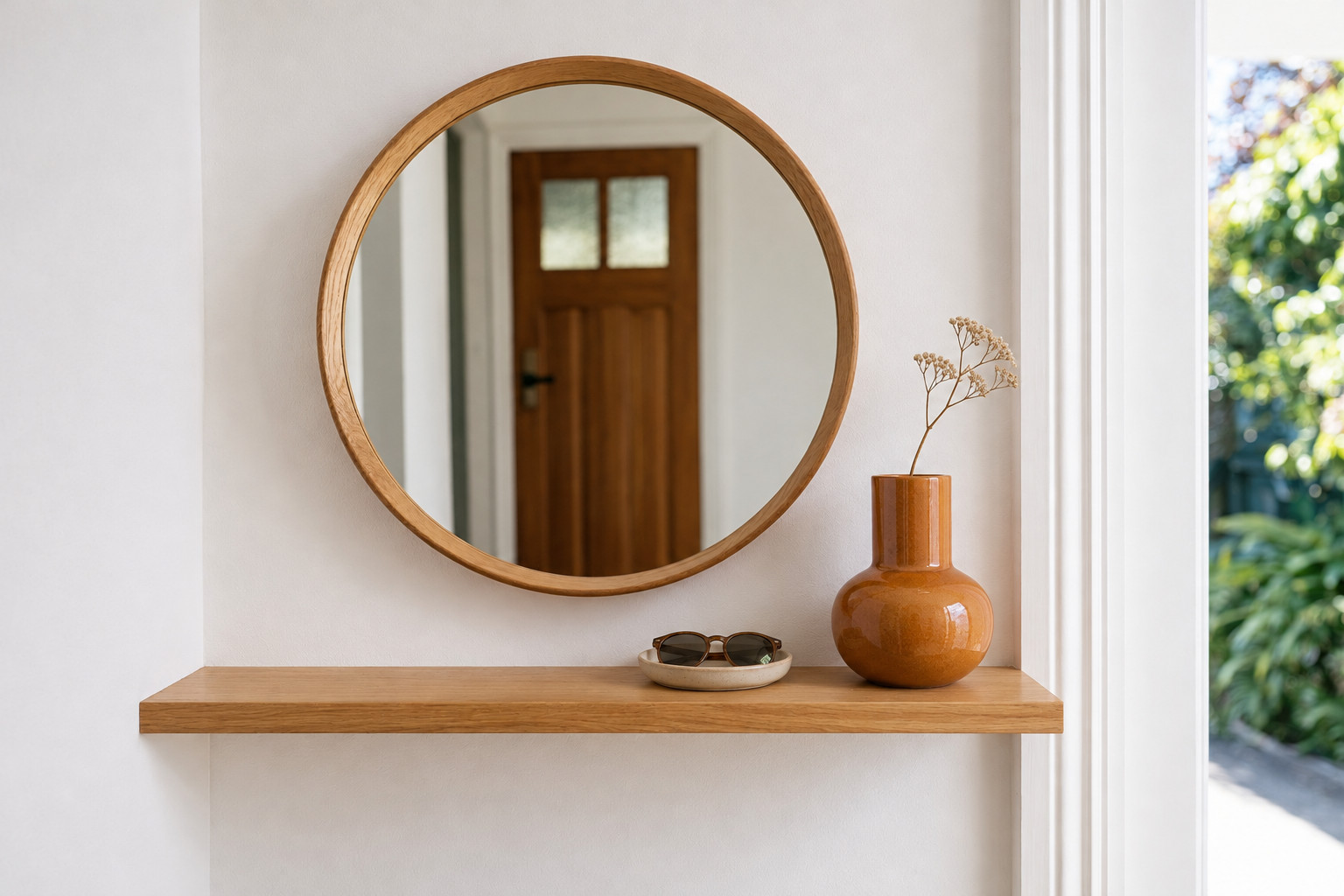
Where a console table will not fit, a floating shelf does the same job. Choose one about 4 to 6 in (10 to 15 cm) deep and 24 to 36 in (61 to 91 cm) long, mounted around 36 to 40 in (91 to 102 cm) high. It holds a small tray for keys, a dish for coins and a small plant, and nothing sticks out far enough to bump into.
Put a small bowl or tray on it. Without one, the shelf slowly becomes a pile of receipts and loose change.
3. A mirror above the shelf
 Save
A mirror is the one piece of decor every entryway needs. You check your face before leaving, and it bounces light around a space that usually has no window. A round mirror 20 to 24 in (51 to 61 cm) across fits above most shelves. In a very narrow entry, a tall, slim mirror on the wall beside the door suits the proportions better.
Hang it so its center sits around 60 in from the floor, and use hardware rated well above its weight. Entry walls get knocked by bags and doors.
4. A wall-mounted shoe cabinet
 Save
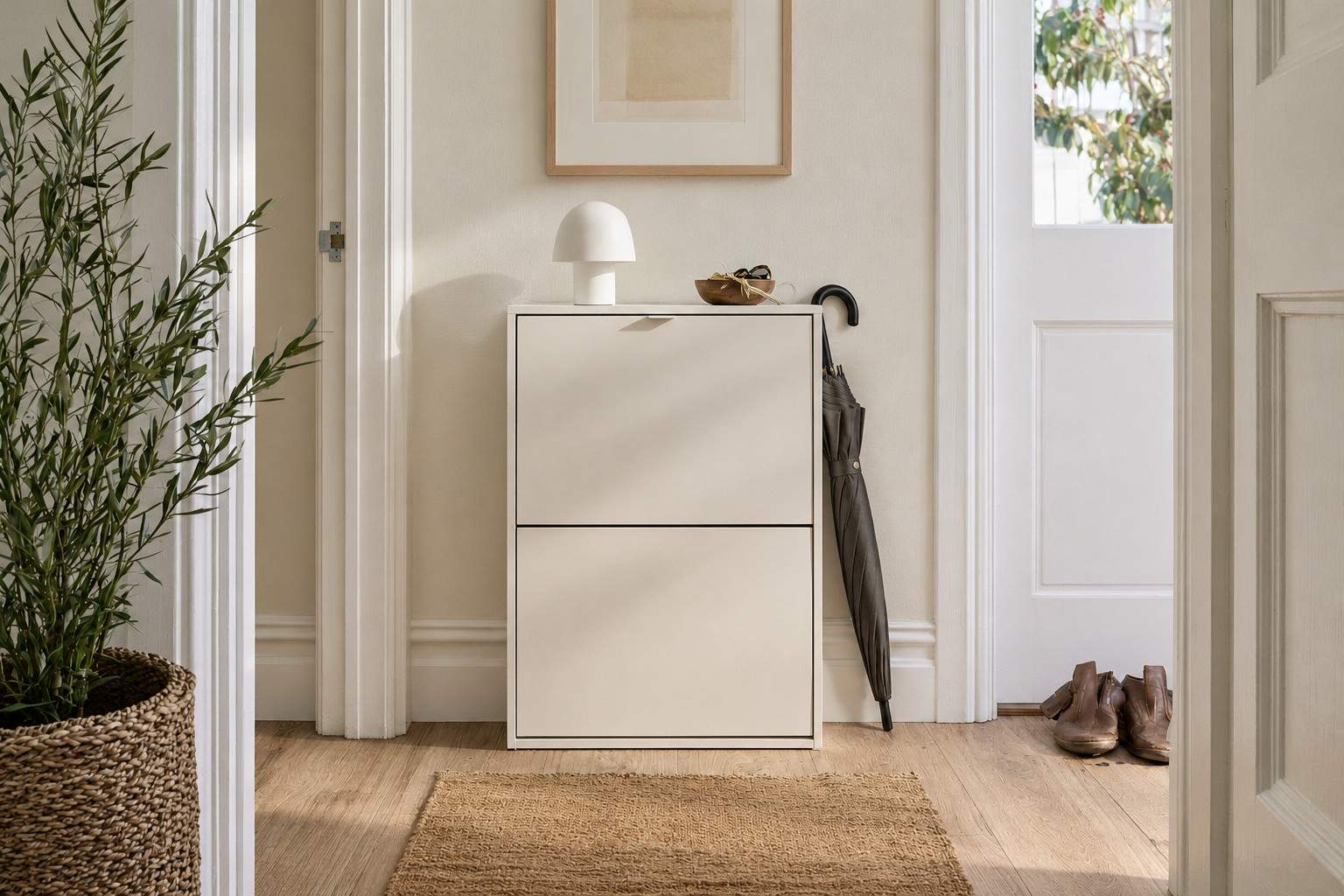
Shoes are what makes a small entryway look messy. Slim tilt-out shoe cabinets, only 6 to 9 in (15 to 23 cm) deep, hang on the wall or stand against it and hide six to twelve pairs. The top doubles as a shelf for keys and a lamp. Anchor tall shoe cabinets to the wall. They are top-heavy when a drawer is pulled out.
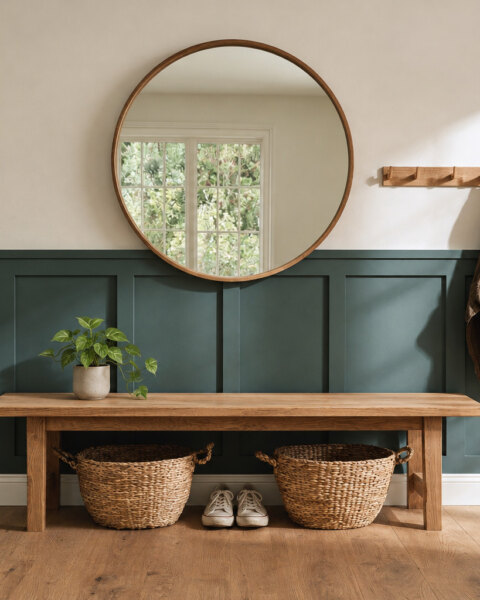
If you prefer open storage, a low two-tier shoe rack under a bench works too. Keep it to the shoes you actually wear this week, and move the rest to a closet.
5. A narrow bench, if there is room
 Save
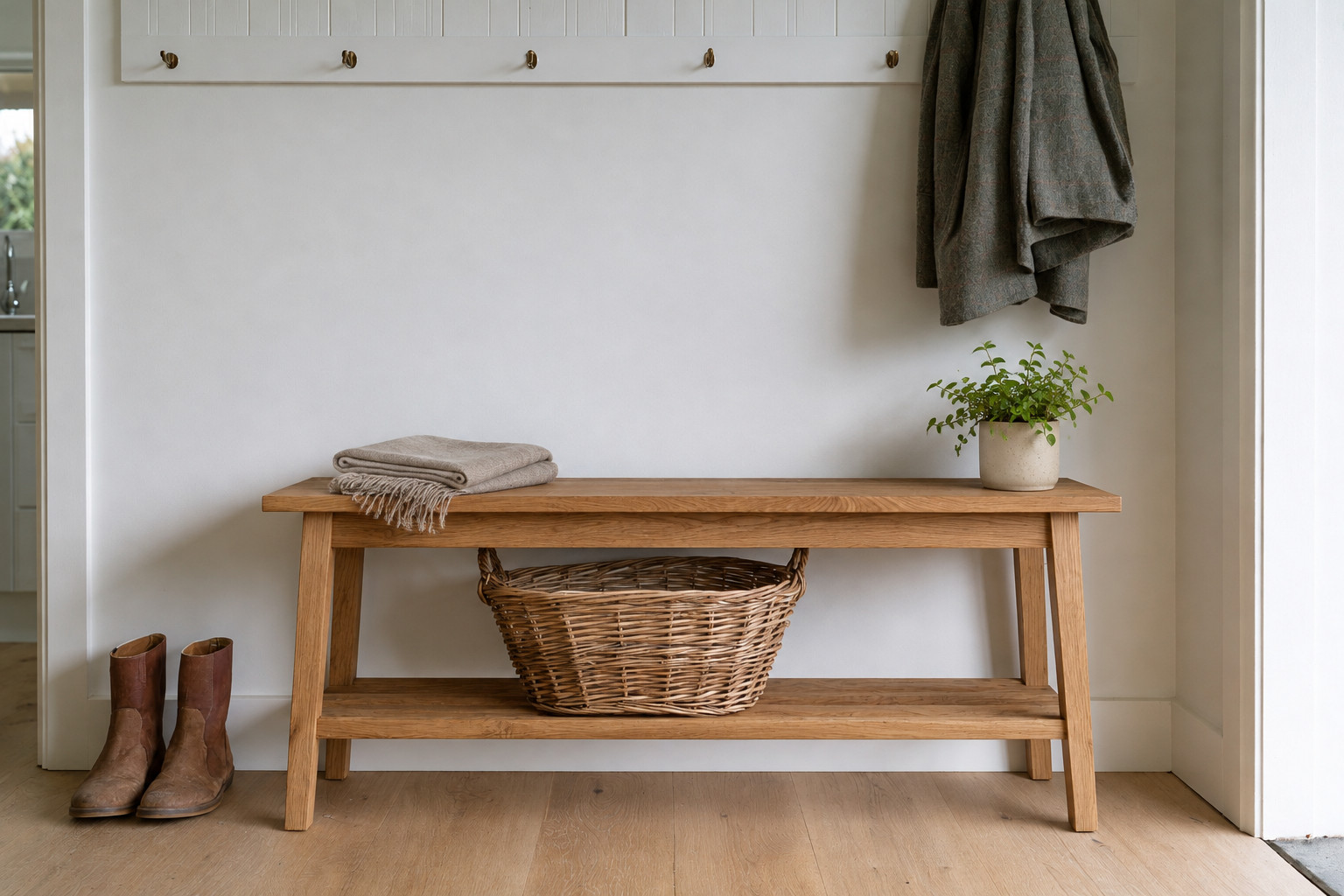
A bench gives you somewhere to sit and pull on boots, and space underneath for a basket or shoes. In a small entryway, look for one 12 to 14 in deep and no longer than the wall section it sits on. A bench with a lift-up seat or cubbies below doubles as storage. Skip it if it would block the door swing or narrow the walkway below about 36 in.
6. A runner that can handle the weather
 Save
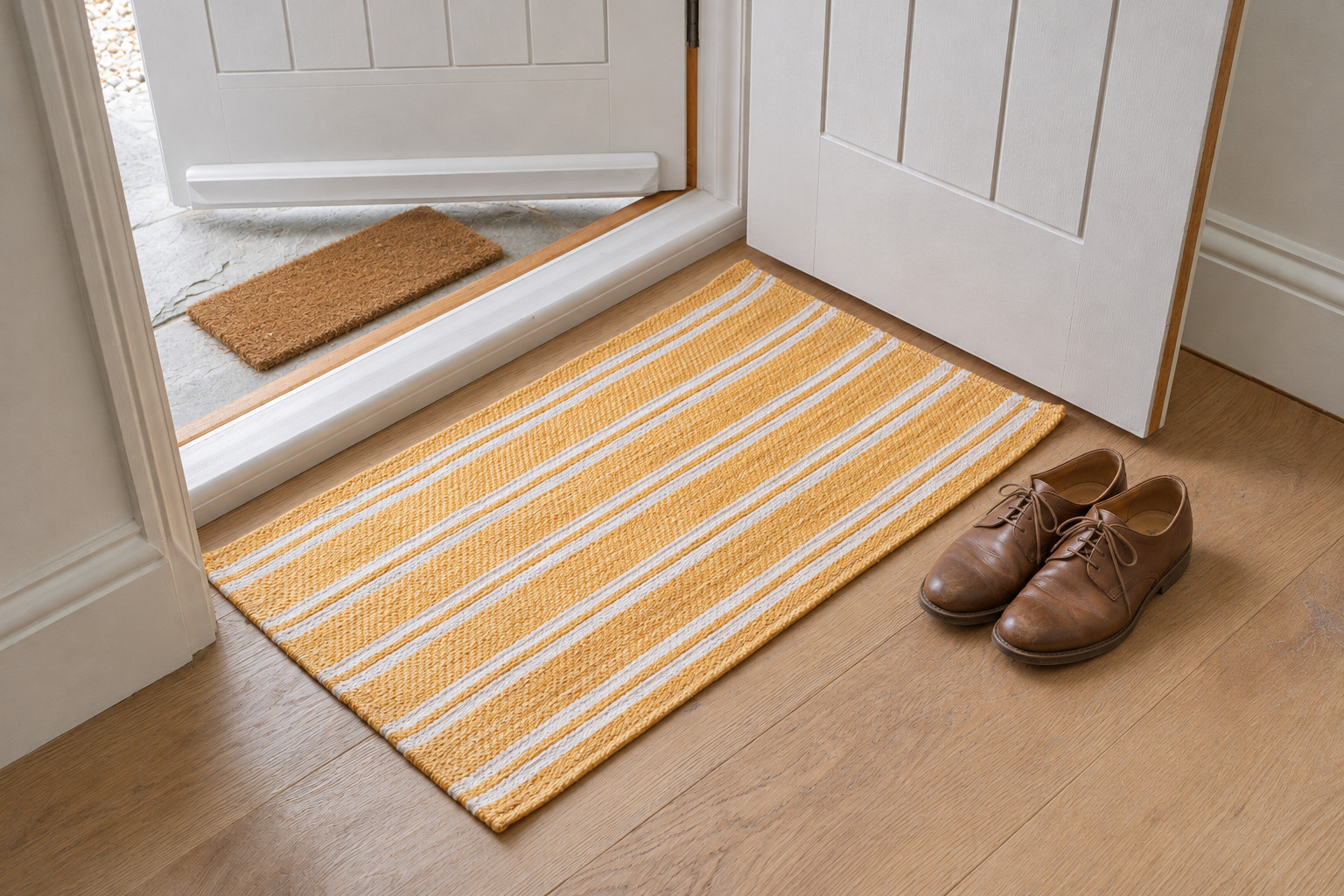
A rug defines the entry, protects the floor from grit and makes the space feel finished. Choose something flat and washable: a flatweave cotton, an indoor-outdoor polypropylene runner or a low-pile wool. Keep it at least an inch or two shorter than the door clearance so the door does not catch on it, and put a non-slip pad underneath. A loose rug by the front door is easy to trip on.
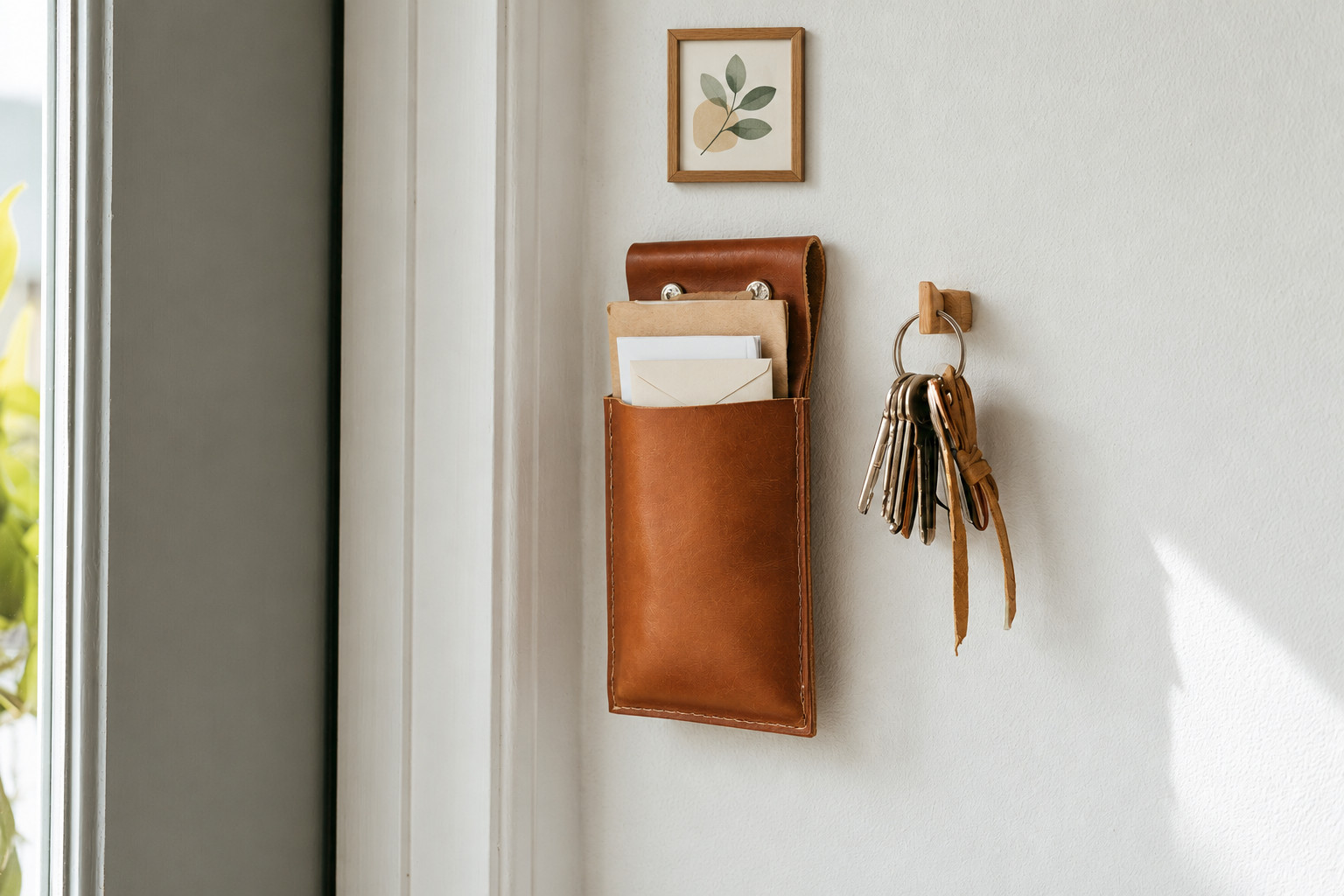
7. Wall pockets for mail and keys
 Save
Paper is the other entryway mess. A wall-mounted mail organizer or a simple leather or canvas wall pocket keeps letters off the shelf, and a small key hook strip underneath means keys always land in the same place. Place them near the door at about 48 to 54 in high, where you can reach them with your hands full.
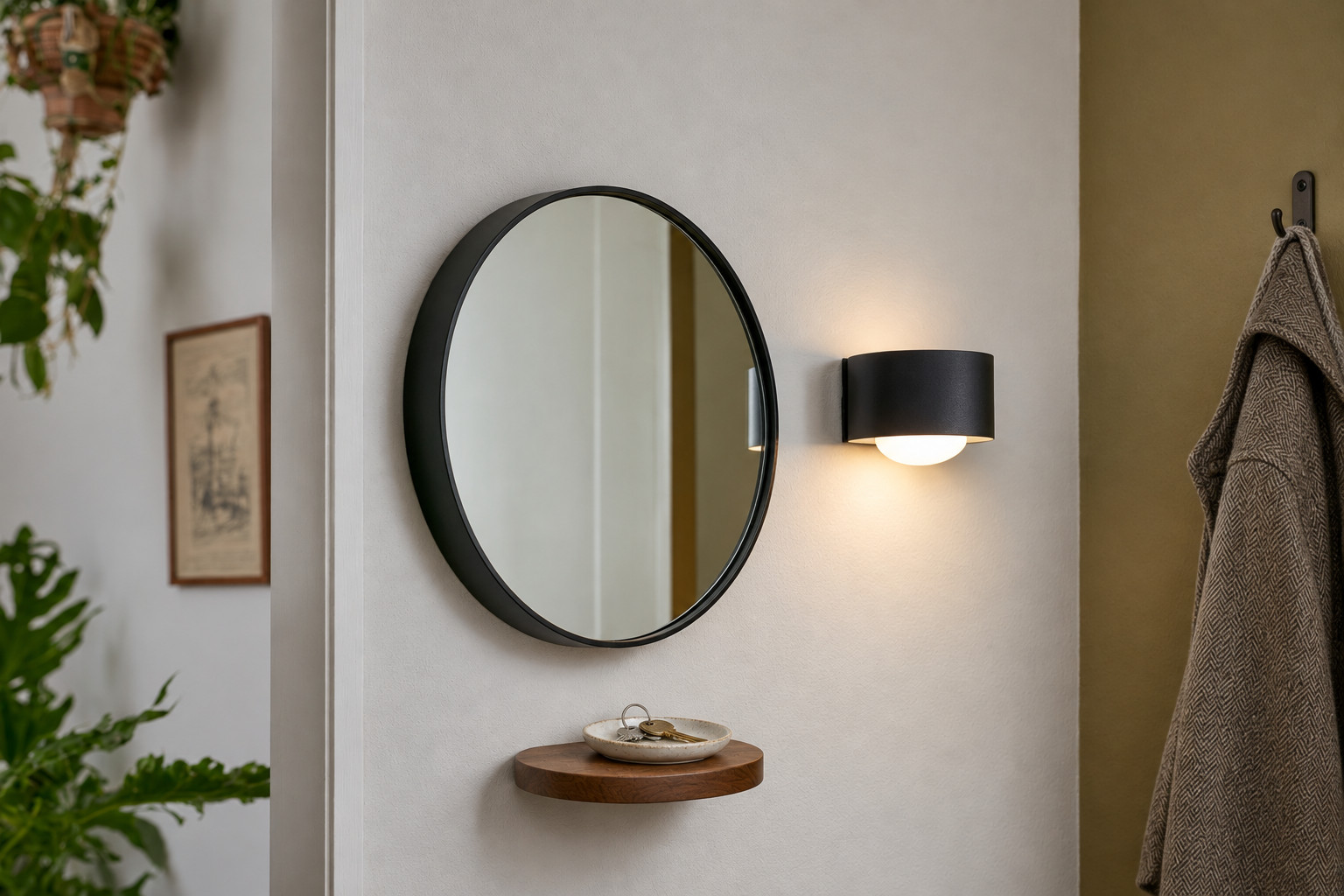
8. Light and a little personality
 Save
Many small entryways have only a dim ceiling light. A plug-in wall sconce beside the mirror makes the space feel welcoming at night without new wiring. Run the cord in a paintable cord cover. Then add one personal touch: a small framed print, a hanging plant or a bold paint color on the entry wall only. The entry is a small enough area that a strong color works without overwhelming the home.
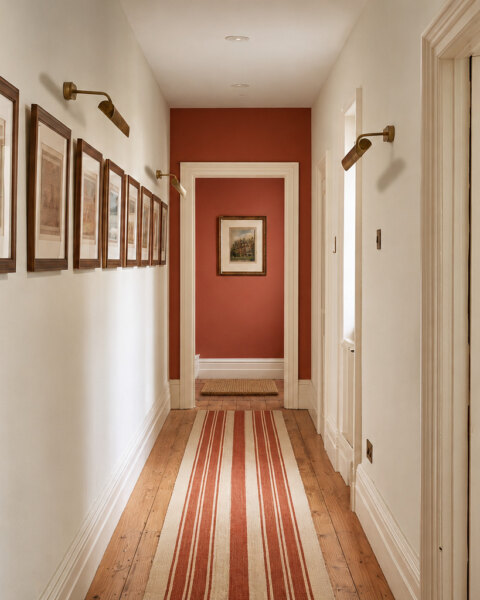
If your entry opens into a hallway, our guide on how to decorate a hallway wall covers art heights, ledges and paneling for the rest of the run.
Small entryway mistakes to avoid
- Furniture in the door swing. Measure the arc before you buy anything.
- Deep pieces in a narrow entry. Keep wall items within about 4 in where people walk.
- Too few hooks. Count winter coats, bags and leashes, then add two.
- A loose rug with no pad. Use a non-slip pad by the door.
- No home for keys and mail. Give both a fixed spot, or they end up everywhere.
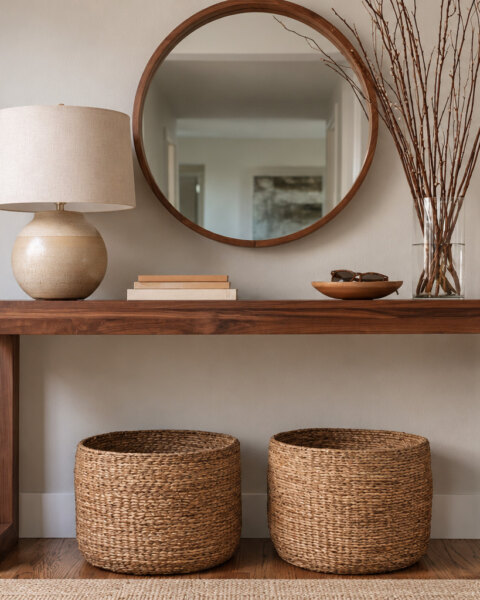
If you have room for a console, our guide to entryway table decor has a simple styling formula.
Frequently asked questions
How do you decorate a small entryway with no space for a table?
Use the wall: hooks or a peg rail for coats, a shallow floating shelf as a mini console, a mirror above it and a slim wall-mounted shoe cabinet below.
How high should entryway hooks be?
About 60 to 66 in from the floor for adults, and 40 to 48 in for children’s hooks.
What size mirror for a small entryway?
A round mirror 20 to 24 in across fits above most shelves. In a narrow entry, a tall, slim mirror beside the door often works better.
How deep should an entryway shelf be?
About 4 to 6 in deep in a small entry, so it holds keys and a tray without sticking out into the walkway.
Where do you put shoes in a small entryway?
In a slim wall-mounted tilt-out shoe cabinet, under a narrow bench, or in a closed basket. Keep only the pairs you wear often by the door.
Start with hooks and a tray
If you only do two things, put up a row of hooks and give your keys a dish on a small shelf. Live with that for a week and see where the clutter still lands. That is the spot that needs the next idea. For more entry and hallway inspiration, browse our entryway and hallway ideas.