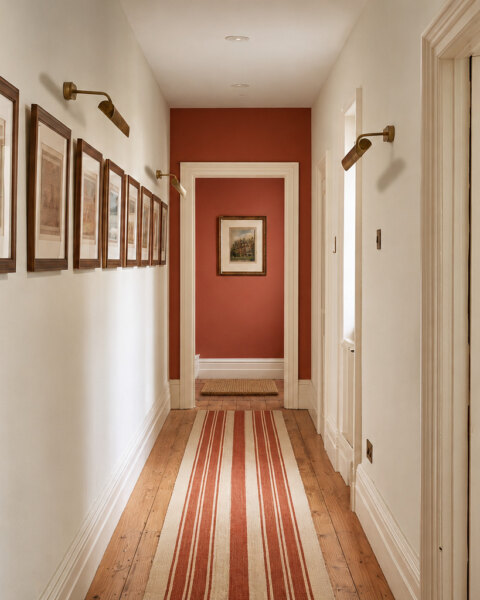
Bookshelf Decor: How to Style a Bookshelf Step by Step
8 steps to style a bookshelf in layers, from books first to a balanced zigzag of objects.
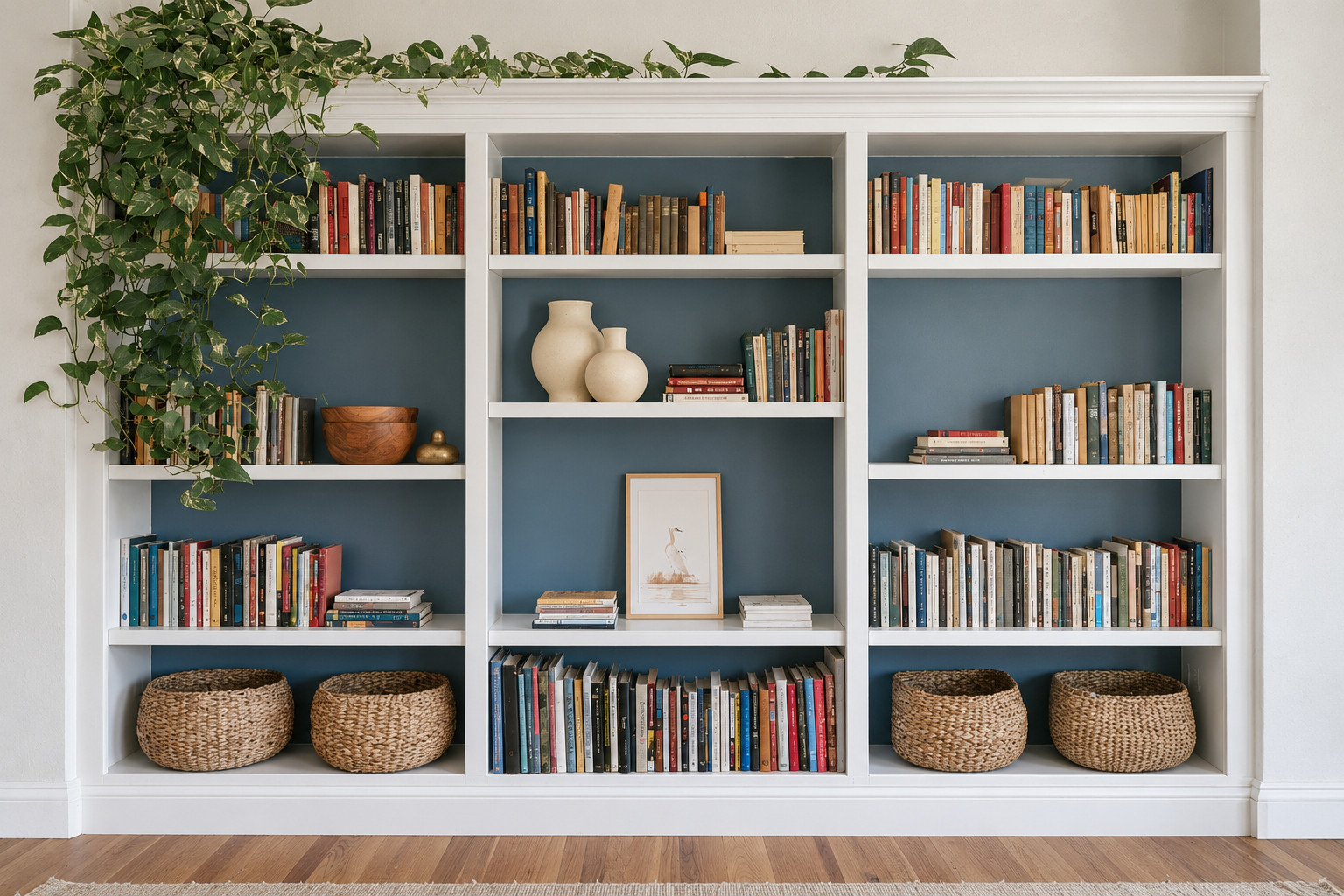
Most bookshelves look messy for one simple reason: everything went on at once. Books, a candle, three photos, a plant and a souvenir all compete for the same few inches. Good book shelf decor works in layers instead. The books go back first, then a few larger objects, then art, then something living, and only at the end do you step back and fix the balance. This guide walks through those layers in order, with the spacing and proportions that keep a full shelf looking calm.
Quick answer: To style a bookshelf, empty it completely, paint or line the back if you want color, put the books back first so they fill about two-thirds of the space, mix upright rows with horizontal stacks, add a few larger objects such as vases and bowls, lean one or two pieces of art against the back, add a plant, use baskets on the bottom shelf and finish by balancing heavy and light items in a zigzag. Leave about 2 in (5 cm) of air above the tallest item on each shelf.
In this article
- How full should each shelf be?
- 1. Empty the shelves and decide on the back
- 2. Put the books back first
- 3. Mix upright rows with horizontal stacks
- 4. Add a few larger objects
- 5. Lean art against the back
- 6. Add one living thing
- 7. Use baskets or boxes on the bottom shelf
- 8. Step back and balance in a zigzag
- Anchor the bookcase before you style it
- Bookshelf styling mistakes
- Frequently asked questions
- One shelf this evening
How full should each shelf be?
| What goes on the shelves | Share of the space | What it does |
|---|---|---|
| Books | About two-thirds | The base layer, and the reason the shelf exists |
| Objects and art | About one-quarter | Breaks up the rows and adds shape and color |
| Empty space | The rest, roughly 10 percent | Lets each group read on its own |
These are proportions to aim for, not rules to measure with a tape. A shelf for a big book collection can be almost all books. A shelf in a living room that holds only a few novels will lean the other way.
1. Empty the shelves and decide on the back
 Save
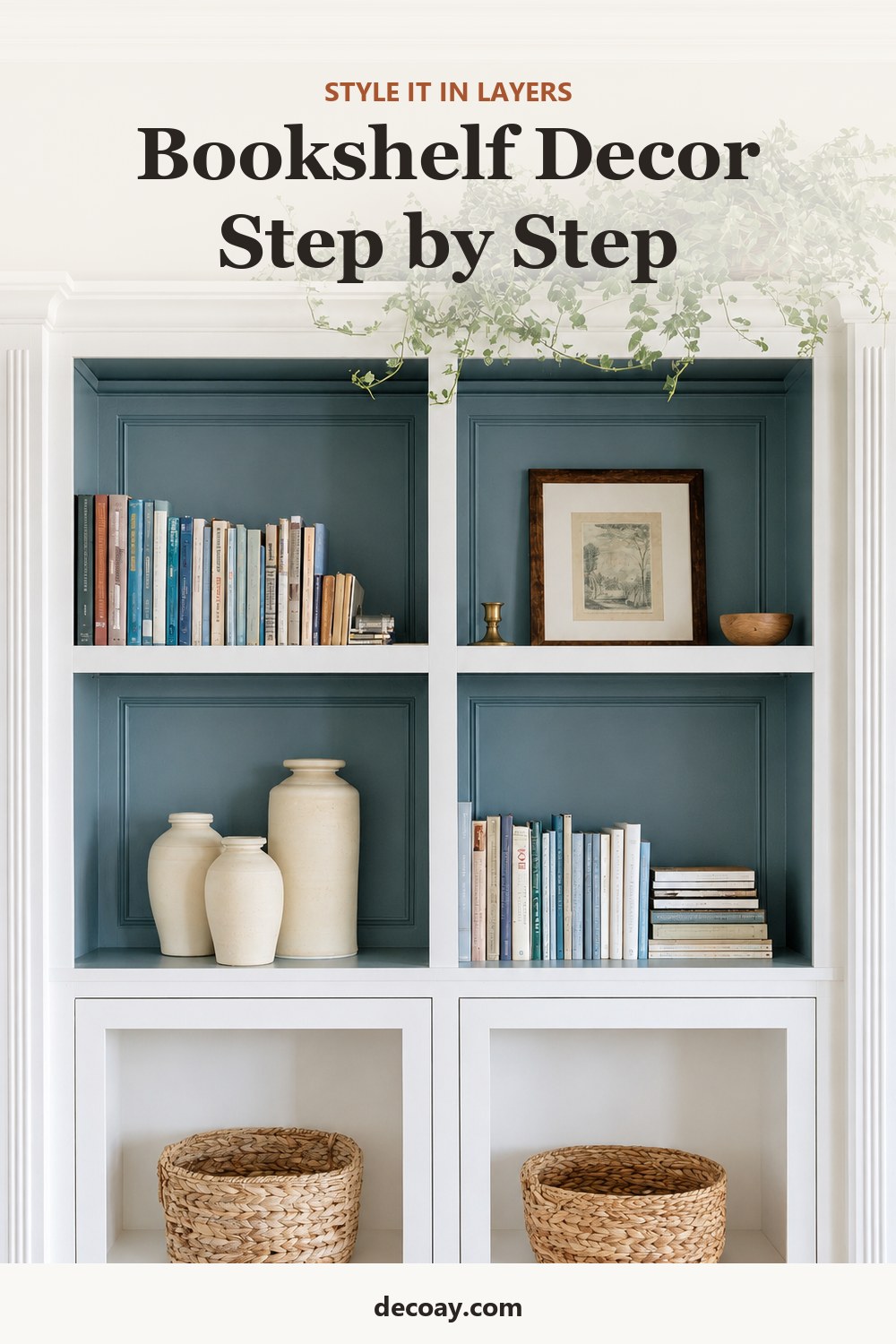
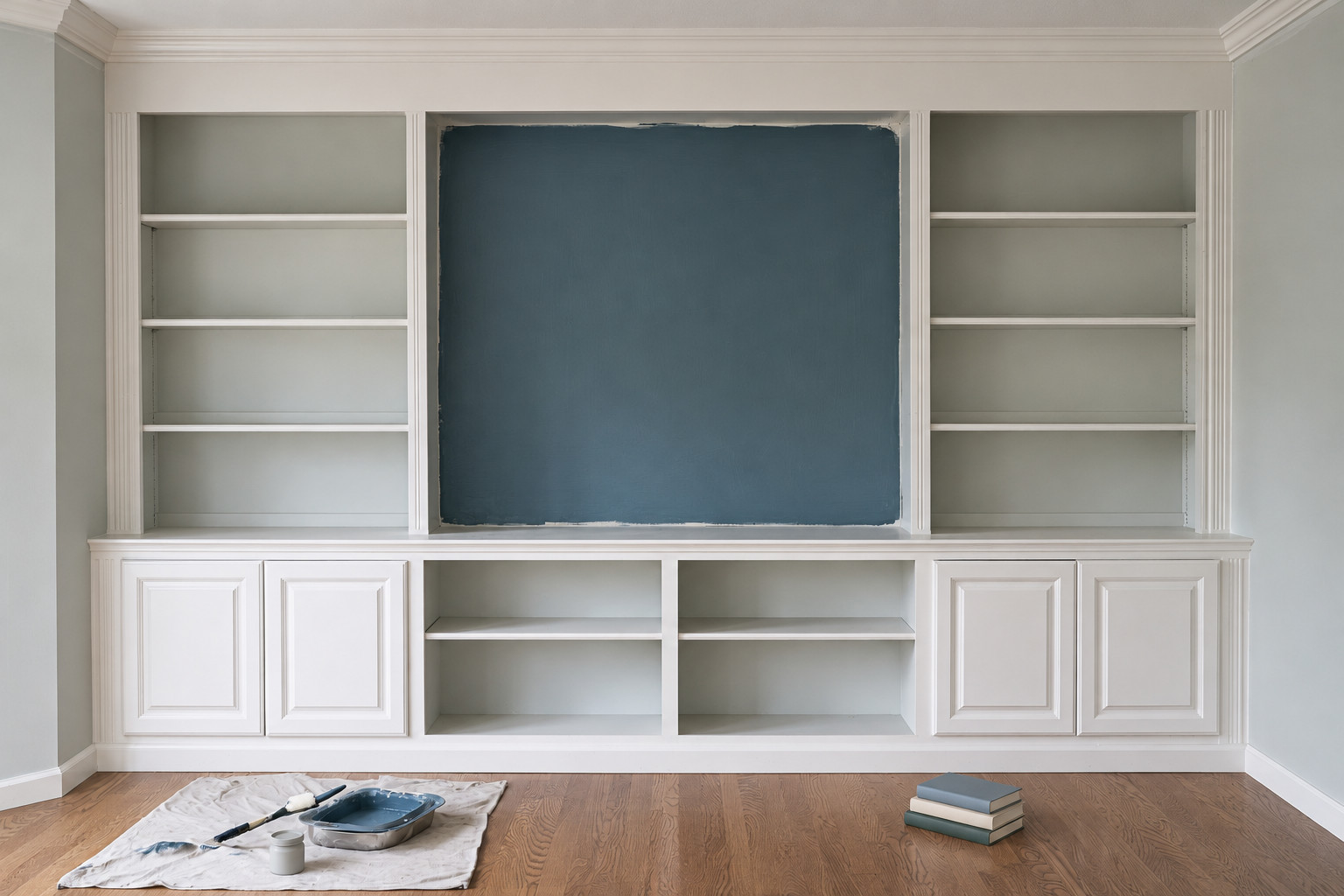
Take everything off. All of it, including the books. Wipe the shelves and look at the empty unit: this is the moment to change the background. Painting the back panel a color such as dusty blue, olive or terracotta makes white books and pale ceramics stand out, and it turns an ordinary bookcase into something that looks built in. One sample-size pot or a single quart covers the back of most standard bookcases. If you rent or the back is thin hardboard, peel-and-stick wallpaper or a sheet of thin fabric held with removable mounting tape does the same job.
2. Put the books back first
 Save
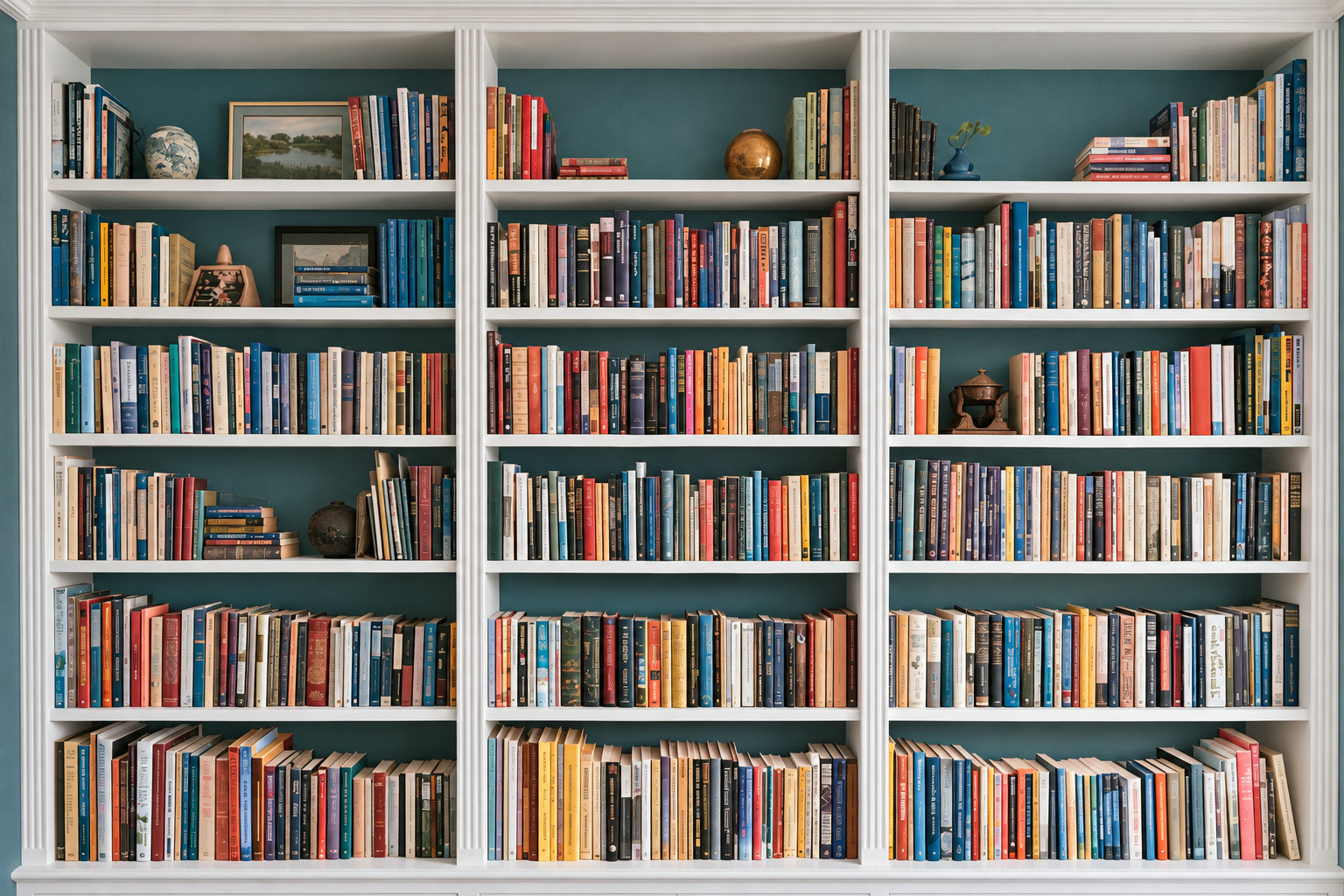
Books are the main layer, so they go in before any decor. Sort them roughly by height rather than by subject, and keep the tallest books toward the outer ends of each row so the shelf frames itself. Pull every spine to the front edge of the shelf. That one change, books flush with the edge instead of pushed back at random depths, does more for a tidy look than any object you can buy. Arranging by color is an option, but it makes books harder to find, so do it only if you mostly read on a tablet.
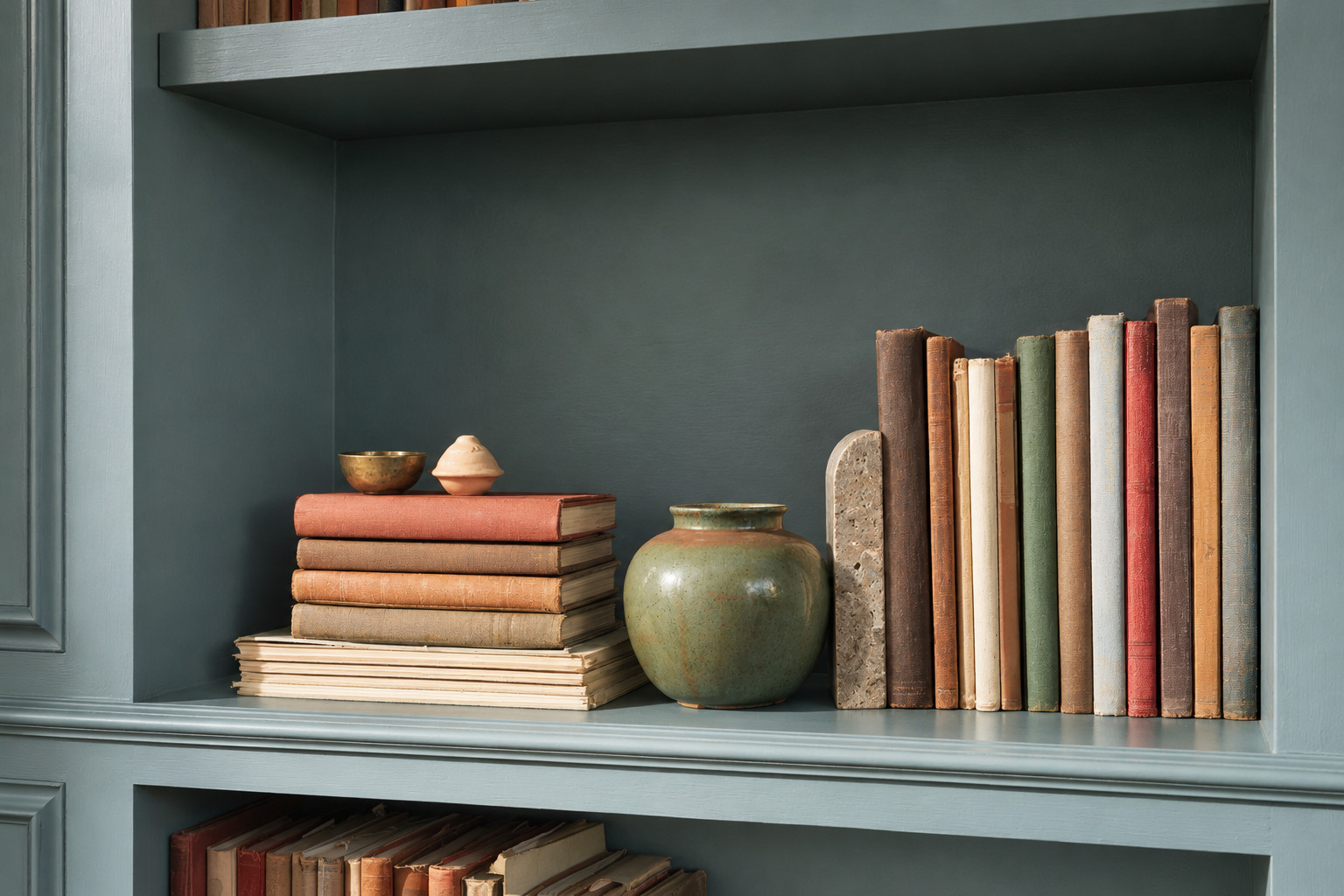
3. Mix upright rows with horizontal stacks
 Save
A shelf of only upright books looks like a library. A shelf of only stacks looks like a storage room. Mix the two:
- Lay 3 to 5 books flat to make a low stack, and use it as a base for a small object.
- Stand a row of 8 to 15 books upright next to it.
- Let the last upright book lean slightly or use a heavy object as a bookend.
- Alternate the pattern from shelf to shelf, so a stack on the left above is a row on the left below.
Two different book shapes on every shelf is enough. Three or four makes the unit look busy again.
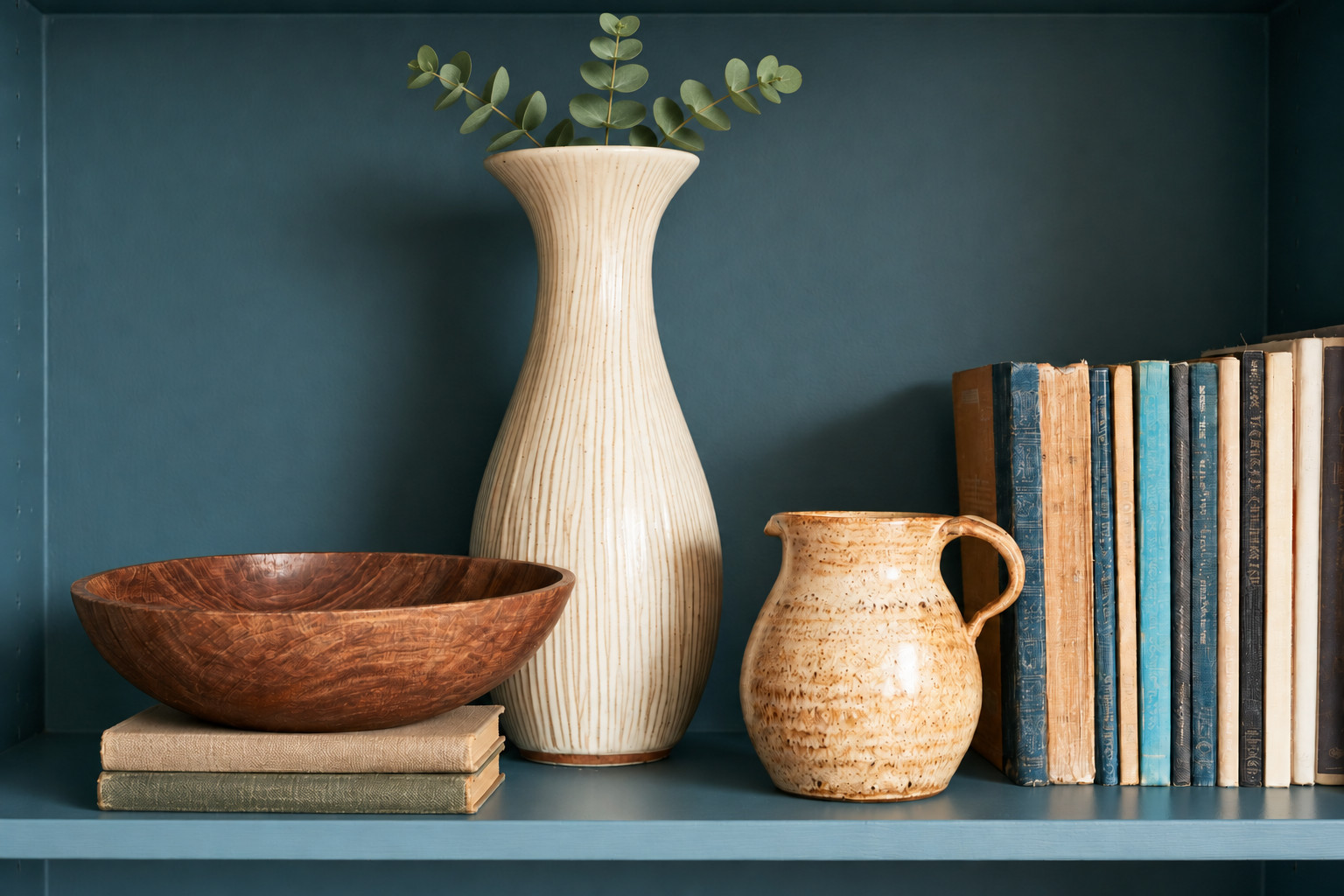
4. Add a few larger objects
 Save
Now add decor, but fewer and bigger pieces than you think. A ceramic vase 8 to 10 in (20 to 25 cm) tall, a wide wooden bowl or a stoneware jug holds its own next to a row of books. Small trinkets disappear among the spines and read as clutter. Choose objects in two or three materials that repeat across the unit, such as matte cream ceramic, warm wood and a little brass. These are the bookshelf decor items that earn their space: they have a clear shape and a material that contrasts with paper.
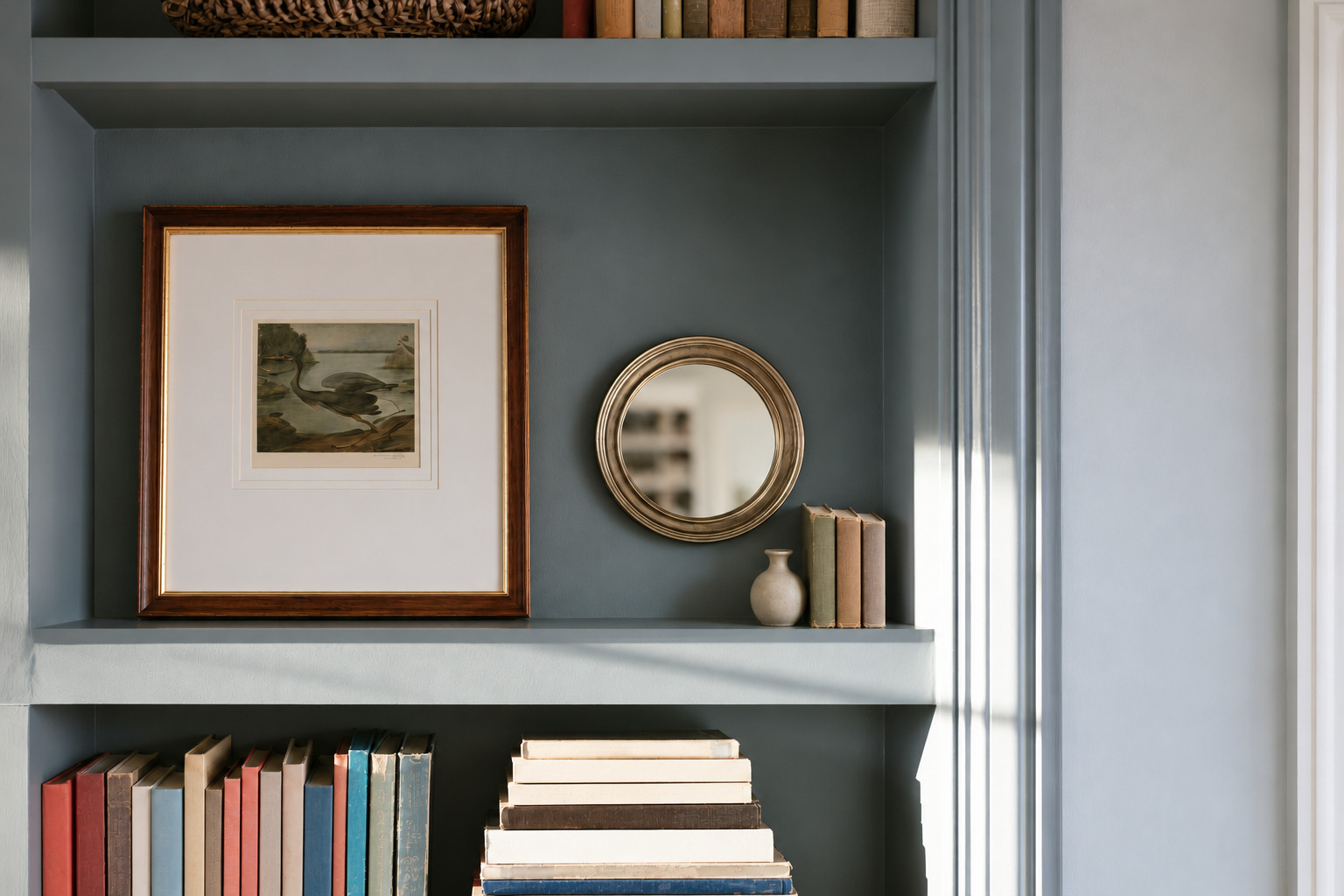
5. Lean art against the back
 Save
Framed art or a small mirror leaning against the back panel adds depth, because it sits behind the books instead of beside them. Choose a frame a little shorter than the shelf opening and lean it at the back, then set a small object or a short stack in front so it overlaps the frame’s lower edge. One or two leaning pieces across a whole bookcase is plenty. If the unit stands near a door or a busy walkway, put a small piece of museum putty under the frame’s lower edge so it cannot slide.
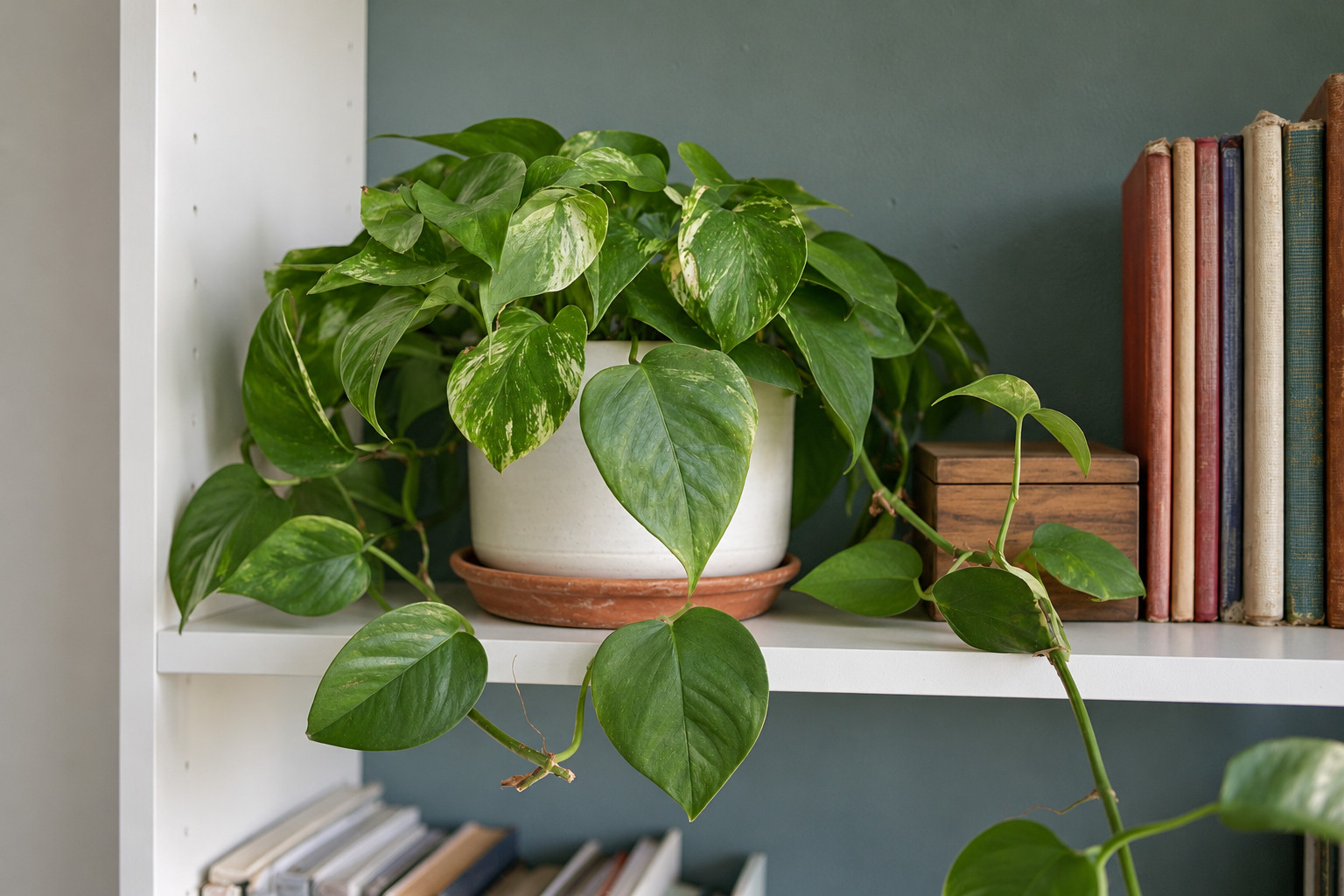
6. Add one living thing
 Save
A plant softens the straight lines of a bookcase better than any object. A trailing pothos or heartleaf philodendron on a top or upper shelf looks especially good as it grows down over the edge. Keep it in a pot with a saucer or in a cachepot so water never reaches the books. Low-light plants suit most shelves, since bookcases usually stand away from the window. If you prefer not to water anything, a small bundle of dried stems in a bud vase gives a similar soft shape.
7. Use baskets or boxes on the bottom shelf
 Save
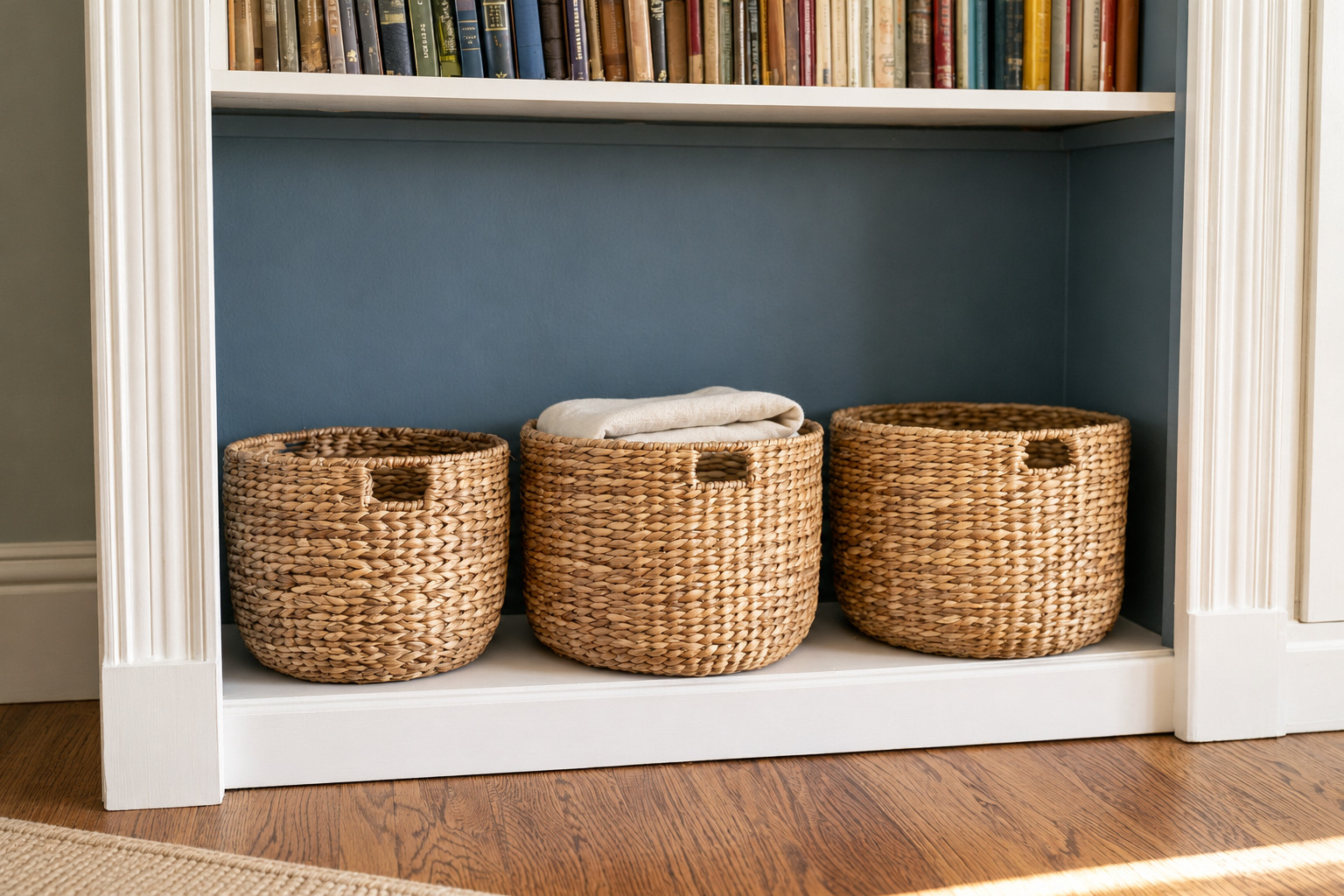
The bottom shelf is the hardest to style and the easiest to use. It sits at knee height, so nobody admires it, but it is ideal for the things you need and do not want to look at: chargers, board games, magazines, photo albums. Two or three woven baskets or lidded fabric boxes of the same size hide all of it and give the unit a solid, heavy base. Measure the opening first and choose baskets about 1 in (2.5 cm) shorter so they slide out easily.
8. Step back and balance in a zigzag
 Save
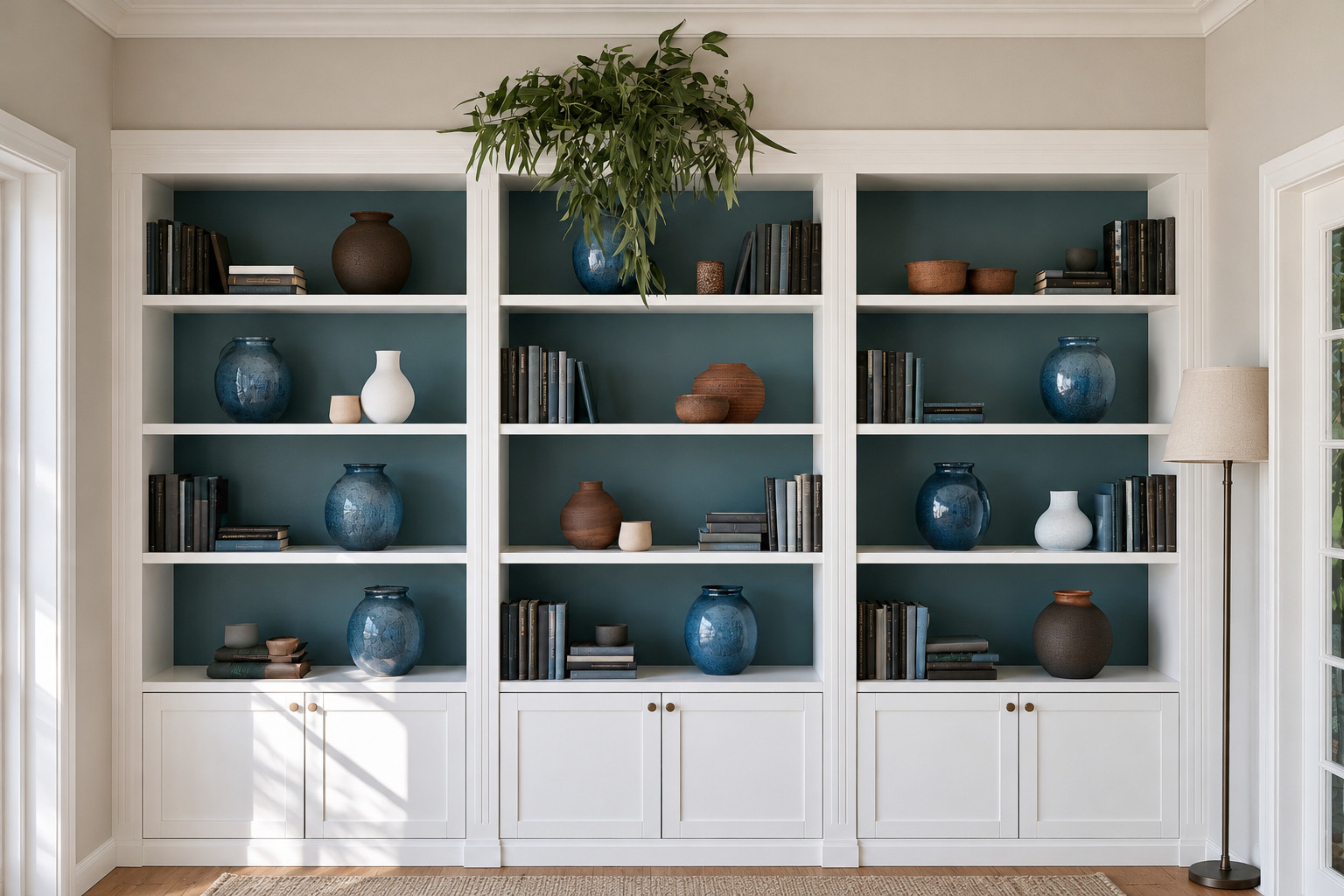
Stand about 10 feet back and squint. You are looking for heavy spots, places where the dark books, large objects or baskets cluster. Move things until the visual weight forms a loose zigzag down the unit: heavy on the left of the top shelf, heavy on the right of the next, left again below. The same goes for color. If one blue vase sits top left, repeat blue once in the middle and once lower right. Take a phone photo and look at it small, because imbalance is easier to spot on a screen than in the room.
Anchor the bookcase before you style it
A loaded bookcase is heavy at the top and can tip if a child climbs it or a shelf is pulled. Attach every freestanding bookcase to the wall with the anti-tip strap or bracket that came with it, screwed into a stud or a suitable wall anchor. Keep the heaviest books on the lower shelves. The CPSC Anchor It campaign explains which furniture needs anchoring and how to do it.
Bookshelf styling mistakes
- Putting decor on first and squeezing the books in afterward.
- Lots of tiny objects instead of a few larger ones.
- Every shelf styled the same way, so the unit looks like a store display.
- Books pushed back to different depths.
- Heavy books on the top shelves and an unanchored unit.
Frequently asked questions
How do you decorate a bookshelf without it looking cluttered?
Put the books back first, use a few larger objects instead of many small ones and leave about 10 percent of the space empty so each group can breathe.
What do you put on a bookshelf besides books?
Ceramic vases, wooden bowls, leaning framed art, a trailing plant and baskets on the bottom shelf. Choose items in two or three materials that repeat across the unit.
Should books be arranged by color?
Only if you rarely look for a specific book. Sorting by height and pulling spines to the front edge looks tidy and keeps books easy to find.
How much space should be above items on a shelf?
About 2 in (5 cm) above the tallest book or object. Items that touch the shelf above look crammed.
How do you style the bottom shelf of a bookcase?
Use two or three matching baskets or lidded boxes for everyday things like chargers, games and magazines. They give the unit a solid base.
One shelf this evening
You do not have to restyle the whole bookcase at once. Empty one shelf tonight, put the books back flush with the edge, add one larger object and see how different it looks. Then repeat on the next shelf. For more wall ideas, read about wall decor for white walls and accent pieces for the living room, or browse all shelves and walls ideas.