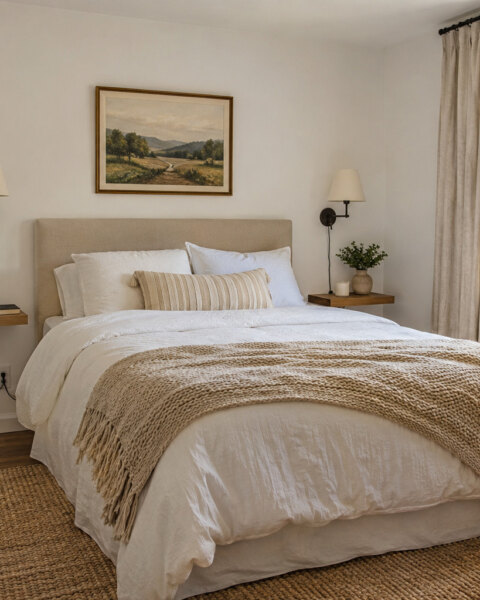
Bed Ideas for Small Spaces: Space-Saving Beds That Still Look Good
Space-saving bed ideas for small rooms, from storage and platform beds to daybeds, loft beds and wall beds, with sizes and layout tips.
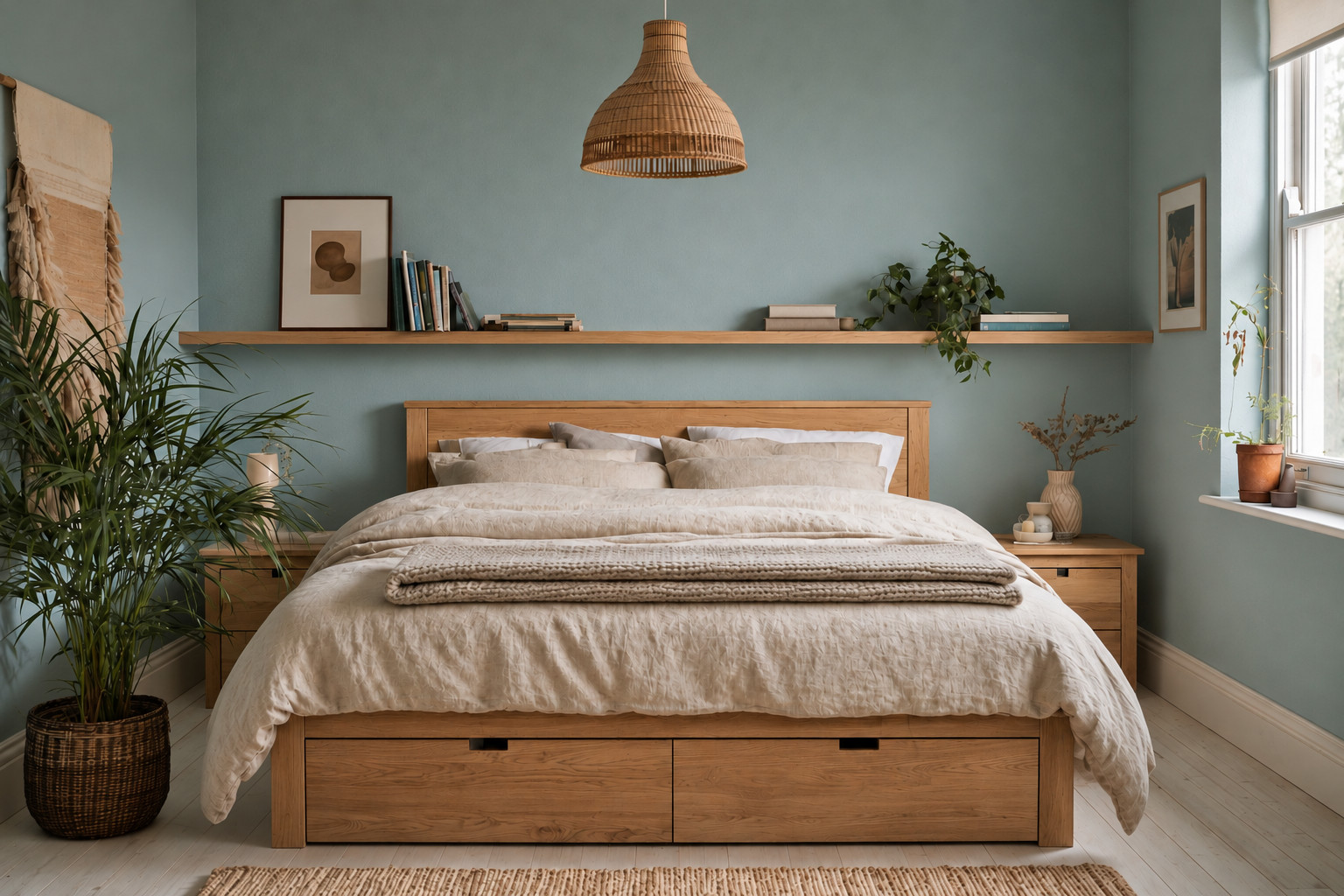
In a small bedroom the bed is not just the biggest piece of furniture. It is most of the room. Get the bed right and everything else, from storage to walking space, falls into place. Get it wrong and you spend years squeezing past a corner. These bed ideas for small spaces cover the types of bed that save the most room, where to put the bed in a tight layout, and how to keep a small bedroom looking calm rather than crammed.
Quick answer: The best beds for small rooms are storage beds with drawers or a lift-up base, low platform beds, daybeds, loft beds and wall beds. Choose the smallest mattress that suits how you sleep, keep at least 24 in (61 cm) of walking space on the sides you use, push the bed into a corner or under a window if needed, and pick a light frame with visible legs or a slim headboard so the room feels bigger.
In this article
- Bed ideas for small spaces start with the right size
- 1. A storage bed that replaces a dresser
- 2. A low platform bed for a more open feel
- 3. A daybed that works as a sofa too
- 4. A loft bed that frees the floor
- 5. A wall bed for a room that does two jobs
- 6. Push the bed into a corner or under a window
- 7. Let the headboard store things
- 8. Keep the bed light, visually
- Small bedroom bed mistakes to avoid
- Frequently asked questions
- Measure before you shop
Bed ideas for small spaces start with the right size
Before you choose a style, check what actually fits. Standard US mattress sizes and the smallest rooms they work in comfortably, with about 24 in of floor around the bed:
| Mattress | Size | Smallest comfortable room |
|---|---|---|
| Twin | 38 × 75 in (97 × 191 cm) | about 7 × 9 ft (2.1 × 2.7 m) |
| Full | 54 × 75 in (137 × 191 cm) | about 9 × 9 ft (2.7 × 2.7 m) |
| Queen | 60 × 80 in (152 × 203 cm) | about 10 × 10 ft (3 × 3 m) |
Twenty-four inches is the minimum to walk past a bed; 30 to 36 in (76 to 91 cm) feels comfortable. If a queen leaves you with less than 24 in on the side you get in from, a full will make the room easier to live in every single day. That is not the advice mattress shops give, but it is the honest one.
1. A storage bed that replaces a dresser
 Save
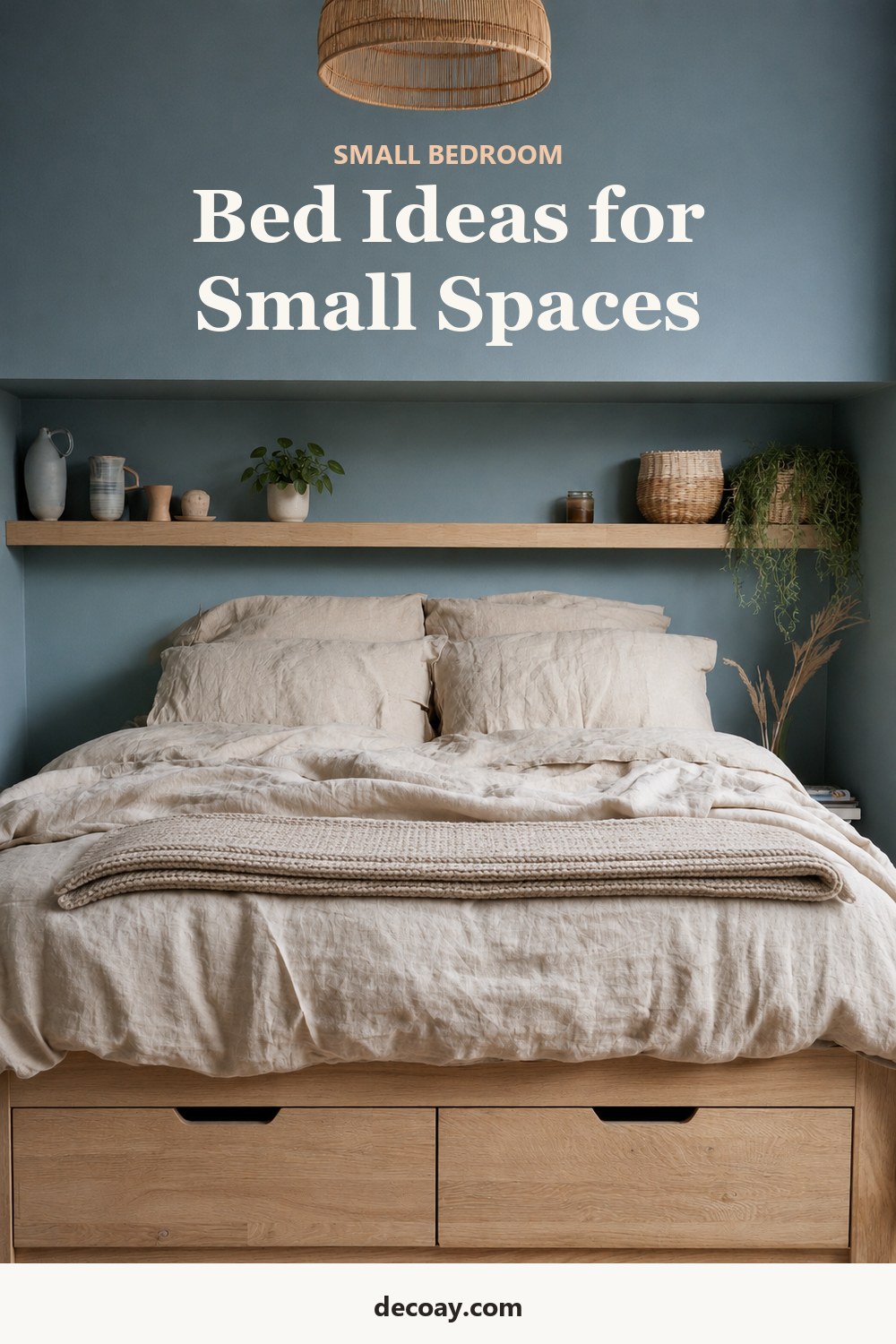
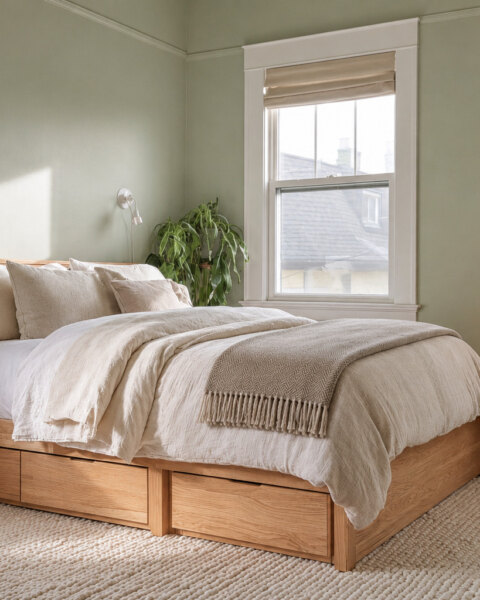
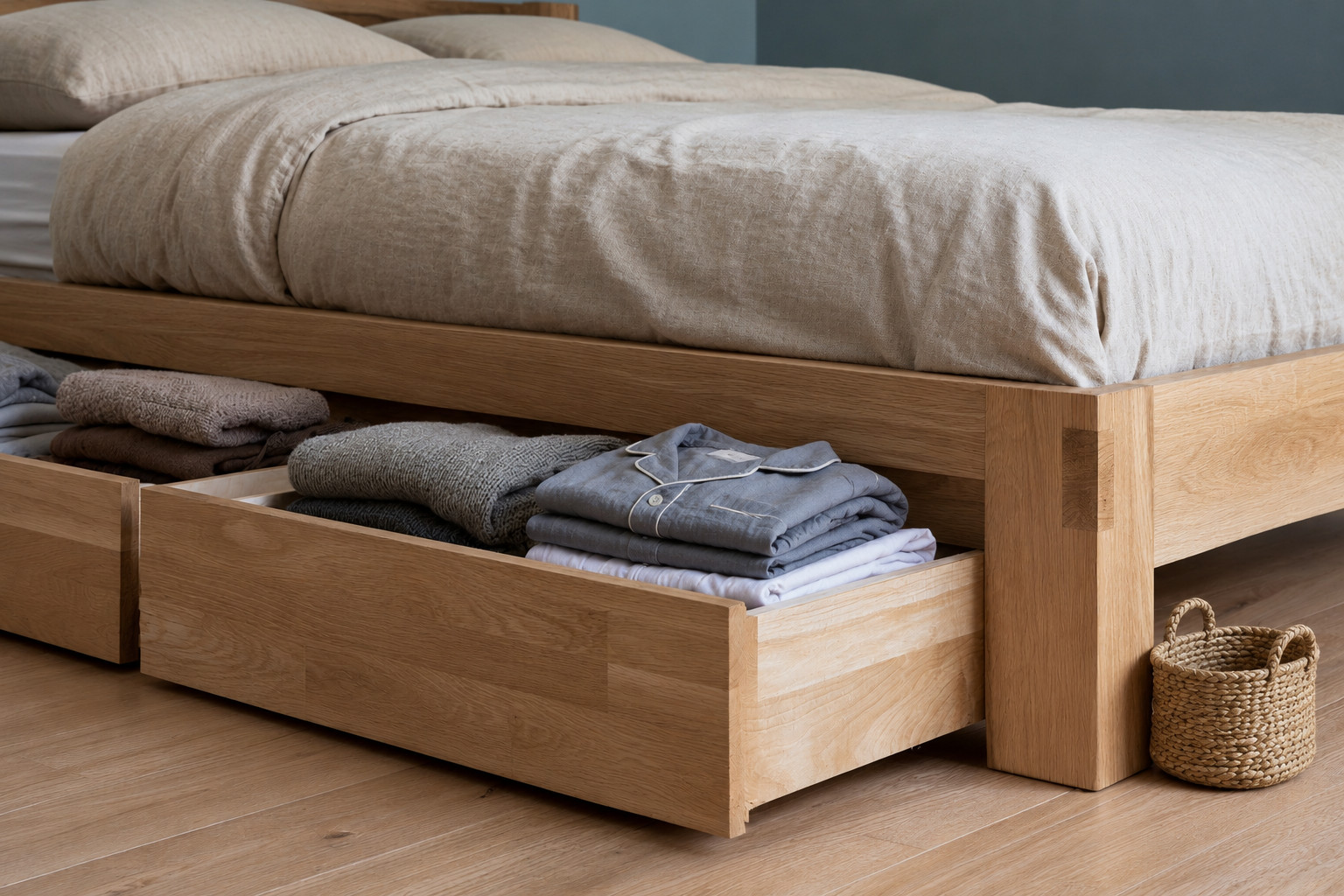
In a small bedroom, the space under the bed is the biggest storage area you have. A storage bed uses it properly instead of leaving it for dust and lost socks. There are two main types:
- Drawer beds have two to six drawers along the sides or the foot. They are easy to use every day but need about 20 in (51 cm) of clear floor beside the bed to open fully.
- Lift-up (ottoman) beds have a base that hinges up on gas struts, revealing the whole area underneath. They hold more and need no extra floor space, but they suit seasonal things you do not need every morning.
Pick the drawer type if the bed sits in open floor, and the lift-up type if the bed is pushed against walls on two sides. Either can replace a dresser, which frees a whole wall.
2. A low platform bed for a more open feel
 Save
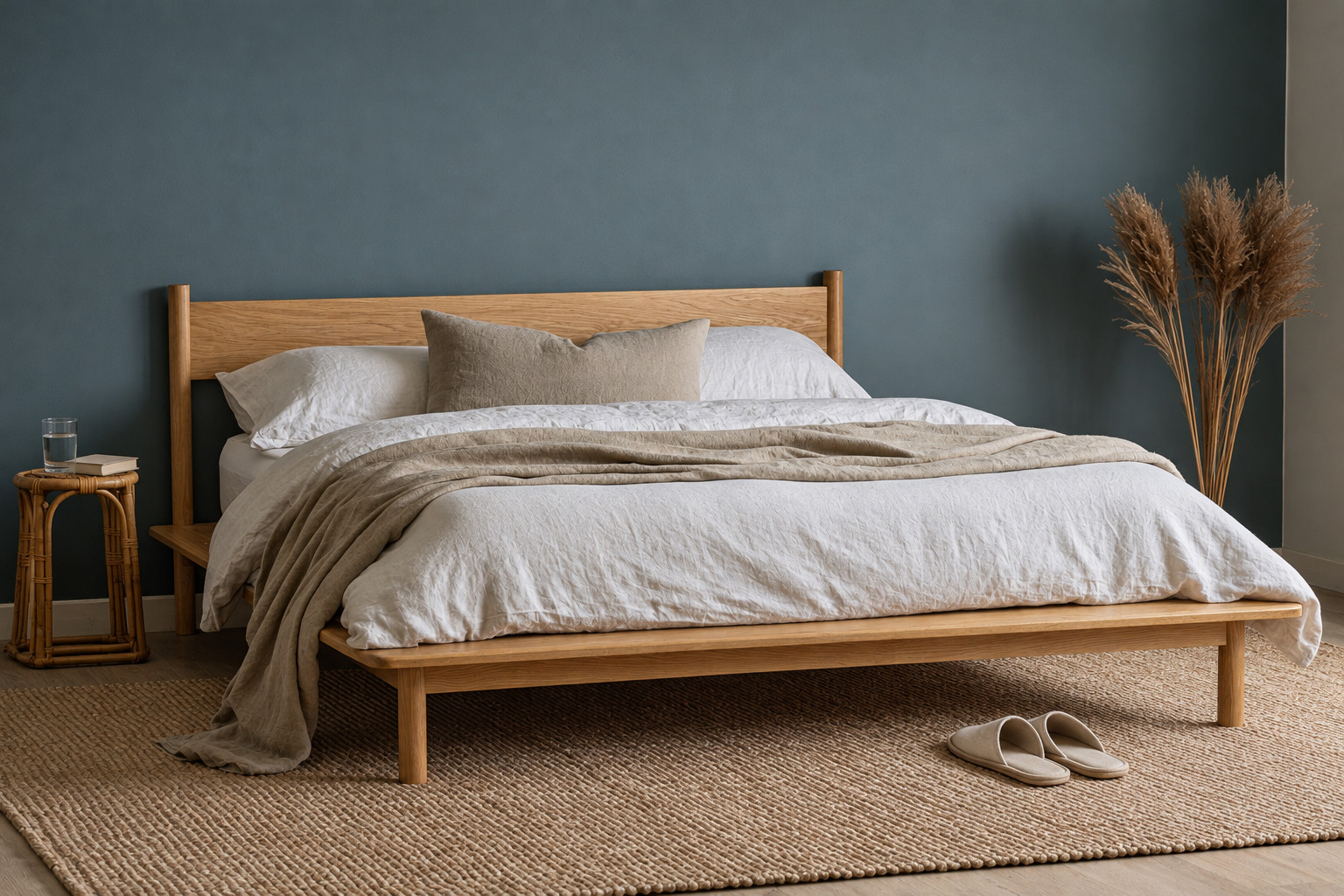
A low bed leaves more wall above it, and that empty wall makes a small room feel taller and calmer. Platform beds need no box spring, so the mattress sits lower and the frame stays simple. Look for one with slim legs and a little visible floor beneath. Being able to see the floor under furniture makes a room read as bigger.
The trade-off is storage. A very low bed has none underneath. If you need both, a platform bed about 14 in (36 cm) high still fits flat storage bins under it.
3. A daybed that works as a sofa too
 Save
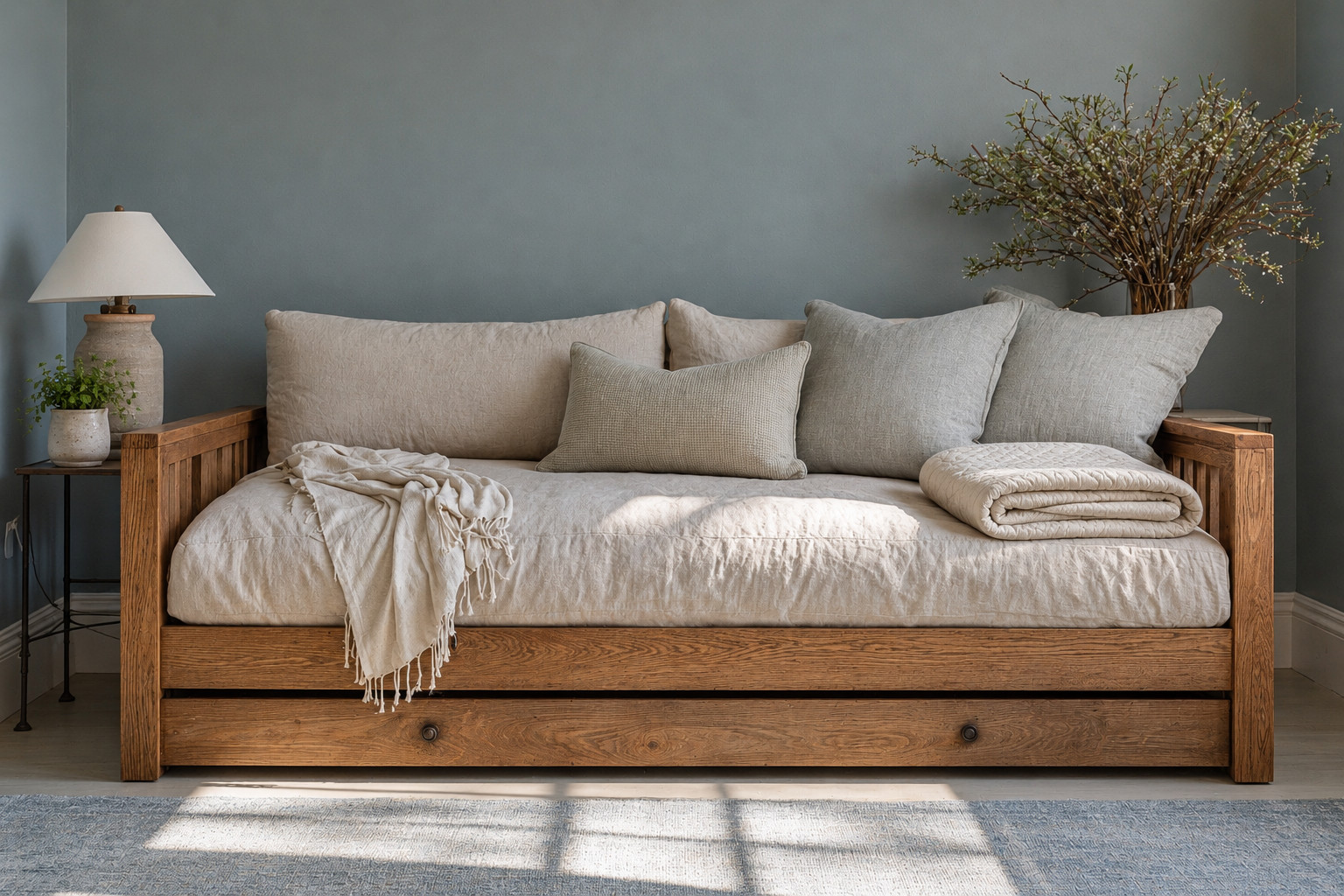
For a guest room, a studio or a small room that has to do more than one job, a daybed is the most useful option. Pushed lengthwise against a wall with cushions along the back, it reads as a sofa during the day and a twin bed at night. Many have a trundle underneath that pulls out to a second twin, so two guests can stay.
Daybeds take a twin mattress, so they are best for one sleeper or for occasional use. For an adult’s everyday bed, a regular frame is more comfortable.
4. A loft bed that frees the floor
 Save
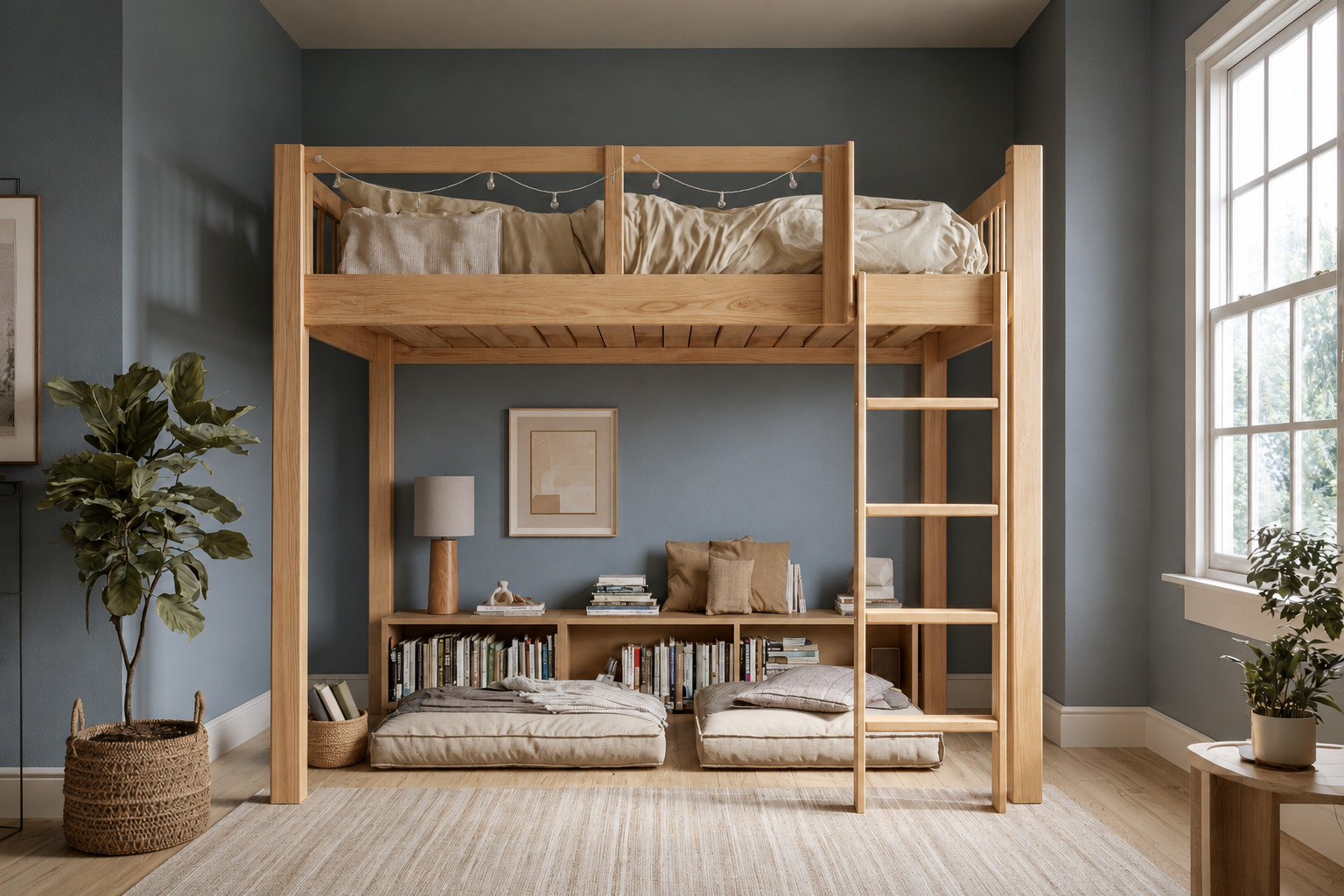
A loft bed lifts the mattress high enough to fit a desk, a reading corner or a wardrobe underneath. In a tiny kids’ room or a studio, it can almost double the usable floor. It works best with ceilings of at least 8 ft (2.4 m), so there is room to sit up in bed without hitting your head.
Safety matters here. Buy a loft bed that meets the US bunk bed requirements in 16 CFR 1513, which cover guardrails and openings. Use guardrails on every open side, keep the ladder secure, and do not put children younger than six on the upper level.
5. A wall bed for a room that does two jobs
 Save
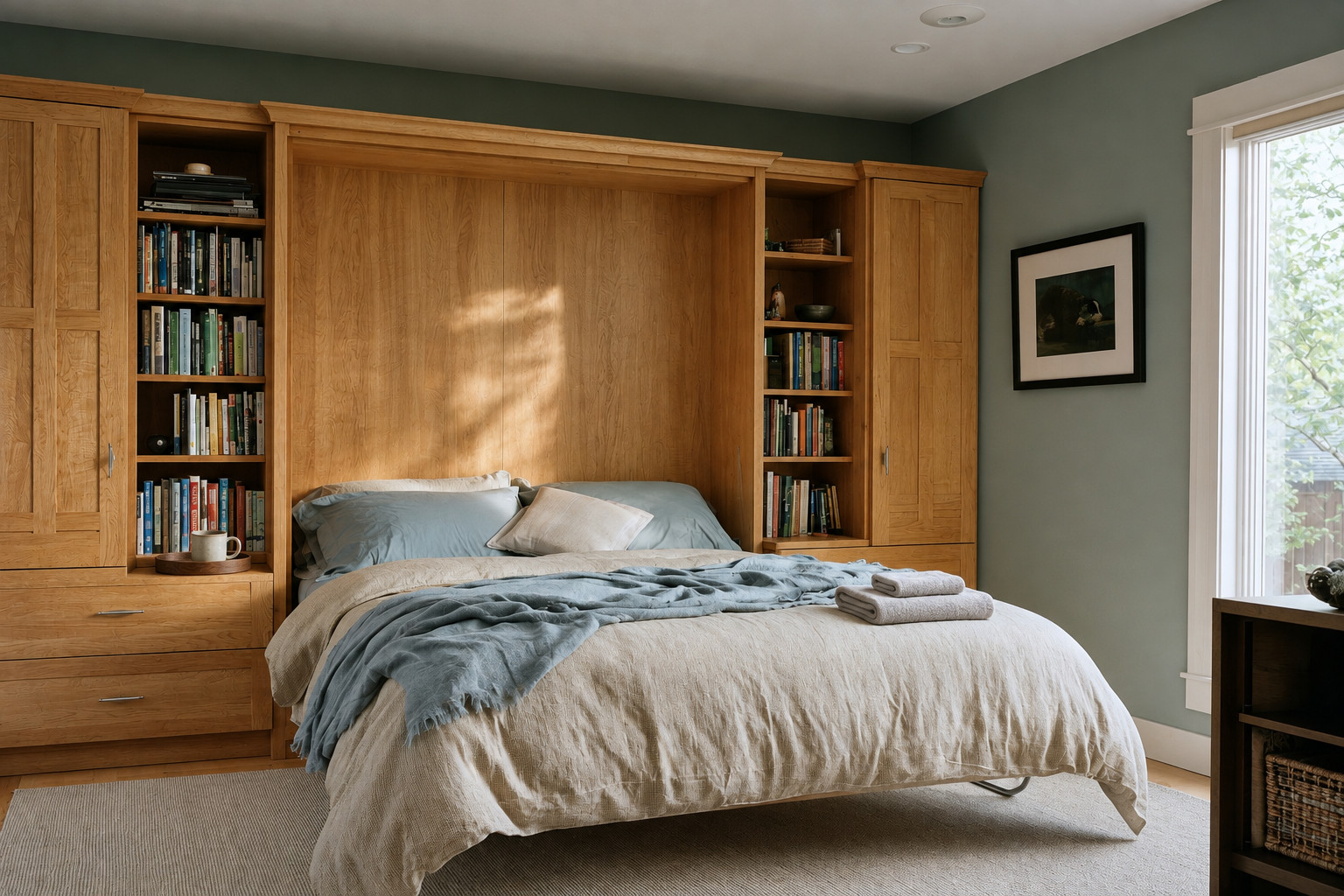
A wall bed, often called a Murphy bed, folds up into a cabinet when you do not need it. It is the best choice for a home office that hosts guests or a studio apartment where the bedroom is also the living room. Some versions have a sofa or a desk that stays in place when the bed comes down.
A wall bed must be anchored to the wall exactly as the maker’s instructions say, usually into studs. It costs more than other options and the mechanism needs space to swing, so measure the open length before you buy. In a den that also works as an office, our guide to home office den ideas compares wall beds with sleeper sofas and daybeds.
6. Push the bed into a corner or under a window
 Save
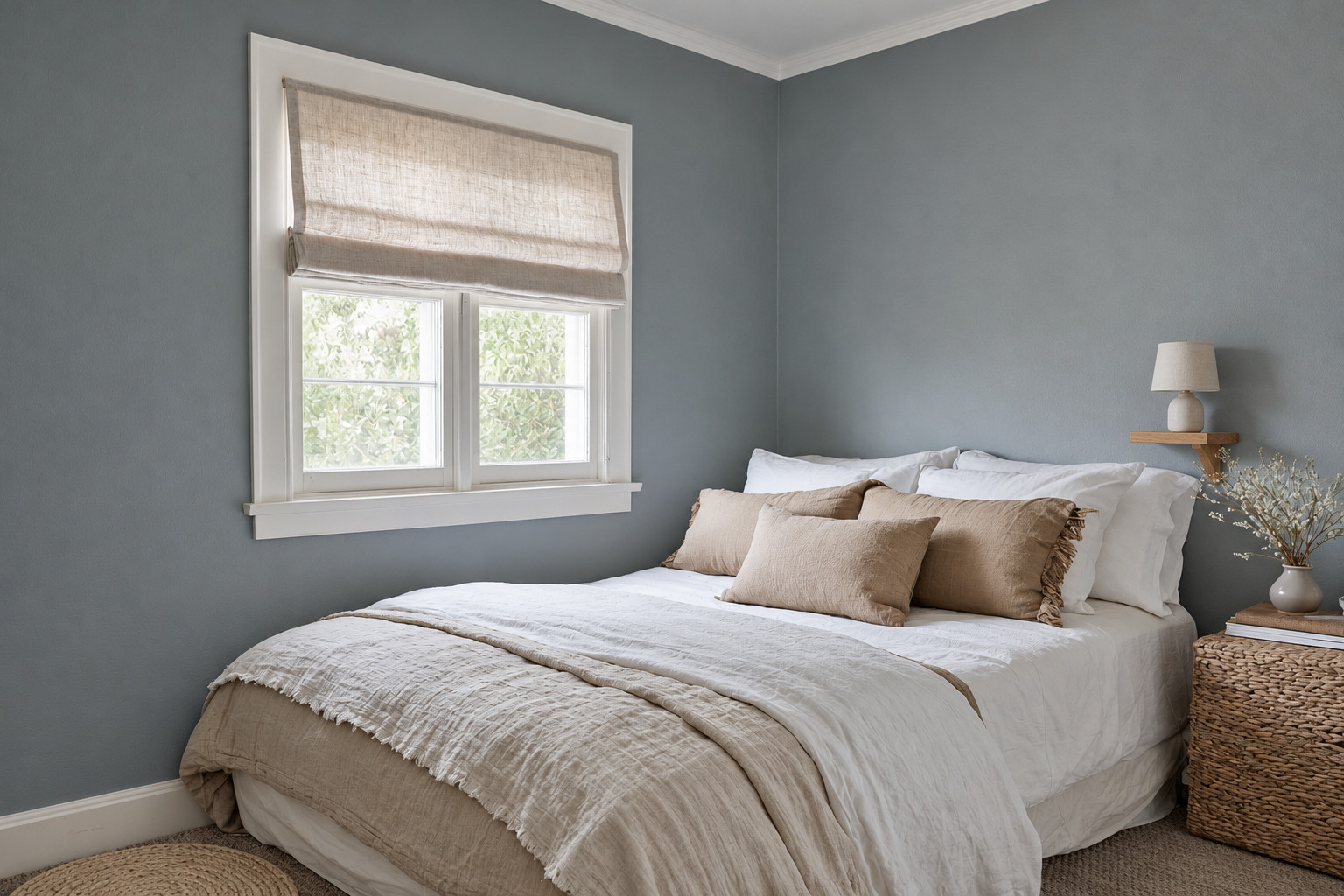
Centering the bed on a wall looks classic, but in a narrow room it can leave two useless 12 in strips on either side. Pushing one long side of the bed into a corner gives you one generous walkway instead. It works especially well for a single sleeper, a guest room or a child’s room.
Under a window is the other underused spot. If the window starts at least a few inches above the headboard, the bed can sit beneath it, leaving the solid walls free for storage. Keep curtains or shades light so they do not bunch up behind your pillows.
7. Let the headboard store things
 Save
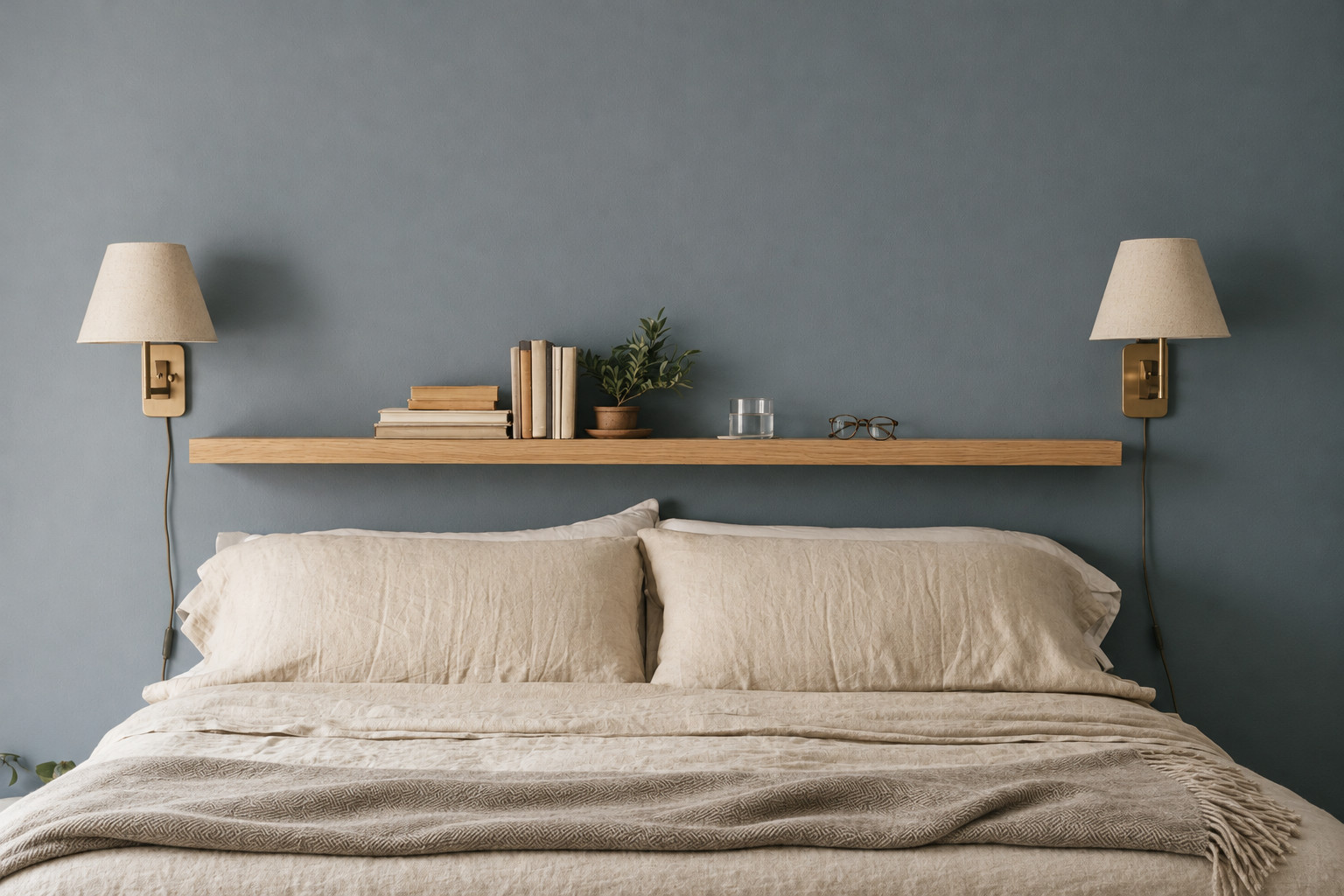
When there is no room for nightstands, the headboard can take over. A bookcase headboard with shallow shelves holds books, glasses and a phone. A simpler trick is a long floating shelf mounted about 6 to 10 in (15 to 25 cm) above the mattress, used as a shared nightstand. Add two plug-in wall sconces and you have light without lamps taking up space.
Keep anything heavy off the shelf directly above where heads go. Books are fine; heavy vases and framed glass are not.
8. Keep the bed light, visually
 Save
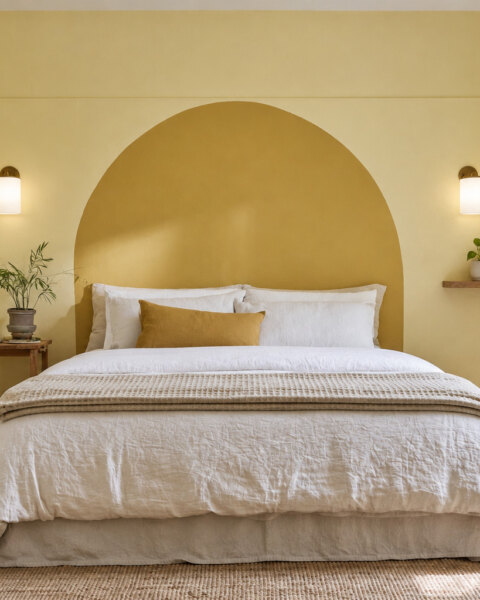
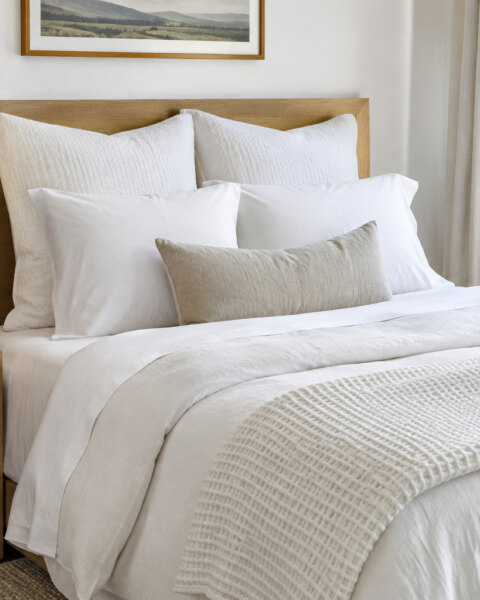
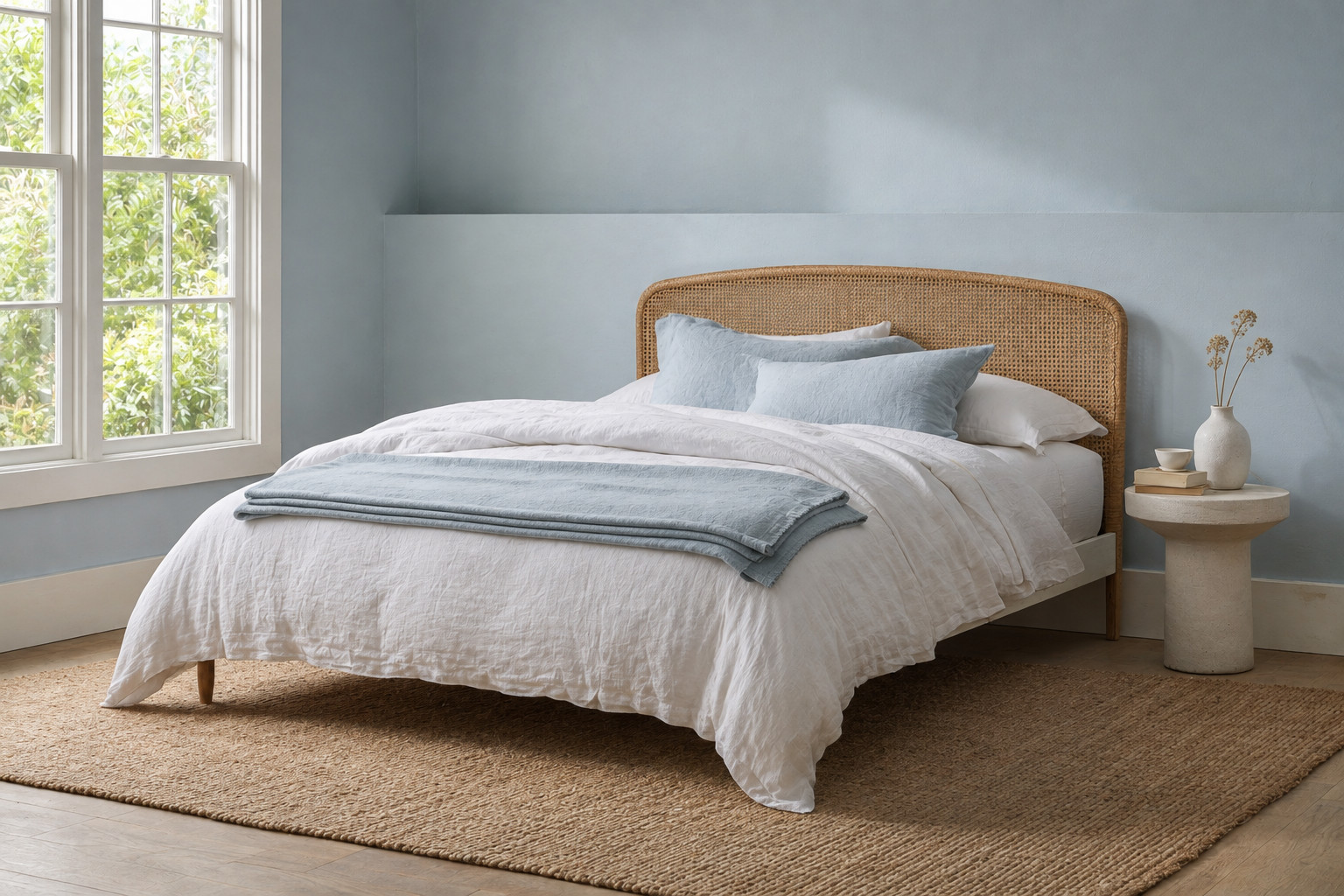
Two beds of the same size can make a room feel very different. A chunky upholstered frame with a tall headboard and a heavy dark bedspread fills a small room visually. A frame with slim legs, a low or open headboard, and bedding in soft light colors does the opposite.
A few rules that help in any small bedroom:
- Choose a headboard no taller than about half the wall height.
- Pick bedding in one or two calm colors, with texture rather than a busy print.
- Skip the bed skirt and let a little floor show underneath.
- Use a rug that extends past the bed sides, not a small one in the middle of the floor.
For more ways to make a tight bedroom work, see our small master bedroom ideas, or our guide to white bedding decorating ideas if you want the bed itself to feel lighter.
Small bedroom bed mistakes to avoid
- Buying the biggest bed that technically fits. A bed with no walking space around it makes the room harder to use every day.
- Forgetting drawer clearance. Drawer beds need about 20 in of floor to open.
- A loft bed under a low ceiling. Under 8 ft, sitting up in bed becomes awkward.
- Heavy shelves over the pillows. Keep heavy objects off shelves above the bed.
- A tall, dark headboard in a tiny room. It eats the wall. Go lower or lighter.
Frequently asked questions
What is the best bed for a small room?
A storage bed is the best all-round choice, because it replaces a dresser. For rooms that do two jobs, a daybed or a wall bed works better. For kids’ rooms and studios with high ceilings, a loft bed frees the most floor.
Can a queen bed fit in a 10 × 10 room?
Yes. A queen is 60 × 80 in, which leaves about 30 in on each side and 40 in at the foot in a 10 × 10 ft room. That is comfortable, though there will be little space for other furniture.
Where should a bed go in a small bedroom?
Centered on the wall opposite the door if you have 24 in or more on each side. If not, push one side into a corner or place the bed under a window to keep one wide walkway.
How do I make a small bedroom look bigger with the bed?
Choose a low frame with visible legs, a headboard no taller than half the wall, light bedding and a rug that extends past the sides of the bed.
Are loft beds safe for adults?
Yes, if the bed is rated for adult weight, meets bunk bed safety requirements, has guardrails on every open side and the ceiling leaves room to sit up.
Measure before you shop
Draw your room on paper, mark the door swing and the windows, then sketch the bed in each possible spot with 24 in of walking space around it. The right bed usually becomes obvious once you see the floor that is left. For storage around it, see how to maximize small bedroom space. For more ideas, browse our bedroom decor ideas.